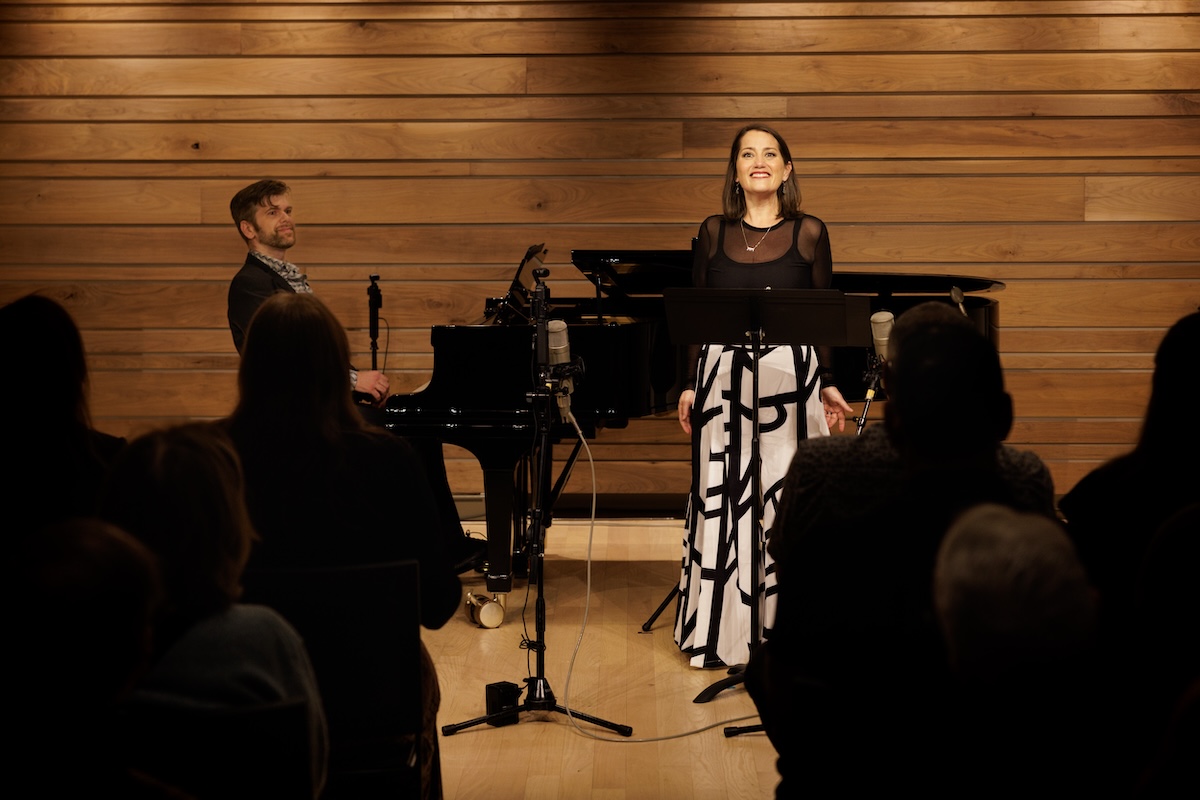

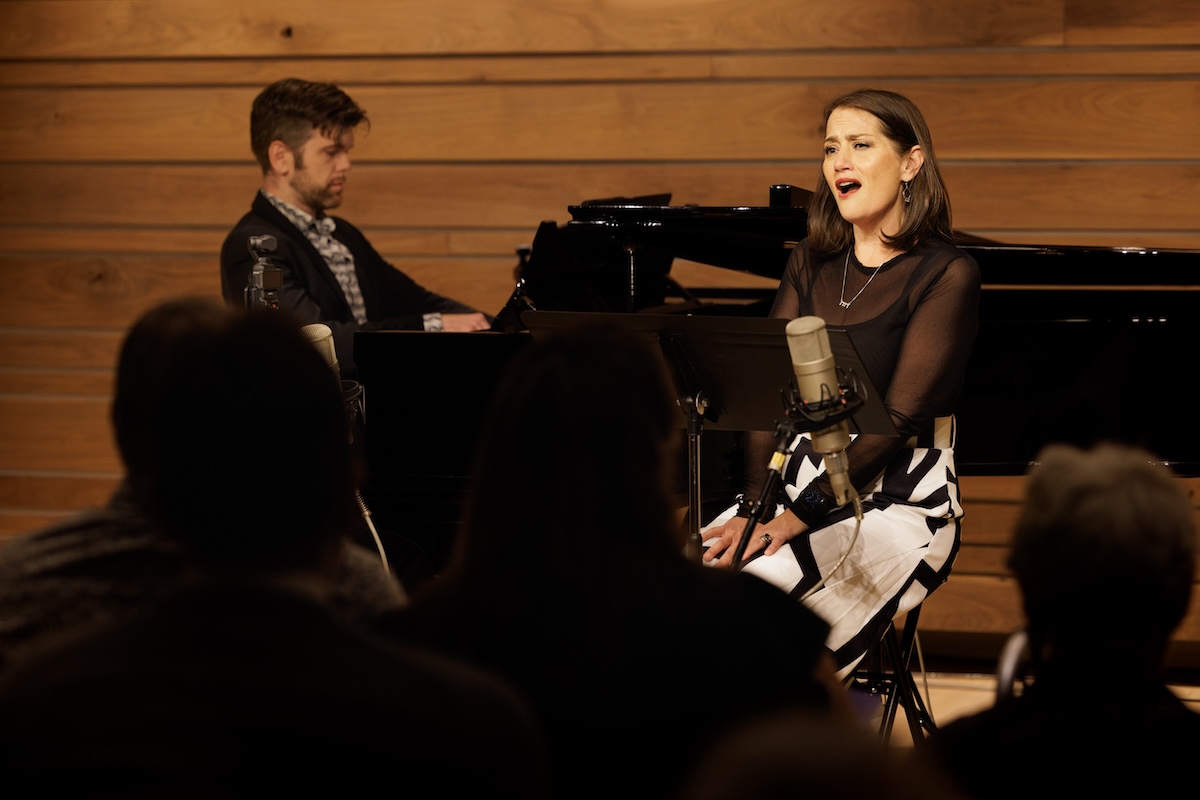
In a moving and joyous concert at the acoustically perfect Guarneri Hall, Nova Linea Musica presented its first vocal program, L'dor V'dor, which is Hebrew for "from generation to generation." On Wednesday, mezzo-soprano Heather Johnson and pianist Jason Wirth performed music honoring Jewish composers and confirming Jewish values for a beautiful life. They were joined by soprano Michelle Areyzaga for the world premiere of David Hanlon's "Ki Ger Anokhi Imakh" (I am a Stranger Among You). Areyzaga stepped in literally at the last minute to duet with Johnson on the Hanlon composition. The original soprano, Arianna Zuckerman, was not feeling well, so Johnson described Areyaga as a "special ninja." There was an excellent preconcert discussion with Doyle Armbrust, Johnson, and Wirth.
Johnson expressed unease with the times we are living in. "It's scary to be a Jew, but I am proud to be a stranger." She explained that Judaism recognizes the struggle of the "other," and in that way, it is universal. Pianist Jason Wirth was asked what he wanted the audience to come away with from this experience. He also mentioned the program's universal influence and its welcoming of strangers. Johnson told the audience that they should feel as if they were in a salon, as in Schubert's time, when his music became celebrated there, particularly in France and Belgium.
Every NLM performance has a newly commissioned composition, and David Hanlon had the honor for this concert. He appeared in a short film to discuss his process and mindset in creating "Ki Ger Anokhi Imakh," translated as "For I am a Stranger Among You." Another composer, Alex Weiser, is the director of public programs at the YIVO Institute for Jewish Research. The song was written as a lament and is rooted in Psalm 39, supplicating God to hear the prayers of those who dwell among us as foreigners, with their ancestors also being strangers. It was germane to the worldwide immigration crisis. YIVO is dedicated to reviving the Yiddish language.
The program was divided into five Jewish principles for living a beautiful life. The first is T'fillah (prayer) with "Simple Song" from Leonard Bernstein's Mass, the old Shaker melody "Simple Gifts," from Old American Songs by Aaron Copland, and ending with "Y'verch'cha," by Gerald Cohen. Johnson mentioned that one of the difficulties in singing in Yiddish is that the notes are held until the end of the syllable. That was beautifully demonstrated in Cohen's song. Johnson and Wirth have a lovely rapport and seem to anticipate each other's breath and tempos.
Johnson sang with deeply felt emotion for the second segment called Tikvah (Hope). "To Imagination" was composed by David Leisner for Emily Brontë's poem of the same name. Brontë lived in her imagination, an inner world, and that world was an escape from despair. Wirth played Fantasy Toccata in 4 Movements by Neal Radisch. He is an excellent pianist and nimble with changing tempos. The last songs in the Tikvah section were two takes on one song, with lyrics from Emily Dickinson's WIll There Really Be a Morning.
The first version was by Ricky Ian Gordon from his 1995 score A Horse with Wings. It was lovely and gentle. I could feel the excitement of being alive. The second, by André Previn, was a more dramatic version in a higher register that Johnson handled easily. Tikvah ended on a hopeful note.
Tikkun Olam stands for repairing the world through social action, a commitment to justice, and spiritual practice. The first song was "Evening" (Ovnt), by Alex Weiser. It was set to a poem by Morris Rosenfeld and was sung in Yiddish. The words of the poem have an onomatopoeic effect in English. Johnson's Yiddish interpretation was melodic and flowing like the Hudson River, "lost in thought in its cold silver bed," from Rosenfeld's Poem. Yiddish has Germanic roots, and I could pick out some words. I felt caught up in the melancholy of winter as I listened to Johnson sing.
The next song, "Marriage Equality," was direct in its support of social action and a commitment to justice. Laura Kaminsky wrote the music to a poem by Elaine Sexton about Edie Windsor and Thea Spyer, whose lawsuit reached the Supreme Court. It is a straightforward subject with a barn-burner tempo. I had not known of any song that is 7/16 until "Marriage Equality." The song spoke of compassion and the love that people were willing to take to the highest court to demand equal legal protection and benefits.
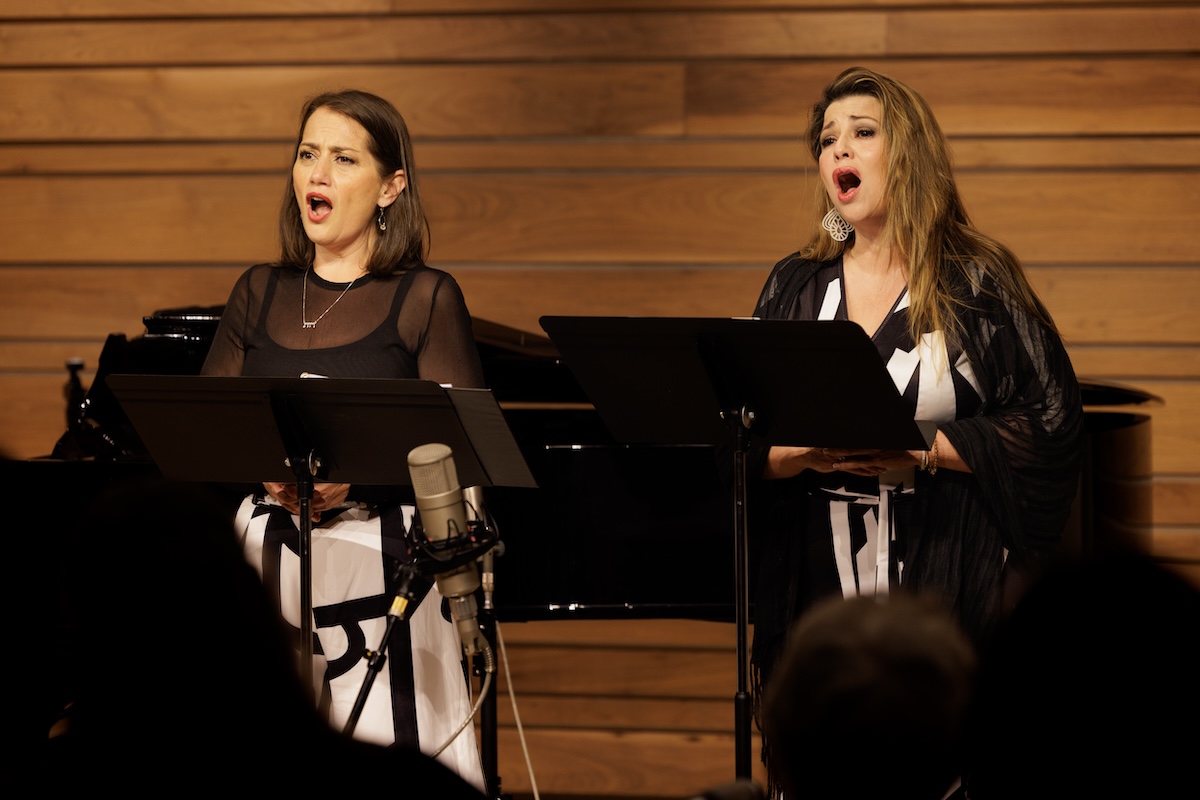
Johnson introduced the NLM-commissioned song, "Ki Ger Anokhi Imakh" ("For I am a Stranger Among You") by explaining the meaning and pronunciation of Simcha, which was the title of the final set and also applied to David Hanlon's song. Michelle Areyzaya joined Johnson for this song. The introduction was sung a capella and took its theme from Psalm 39, which combined prayer and repair the world. The music was beautiful, blending the chromatic and the Klezmer scales. The minor sounds appealed to me as a person raised on gospel, which inspired the blues, and is one of the more memorable NLM commissions.
The final segment of the program is titled Simcha (Joy) and is "directly to God," as explained for "Ki Ger Anokhi Imakh." In this set, there are two piano rags by William Bolcom, played by Wirth. The first was a jaunty "California Porcupine Rag" from 1968. Interestingly, porcupines are mentioned in Jewish lore as a symbol of the wilderness in the Torah and the Hebrew bible (the Christian Old Testament). "The Graceful Ghost Rag" did not have the same tempo as traditional rags and sounded mournful. Then again, it was about a ghost possibly looking over their old home or land. Johnson finished the program with Bernstein's "A Little Bit in Love" from Wonderful Town (1958) and "Joy" by Ricky Ian Gordon.
L'dor V'dor was a great example of the voice as an instrument of music and of the soul. The singing and playing were exquisite, and I found it deeply appealing. There is a long history between Blacks and Jews in America. Jews were instrumental in protests and activism in the Civil Rights Movement. It is a scary time to be Jewish or Black anywhere in the world. On Wednesday, May 6, I felt compassion, safety, and connection as I experienced L'dor V'dor at Guarneri Hall. Johnson, Wirth, and Areyzaga were fantastic performers who were dedicated to their craft and generous in sharing it.
L'dor V'dor is the penultimate concert of NLM's second season. The season finale will be June 3 at 6:30pm with Blooming Under Blue Skies, featuring: Mak Grgić (guitar), NLM artistic director, Desirée Ruhstrat (violin), Wendy Sutter (cello), and NLM artist in residence Rabia Brooke (violin). NLM concerts take place at Guarneri Hall, 11 E Adams St. Please visit novalineamusica.org for more information and a preview of season three.
Did you enjoy this post? Please consider supporting Third Coast Review’s arts and culture coverage by making a donation. Choose the amount that works best for you, and know how much we appreciate your support!
