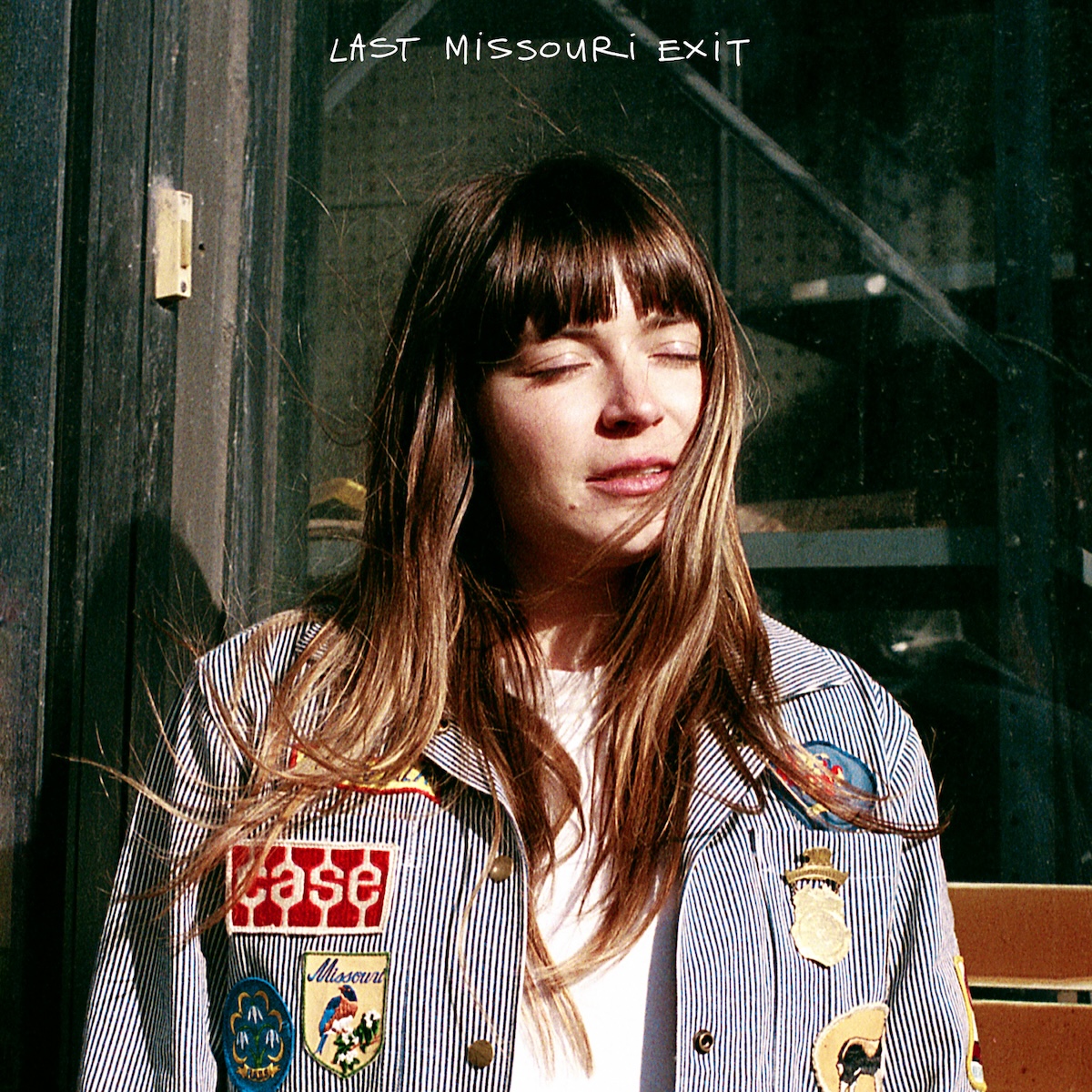
I’m not sure if anyone else is feeling this, but I sure as hell feel like I’m getting utterly spoiled this year with great Chicago music. Moontype, Smut, Free Range, and Tobacco City are just a handful of examples of great, established Chicago bands putting out exceptional follow-ups this year, but it’s sometimes even more special getting to review a newcomer. Case Oats started out as a mere embryonic idea of what could be all the way back in 2018, when bandleader Casey Gomez Walker bluffed her way into playing a headlining show in Chicago as Case Oats under the pretense that she actually had a band to perform with. She made do for that performance, and fast forward about seven years, and we have the debut album from Case Oats, Last Missouri Exit, out on Merge Records. Backed by a band that includes members with ties to such local legends as Minor Moon, Lucky Cloud, Hannah Frances, and more, Casey Gomez Walker has put together a spectacular, sprawling, and all-around dazzling ten-song collection of country-infused indie rock for the ages.
The album comes in under 35 minutes and each of the ten songs on Last Missouri Exit never lasts too long or comes in too short. Each so easily inspires all sorts of laughs, smiles, shock, and applause, and furthermore, all the songs come together to form a cohesive collection of end-of-summer companions to take you right into the cool warmth of autumn with Walker’s charismatic and animated voice ringing throughout your head. There are some real gems on this record that any artist would kill to have on their next release, and I promise you, if you give Walker and her comrades a chance, you’ll be listening to Case Oats and Last Missouri Exit for years to come.
The album starts off on an easy, breezy note with “Buick Door”, a song that paints a nostalgic and loving portrait of childhood, perhaps based on the experiences of a close friend or companion to Walker. Without even reading or attempting to understand the lyrics, the song comes off deeply personal and rich with backstory, and the music helps illuminate beautifully. Everything in this song makes a perfect pairing; even if this song were just an instrumental, it would still feel like storytelling with an unknown and possibly mysterious backstory that you just need to know more about. It’s an incredibly constructed piece of music with a modesty to it that I admire and it really sets the tone both lyrically and musically for what’s ahead.
“Nora” feels like the big single of the album, and it’s nothing but a coincidence that it actually is a single, with its big, poppy chorus and bright, sunny disposition. I’m not the best with lyrics, but the song feels like it’s dedicated to either an old friend or the friend that got away, but Walker still has love in her heart for them. You can feel that love in the twanged-up guitar and drums that drive the song forward at a speed that you’d think they both have some place to be. There’s an absolutely ripping and smile-inducing guitar solo halfway through with some added fiddle for good measure. This track is the rainbow after a sunny day rainfall, and what else can you ask for than a song that makes you smile every time you hear it?
“Bitter Root Lake”, much like its predecessor, is a song bursting at the seams with irresistible catchiness, addictively twangy guitars, drums with a personality, and darkly humorous lyrics of an ageless love. One of my favorite things about this song, and there are many, seeing as it’s my second or third favorite track on the record, is that the words of the chorus change their meaning as the verses pile on. Eventually, you get three verses deep and figure out that this love song that you originally thought was just some run-of-the-mill ‘80s love story is actually darker than the head of hair your dad used to sport back then. On a plane trip to Mexico, the titular Diane’s lover, who is piloting the plane, dives headfirst into Bitter Root Lake and accidentally kills Diane in the process. The guilt sets in, and it sets in hard, for this now poor, lonesome lover, and he makes a promise to Diane in that moment that he will one day return to her at the bottom of Bitter Root Lake to live out eternity in each other’s mangled arms. Again, it’s just another song on the record you can just vibe out and smile to, and even though that feels like a rare feat for most artists, that’s a common occurrence for Case Oats on Last Missouri Exit. I’d also be remiss if I didn’t comment on how much this song reminded me of late '90s/early '00s-era Wilco, but maybe that’s not the biggest coincidence seeing as Walker’s drummer and fiancée, Spencer Tweedy, is the son of the lead singer of Wilco and all around Chicago legend, Mr. Jeff Tweedy. Whenever I feel like I hear that Wilco sound, it just makes me feel like I’m listening to the heart of Chicago because, in many ways, Wilco is the heart and soul of Chicago. Case Oats, in no uncertain terms, is carrying the torch of Chicago indie and keeping that sound and ethos alive for years to come.
There are so few low points to this record that I could possibly only count them on one or two fingers, but unfortunately, “Kentucky Cave” is one of those low points. It’s all relative in the end because this song is, without a doubt, a good song, but it just doesn’t inspire the same impassioned feelings in me as the others do. The song has a fairly repetitive melody, which in and of itself is not a problem, but it’s just not a melody that I love, so the repetition sticks out far more. There’s a dark, ballad-esque tinge to the song with its moonlit, dusty chord progressions, and Walker’s brooding and murky vocal melodies do make for an enticing listen. Still, there’s just not much replay value in this song for me, and the competition is fierce.
Picking the pace back up, “Seventeen” feels like it would be a song featured in the 2007 coming-of-age classic Juno if it were set in 1980s Tennessee. I’m not sure if it’s intentional, but I definitely get this child-like, lo-fi, anti-folk vibe from the song that The Moldy Peaches and Kimya Dawson did so well. The song feels like Walker is in conversation with an ex or a friend she lost touch with when in reality she’s probably just in conversation with herself, bubbling with nostalgia for a time in her life that felt so chaotic, depressing, sad, and lonely, yet weirdly comforting and familiar; I’m sure plenty of us who were seventeen at one point in our lives can unfortunately relate. The song has an infectious messiness to it, where it feels like the song was written and played minutes after with jangly, out-of-tune guitars and an iPhone microphone, because even though I know it wasn’t, the spirit of the song tells me otherwise.
The next three songs comprise what is the best run of songs on the album, in my humble opinion, and I’m not sure if it’s just because they are all fantastic folk songs with upbeat and colorful palettes or if they also sound like a tight-knit trilogy, and the cohesiveness satisfies my brain. “Wishing Stone” has a chorus that hits like a monster truck helmed by Gillian Welch on her soul journey to find the Goddess of Time. An absolute glutton of a sickly sweet ol’ love song, the lyrics are so wholesome and specific that you can’t help but try and put yourself in her shoes, projecting your visions of the whirlwind yet modest romance you one day hope to find for yourself. Although there is pedal steel guitar all over this record, I think it hits the most in this song. You don’t really realize it until you’re dead in the middle of a great love song, but pedal steel is a very underrated romantic instrument and can make even the most hardened cowboys shed a tear. “In a Bungalow” is another love song, at least in my eyes, even if the lyrics don’t always give off the warm fuzzies, but maybe more so for a place and not just a person. There’s just something so pure Chicago about this song. Whenever this song comes on, I think of Twin Peaks (the band, not the show), I think of autumn in the city, and I romanticize the sight of the trees turning color by the lake, even though I never make the trek over there to see for myself; I just think about Chicago, this city that I love so dear. The lyrics seem more about a friendship that once turned sour but is on the up-and-up, but frankly, I’m already dead-set on my left field interpretation.
Closing out my favorite run of songs on the album, we have “Tennessee.” This is another warm, slow-churning folk song that paints such a vivid picture of romantic (or, I guess, platonic) avoidance; letting the right one go for reasons not entirely certain to you, but you know, in the end, it was because your mind ain’t as healthy as your heart is large. I love and always find myself attaching to songs, especially in the folk and alt-country space, that name-drop a bunch of cities, towns, and states. It may as well be indebted to my love for Americana and how each state, and city, for that matter, has this romanticness to it, even if they don’t wear it on their sleeve for the world to see. There’s something or someone to love any and everywhere you go in this world, and hearing the names of these places in songs makes my mind wander towards all the lives we never get to see, trying creatively to imagine the scene inside the lyricist’s head when they put pen to paper, mouth to microphone. I want to know what happened to Walker in Tennessee, but maybe I’ll just let my imagination keep on wandering instead.
Even though the tone of the lyrics doesn’t always match the sound of the song they’re paired up with, musically, this album is very much a happy one to me, as it successfully puts me in a good mood whenever I run through it. Most of the songs, musically, just have a wholesome, happy-go-lucky folksy vibe, but if I had to bust out some elbow grease and pick the angriest, heaviest song on the album, I would have to say “Hallelujah”. There’s just this mean, gritty, and visceral anger to this song that is intoxicating. I’m almost certain this song isn’t as angry as I imagine it to be, but juxtaposed with so many other songs on the record, “Hallelujah” comes across even more fun and exciting because the anger and urgency of the song, both musically and lyrically, just riles me up something fierce. For some weird reason, I don’t often think of specifically coming back to this song, but when I listen to the album front to back, I’m always so shocked at how much more I love this song when I’m listening to it in the heat of the moment than when I’m done, moved on, listening to another song. It surprises me in the best way and always gets me thinking why this song isn’t higher up in my rankings of the album, and I honestly prefer to keep it that way; it’s the underdog of the album, certainly, and that’s not a trait attached to just any song.
I’m so, so ecstatic that I get to talk about “Bluff” last, not just because I have to since it’s the last song on Last Missouri Exit, but because when is it not fun saving the best for last? Not only is “Bluff” my favorite song on the album by quite a long stretch, but it’s quickly become one of my favorite songs of recent memory. If I had a second complaint, or low point to discuss about this record, it’s the fact that the best song on it is the shortest one of the bunch; curse you, Casey Gomez Walker! It’s hard to express why I love this song so much; I could simultaneously say a million things about it, but, on the flip side, have an exceedingly hard time coming up with even the simplest explanation as to why or how this song moves me in the way that it does. For one, the song feels like a call-and-response between two lovers, again like the Michael Cera and Elliot Page’s characters in Juno, and so there’s this endearing and sweet air to the track that buzzes around me whenever I’m listening. The verses, for some ungodly reason, remind me of “Sweet Caroline”, the Boston anthem sung by the iconic Neil Diamond. It’s not a close match whatsoever, but I just can’t shake the similarity I see between the two that lives mostly inside my head. I love the sporadic, eccentric, and accented snare hits throughout the song as it keeps you on your toes, never knowing where the song will go or how it will look when it gets there; the uncertainty, which is almost a musical metaphor for love itself, is something I absolutely adore. After it’s all said and done, however, I just love this song because it inspires such nostalgia for an innocent time in my life that is completely detached and wholly unrelated to the lyrics, but that, in a way, is a mark of a great song; it gives you the building blocks to morph it into whatever shape, form, or color you want it to be to suit your needs, your thoughts, your experiences, your life. “Bluff” is a song written by Casey Gomez Walker under the Case Oats moniker, but she’s unknowingly letting me borrow it for the rest of my life to morph it into more than just a song, more than just an extension of myself, but as a two minute and nine second-long feeling I’ll always long to return to.
Even though this album shows you a lot in the first listen, I believe it to be a quiet grower at the end of the day, as the best albums often are. It gives enough to entice you at first with curiosity, but quickly moves in for the kill, not unlike the best-evolved hunters and predators oftentimes do. Although this album gave me so much to chew on for years to come, I can still see so much room for growth. Last Missouri Exit, in the best way possible, really does feel like a debut album. There’s not a lot of experimentation with Walker often playing to her strengths, each song has a very simple and focused palette of instrumentation, and there’s this intangible, almost indescribable sense of youthful clumsiness and/or naivety raging like a rising river through each song even though Walker is a full grown adult with experience and wisdom; either way, it adds a sprinkle of punk energy and ethos to the album that I think every debut album could use for good measure. This album and band are special, and I can’t wait to see where Walker and company go from here. For now, I’ll remember this album not as a time of day, but as a time of year, and I can promise you there won’t be a year where I don’t return to Last Missouri Exit.
