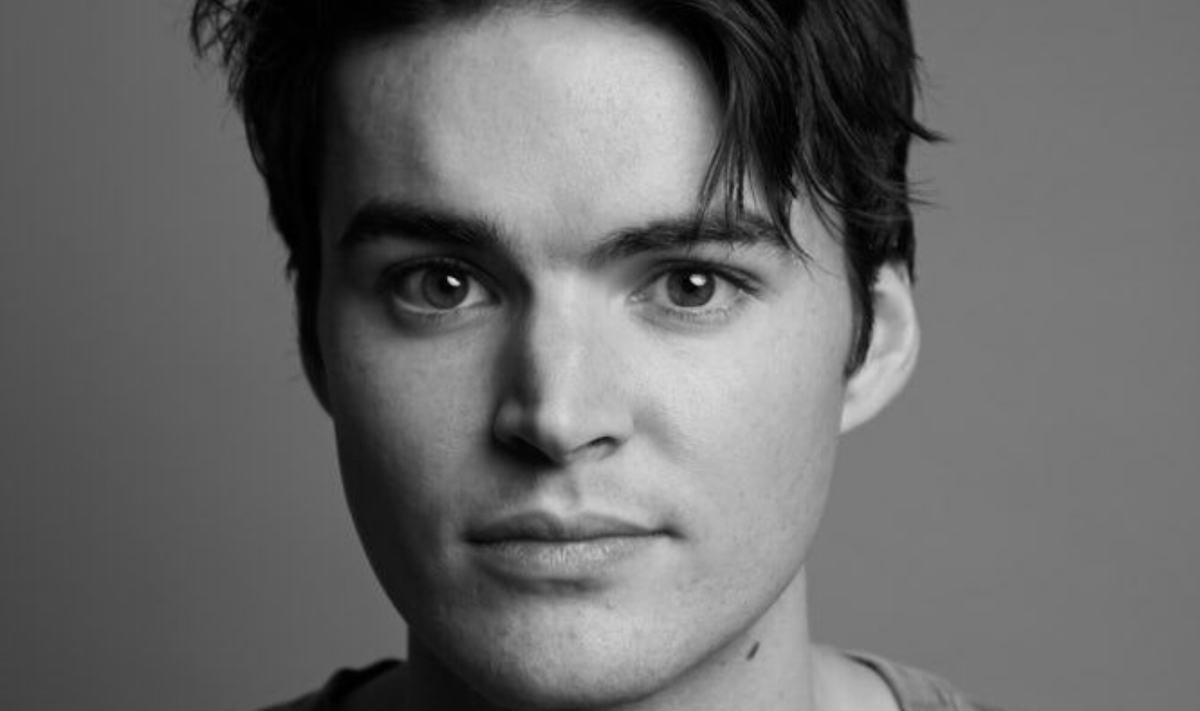
When Michael Longfellow joined the cast of Saturday Night Live in 2022, his dry, sharp wit earned immediate comparisons to legends like Norm MacDonald and Bill Hader. Best remembered for his Weekend Update appearances—threatening to “do a terrorism” if forced to get a REAL ID and portraying a cigarette advocating for the benefits of smoking—he left SNL last year after three seasons and will make his debut at the Den Theatre on April 24 and 25.
We talked with Longfellow about how he almost majored in creative writing, YouTube comments about his appearance, and why his mother demanded a rewrite on SNL.
What have you been up to since SNL?
I learned how to play golf and got into paintball. Work-wise, I’ve been touring a lot, getting back to why (SNL) hired me, which is my standup, and working on a special. I wrote a movie I’m trying to make, and then a couple other things—all the stuff that everyone’s doing. Wrote a show, wrote a movie, doing the audition self-tapes, got a couple of things coming that I can’t say yet. But doing a lot of the standup act is really—the touring, the standup act, and getting a special or two out pretty soon, because I’m already on to my second hour.
What should someone who only knows you from SNL expect when they come to see you at the Den?
At the shows in Chicago, come see the reason Lorne (Michaels) let me on his sketch show. Come see standup that he liked enough that he let me on his sketch comedy show for a few years. I think I’ve only done Zanie’s downtown in Chicago, which is an amazing club. It is. I mean, it’s got so much history to it. But I’ve heard of the Den. I’m excited for the Den.
You mentioned a few projects you aren’t allowed to talk about yet, but I’d love to know about the movie and show you said you’re writing.
The movie is sort of—the idea was what I would have done if I never really found comedy, which is work a menial job probably 10 minutes from my mom’s house, specifically at a gas station. I like gas stations. I don’t know why. A gas station at night, one of my favorite things. I kind of always wanted to work at one. So basically, it’s me and my friends in Arizona if we were all just sort of the aimless, video game basement at mom’s house still. I work at a gas station. We come up with an idea to rob it while I’m working, because that’s an easy plan. A guy doesn’t know it’s a fake robbery, ends up going a little haywire, and then we got to get out of the trouble. It’s a funny movie that I wrote because I want to be able to do action scenes.
Gotta live out your dreams.
But it’s also funny, yeah. So just my life without comedy, probably.
Speaking of Arizona, I want to make sure I understand this correctly. You wanted to major in creative writing at ASU, but you ended up—
I did major in creative writing.
Ah, ok.
For four years, until my thesis. I was doing comedy so much. I was trying to drop out, and I was so into—I was writing creatively, joke-wise. I forgot my thesis was due. I remembered I think two days before. I wrote it in one night—I think 20 pages of an etiquette for people that just died on how to haunt appropriately. It had spelling errors. It had no cover page. I think I stapled it a couple times in the corner. I remember throwing it into the pile and just seeing everyone’s cover page, and I was like, I failed this.
Just off the spelling errors alone, they’re like, “The idea is good, there’s good writing, but it’s just technically not—we can’t pass this. So you can do it again next year, stay a fifth year and get your creative writing degree, or just do literature and get out of here.” I was already so into comedy that it’s like, “Get me out of here. Literature degree. Either way, it’s a liberal arts degree from Arizona State University. I’m probably gonna have to make it on my own somehow.” So yeah, I got out of there. I finished online because I was like, “I’m gonna need to travel for comedy.” Then I didn’t go anywhere for like a couple of years, but still.
Have you ever incorporated any of that etiquette guide into your act?
You know, I haven’t. There’s so many things that I’ve written that I forget about and could do. A lot of my jokes that I even have in my act—it’s like an old friend from Arizona will be like, “I like that one that you did.” And it’s like a throwaway. I remember, I do a joke about Yelp and how Yelp—I wish it was just a sound again, you know? Remember when “yelp” was just a sound? I forgot I said that. Years later, my friend was like, “I like that joke.” And then I a five-minute bit. My girlfriend will do that all the time too. And my mom she’ll be like, "This was funny when you said this."
So no, now I probably will. Come see me in Chicago. I’m gonna start writing on that tonight.
I hope to be in the audience when it debuts.
I hope you are too.
What’s your usual writing routine?
I think after a certain amount of years of comedy, you sort of get out of a routine. I think we’re all writing all day, thinking. You just write it down sometimes. So I think I naturally just kind of get little ideas in my head while I’m walking around, doing whatever, and then if I believe there’s something there, I’ll sit down later and write on it, usually a few hours before a show. I’m a big procrastinator. Pressure helps. I write on stage a bit. In the beginning, it used to be turning on an album without lyrics and not looking up until the album’s done. Now it’s sort of—I don’t think sitting there and creating an idea is necessarily the easiest thing to do. I think you get an idea from standing in line at Starbucks—who knows why or how—or you’re trying to go to sleep and you think of something, and then you sit down and write on that idea.
I just try to write what I think is funny. If I look at the page and I can smile, as opposed to writing what I think they think is funny, which I think I did as a newer comic—yeah, if I can smirk at the page or make myself laugh kind of, then I think it’s worthwhile. So I write all day just by thinking—just write it down sometimes.
How do you get past that feeling of writing for an audience versus writing for yourself?
I think it naturally happens just after years and years—if you do comedy every single day, you do something every day, you don’t want it to be this exhausting. Eventually it can be. The first few years I’d have good sets and jokes, but in my head offstage I’d be like, ‘These are so much funnier, the things I’m just thinking or saying offstage.’ And then I think at some point you just have the confidence to just start saying that stuff onstage, or you’re just too tired to keep trying to think of what they would like. So it’s like, this is funny. I think it’s funny. I’m gonna convince you. I think it just naturally happens through either necessity, through exhaustion, or just you naturally find your voice. Who knows, though? Yeah, that’s a good question.
I always tell people that comedy is one of the only things that I take seriously.
So embarrassing how we take it so seriously, dude. I love that about standup. I like improv too. Standup was always my thing, but I did improv, and so I ran out of money in LA. And I love the idea of not preparing all day, or thinking of one line all day, or one word in a line—“Do I say ‘attorney’ or ‘lawyer’? Which one’s funnier?” We take it so seriously. How serious I could be at SNL dressed as a cigarette, and I’m in the wings just sweating, like—this is it. It’s what Obama felt probably when they were doing the Osama Bin Laden mission or something. It’s ridiculous. And I totally recognize that, but I stand by it. I find few other things worthwhile taking so seriously, I guess.
Who were some of the influences that got you into comedy?
Dane Cook’s probably the first comedian a lot of us ever heard, right? It was fifth grade, my stepbrother’s iPod, listening to Dane Cook. And then Steven Wright is the one that blew my mind. I think the first time I was in a car with my mom and SiriusXM radio or something, one of the funny stations, Steven Wright came on, and it was just like, ‘Who the hell is this?’ Demetri Martin, Daniel Tosh—who I think is very underrated standup these days. Blue Collar Comedy Tour was always on. I never saw SNL in my house. I found it later on YouTube. I knew of it because I loved Anchorman and all the people on SNL, but as a kid my parents never turned it on. Chappelle’s Show was always on Comedy Central. All those Premium Blends too. Reno 911—great show.
Once I really got into comedy, I would say my biggest influences were Rory Scovel, Nate Bargatze, early Chappelle, Louie C.K. Louie’s Live at the Beacon, I think it was, blew my mind. And then I started finding all of the Bill Hader SNL stuff. A lot of comedic influences are just like kids I knew at school or my family and stuff.
When you first started at SNL, I think Norm Macdonald was the comparison that came up a lot, but to me it was Bill Hader.
Norm’s probably my favorite. I think he’s an influence of every comic, or should be. The Norm YouTube rabbit hole…
Love going down that.
But almost not even standup, it’s everything else. He only has a couple specials.
And then also a big influence in comedy was every other job that I had. Man, how miserable. People think comedy is—people are like, “How do you do that?” And we get too much credit, I think. I think we have the best job, and I don’t know how. I think it’s amazing that everyone else does these jobs that they don’t like, but they do them every day. And for some reason that just seemed like a death sentence to me. And I had no grades anyway, so I wasn’t sacrificing a medical career or anything. Like John Mulaney says, I don’t know why everyone doesn’t want be a standup comedian. It’s the best job ever.
Making people laugh, or just having a little more fun than seems to be allowed. All my friends, and even my wonderful girlfriend, they were amazing. They got scholarships, 4.0s, great jobs, and hate them. Not my girlfriend, she loves her job. It’s not as risky to do the shit you wanna do, I don’t think, if you do it intentionally and actually really try to do it. I don’t know, though. I don’t wanna steer anyone into comedy and ruin their life. But I do think you should do what you wanna do instead of going the safer route or something.
And I’m not saying that comedy is a better job. I think it’s more noble to be going into a thing and doing a job that you don’t necessarily care about, but you’re providing for yourself or your family and stuff. I just didn’t wanna—I worked really hard to not work, in my mind. You know what I mean? To not do real work, whatever I consider that.
And it’s gotten you pretty far. I know that when you first started out, you thought the pinnacle would be an appearance on Conan. You got to do that in 2018.
That was all I wanted to do. I can’t watch this set, by the way. I thought it was great at the time. And I hope this always happens, that every couple of years I look back at myself and I’m like, ‘Oh my gosh.’ I never wanna look back and be like, ‘Man, it was good.’
That’s the way it should be.
I stand by the set. I think it’s a good set. It is a good set—for the time. For right now, but I’m much— yeah, I know what I’m doing much better now.
I wanna read two YouTube comments from your Conan set. One is, “Looks like a young version of Johnny Depp.” The other is, “Looks like a 29-year-old lesbian sportswriter.” Which do you feel is more fitting?
You wanna go Johnny Depp, but who likes a guy that says that? Probably the other one. I used to have a joke that says I look like a lesbian that just missed the team, and that would do well. I saw someone say I look like a 32-year-old high schooler. I think that’s funny. I get Ben Shapiro sometimes on my worst days. It’s weird. It depends on—I think sometimes I look very young, and then sometimes I do look like a mid-30s sort of Rachel Maddow—whatever. But I don’t know. Which one do you think is more?
I mean, I gotta be the flatterer and say the Johnny Depp one rings true.
Good man. Good interviewer. I’ll take it.
Of course.
I’ll take Johnny Depp. I think I look like I got my mom, probably.
I don’t know what your mom looks like, so I can’t vouch, but—
She’s on SNL for a second, Mother’s Day episode, just for a second. Went right to her head immediately. She declined the first line they wrote her. She was like, “It’s not funny enough.”
Do you remember what the line was?
The first line was something about her thinking Colin Jost was hot or something. And then she was like, “I have a boyfriend, I can’t say this, it’s not funny enough.” So then they wrote another one, and I think the line we did was, everything I do on this show or in comedy is for my mom, except the stuff that bombs—that’s for my dad. And then she was like, we should give a thumbs up at the end. So we give a little thumbs up at the end. It was unwritten.
What does your mom think of your comedy?
She thought comedy was impressive for a month, and then a month in, she’d come to every show and be like, “You look tired, you didn’t do that one right.” It’s like, stop coming. She’s too supportive.
What makes Chicago such a great city for comedy?
I’ve lived in L.A. and New York, and I love both of them, but Chicago feels more like it’s still based a little bit in reality. Like it’s more salt-of-the-earth, real people. So I think audiences are better, because L.A., you get everyone that’s trying to also be an artist, and New Yorkers have seen everything. New York has probably the second-best audiences of all time. New York’s the best city in the world for comedy, but Chicago is up there too. It’s one and two, and the gap is not very big.
If there was industry in Chicago, it could probably be just as good of a spot, and it still is in many ways. You can make it out of Chicago— it’s impressive. It’s like if I could’ve moved to Chicago after Phoenix, that would’ve been awesome, because it feels like the big dogs are there, the funny comedians are there, so you get to do it with all of them, but without the idea that there’s gonna be an industry and an open mic that’s gonna have a first impression of you. You need a place to learn, and it feels like you bomb in a small scene, get funny there, like Phoenix, and then you can go test how funny you really are in Chicago, and then finally make the move to L.A. or New York. That would be, I think, the most ideal if I had the funds or the time to do it. I just moved to L.A. because it was close to Arizona. Someone helped me. But yeah, Chicago rips, dude. I don’t know why, but I love it. And the city too—the streets are just a little bigger. It feels a little more roomy.
You probably get asked all the time about the best advice for up-and-coming comics. I want to flip that around. What is the worst advice you can give someone pursuing comedy?
Anything rule-based, any sort of rule. There are a couple techniques that are good, like put the mic stand behind you. That's just a good up-top beginning. Just put it behind you. It makes you look like you know what you're doing, and also it's distracting if it's in front of you.
Other than that, man, the worst advice I've gotten…get a business card, probably one of them. Really, the best advice is don't listen to any advice. The worst advice is—even if it's good advice—I think people that say, "Don't do this on stage, don't wear shorts." I've never worn shorts, but I disagree with saying it. "Don't look at your notebook ever." I think there's a way that the notebook can be a tool. Maybe not throughout the whole set, or if you're opening, just for professionalism. I don't think if it's funny, anyone actually really cares.
Maybe it's different than when I started back in my day, but I don't think anyone should post anything for, like, five years. I think now there's a lot of advice of, have your socials ready, bring a camera to open mics and stuff. I think, even if you think a set is good—even if it is good—in a few years you're going to hate it.
The only thing that matters is the act, and it'll be a slow return. It's the long way, but you'll develop as an actual comedian for the right reasons, as opposed to getting a lot of followers by doing the algorithm stuff, and then having people that follow you—but you'll change as an artist. Five years in is a huge difference. Ten years in is even bigger. So you don't want people following a version of you that you're not even that thing any more.
Just care about the jokes and the act, and eventually, when that's ready, if you're funny—if you're undeniable, as they say—stuff will happen. And then you'll have good stuff to post, and by the time people follow you, you'll be ready. People come to the shows and you'll have a great hour for them, as opposed to people coming to the shows and you're still kind of figuring it out. I don't know. But that might be new.
Also, I mean, I do listen to advice if it's from someone bigger than me that I value, but there's not much really. There's not too much advice in comedy. Go do it as much as possible, and stuff will work itself out. We all kind of know what to do deep down. It's just a matter of applying it.
It's always bad advice in comedy. It's always from, like, the crazy guy that's 50 at the open mic, God bless him, but he goes by a name that's not his name. It's like a character name (and) no one knows if he's got bodies in his car.
Last question: I want to get your definitive, legally binding answer in writing. If you die at the top of a water slide, do we have your blessing to let your corpse slide down and splash?
Absolutely. Well, if I'm dead, it's not really mine to care what happens any more—yeah, push me down a slide, man. It's not going to happen, by the way. I grew up in a water park. The one I worked at was where my aunt worked my whole life. That's where my mom would dump us off every day in summer. It's kind of like a daycare almost, because my aunt would work there and then everyone became lifeguards. It's what you did. So I'm fine on water parks. I'm fine on swimming. Arizona—everyone has a pool or an outdoor pool or something. It's not just the rich kids in Arizona. There's water, and you go to it, and that's what you do.
So I'm done swimming. I'm wet in the shower, and that's it. You're not going to find me dead at a water slide. And if I'm close to dying, I'm probably not going to a water park, unless it's sudden. But yeah, push me down. Send me backwards. Send me the way down the slide that you always want to go down it. Just forward, throw my head in first, surf on me, whatever you want, and then set me on fire. You're going to set me on fire anyway, so it's like, do whatever you want. You could cremate me while I'm sliding down the slide.
Michael Longfellow performs at the Den Theatre, 1331 N Milwaukee Ave., on Friday, April 24, and Saturday, April 25, at 7:15pm and 9:30pm. Tickets (starting at $22) are on sale now.
