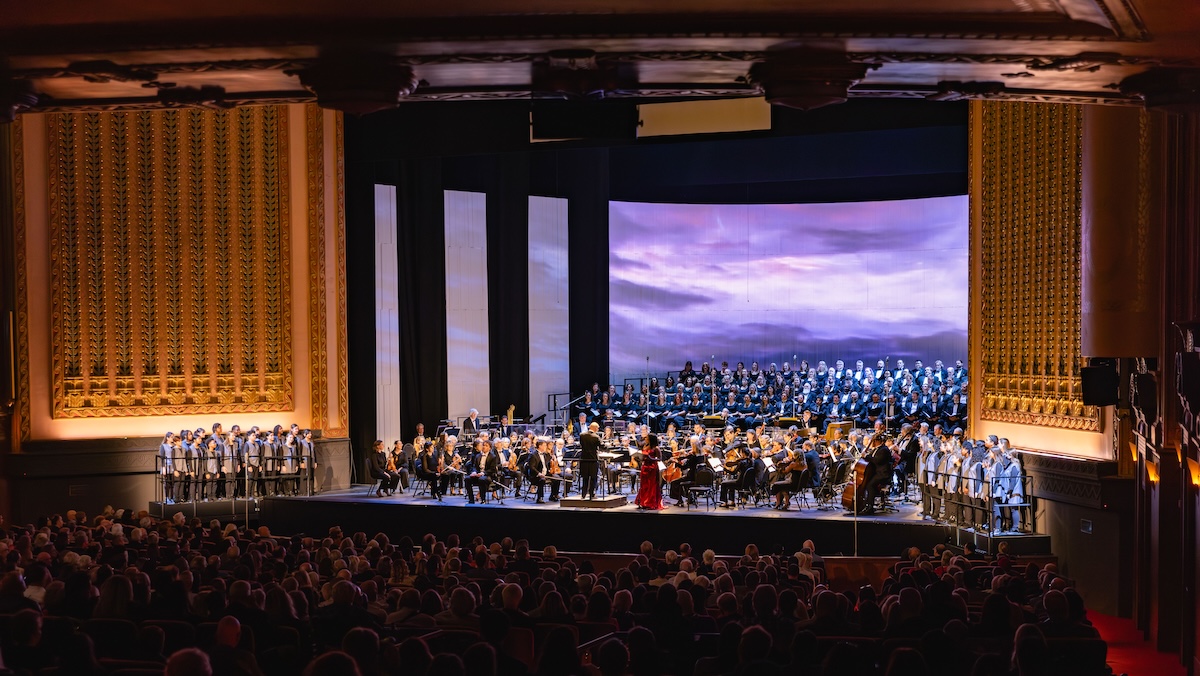

Carl Orff’s Carmina Burana is an excellent intro to choral music: only 65 minutes long and already quite familiar as the dramatic flair of “O Fortuna” can be heard in a multitude of film, television and commercial projects. This 1936 cantata is having a limited run at Lyric Opera, under the passionate baton of Music Director Enrique Mazzola, featuring the Lyric Opera orchestra and chorus, each group numbering about 100 members. Michael Black directs the chorus and Josephine Lee directs the 32-member children’s chorus at the end.
A 13th-century medieval monastic manuscript discovered in Bavaria is the source material for the music. Written by anonymous wandering clerics called Goliards, the tome contains secular songs and poems about fate, love and lust, drinking and the joys of spring evocative of Chaucer’s The Canterbury Tales. There’s also a shout-out for the love of Queen Eleanor of Aquitaine and for goddess of love Venus.
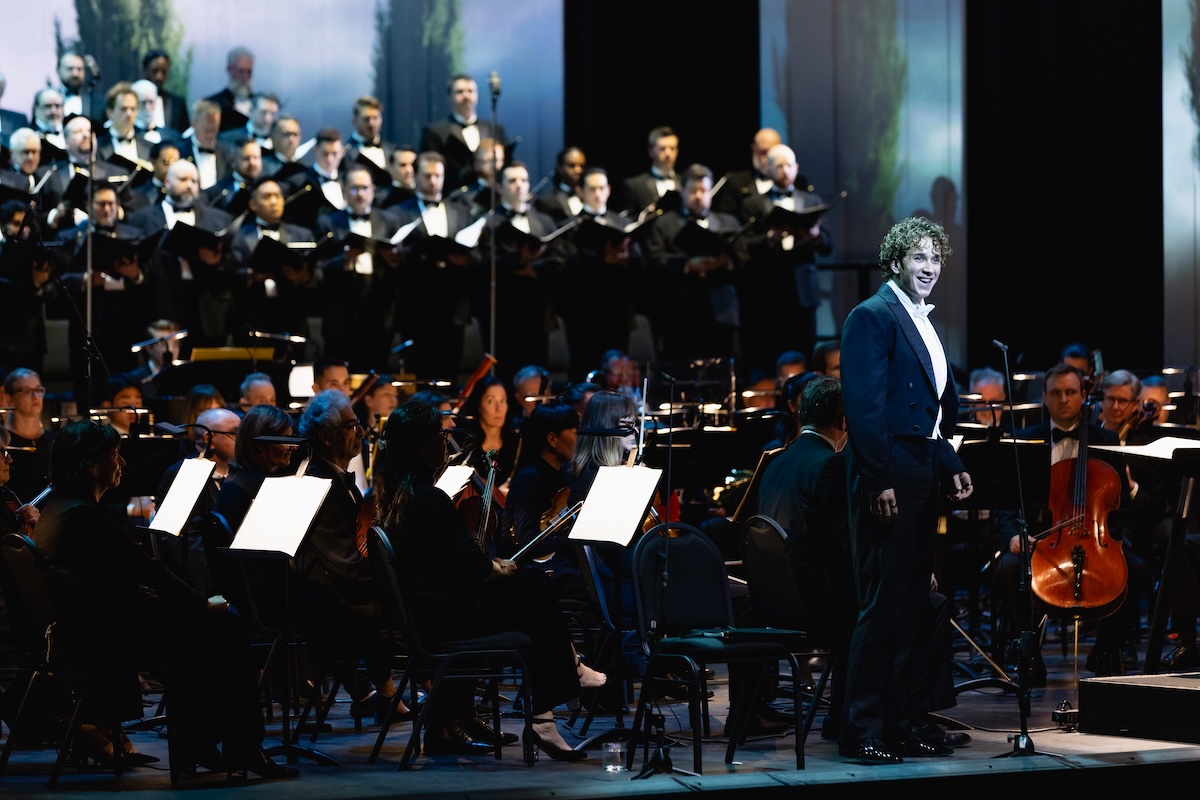
The German composer set the 25 poems in medieval German and Latin to music, “driven purely by huge orchestral forces and driving rhythms—almost primitive primal rhythms—rather than beautiful melodies,” said Lyric’s Chorus Director and head of music Michael Black. “Melodically, it’s not that riveting, but rhythmically and textually it is.” The frequent plucking of cello strings provides that heartbeat and flute solos mimic birds wafting on springtime breezes.
The sections include Primo Vere (“In Springtime”), Uf Dem Anger (“On the Green”), In Taberna (“In the Tavern”), and Cour D’Amours (“The Court of Love”), bookended by that highly recognizable Fortuna Imperatrix Mundi (“Fortune, Empress of the World”). The third act feels more modern, choppy and dissonant.
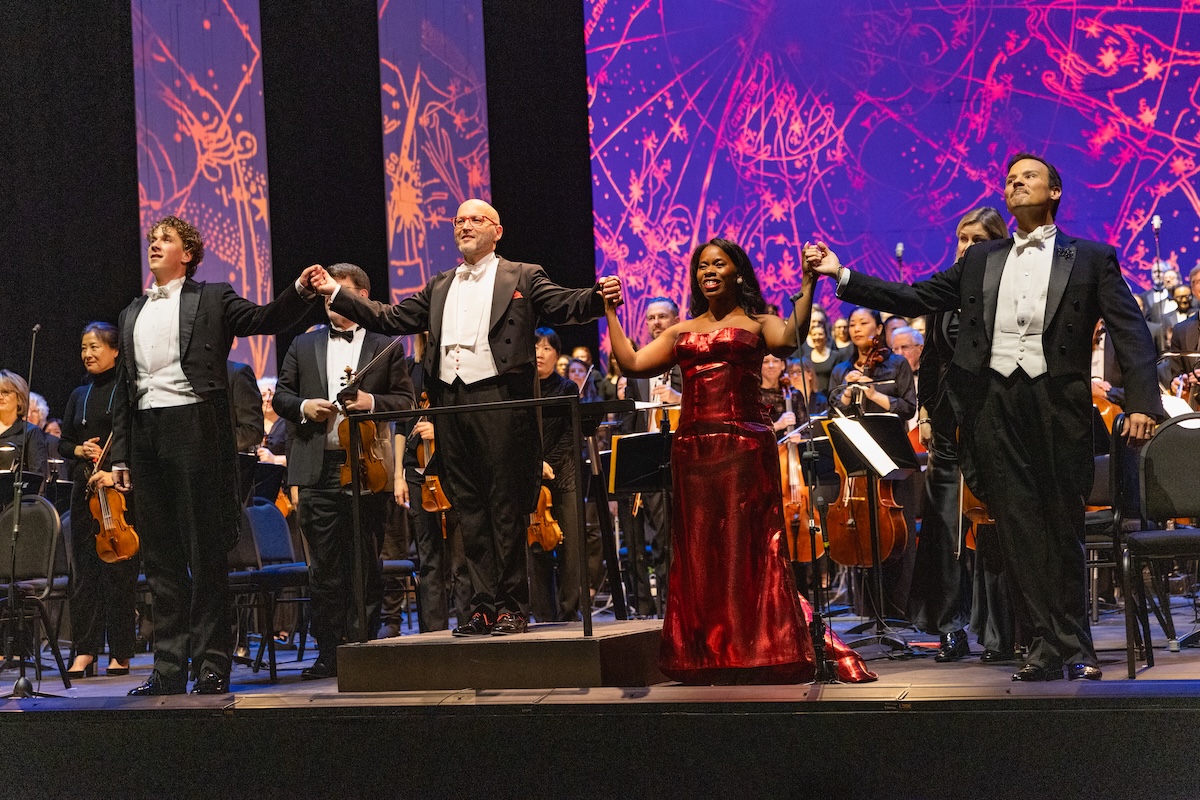
Featured baritone is the young, expressive and impressive Ian Rucker, who delivers some of the evening’s most mellifluous moments. Tenor David Portillo brings dark humor to the “Olim lacus colueram” portion as a swan describing in first person the agony of being roasted and eaten. Soprano Jasmine Habersham brings a lovelorn lady to life in a gorgeous red metallic gown. Orff challenges all singers to push beyond their typical ranges, Dr. Johann Buis, the pre-show speaker, noted, and that the premiere performance in 1937 received mixed reviews. Overall, the piece “affirms humanity,” he said.
The soaring and poignant vocals are supported by rolling images on the cyclorama at the back of the stage (designed by Adam Larsen), rolling from flames to flowers, constellations to lovers, as well as at that ubiquitous wheel of fortune: “those who love know the torments of the wheel.”
This piece is the original Wheel! Of! Fortune! And what’s the English translation of that exalted oratorio? It’s not this, but this:
O Fortune,
like the moon
you are changeable,
ever waxing,
ever waning,
hateful life
first oppresses
and then soothes
as fancy takes it;
poverty
and power
it melts them like ice
fate – monstrous
and empty,
you whirling wheel,
you are malevolent,
well-being is vain
and always fades to nothing,
shadowed
and veiled
you plague me too;
now through the game
I bring my bare back
to your villainy
fate is against me
in health
and virtue,
driven on
and weighted down,
always enslaved.
so at this hour
without delay
pluck the vibrating strings;
since Fate
strikes down the strong man,
everyone weep with me!
Carmina Burana will be performed only twice more on November 16th and 18th at Lyric Opera, 20 N. Wacker Drive. Tickets start at $104 and are available on the Lyric website. Upcoming Lyric concerts include a collaboration with Chicago’s own Billy Corgan of Smashing Pumpkins, A Night of Mellon Collie and Infinite Sadness, running November 21-30.
For more information on this and other productions, see theatreinchicago.com.
Did you enjoy this post? Please consider supporting Third Coast Review’s arts and culture coverage by making a donation. Choose the amount that works best for you, and know how much we appreciate your support!
