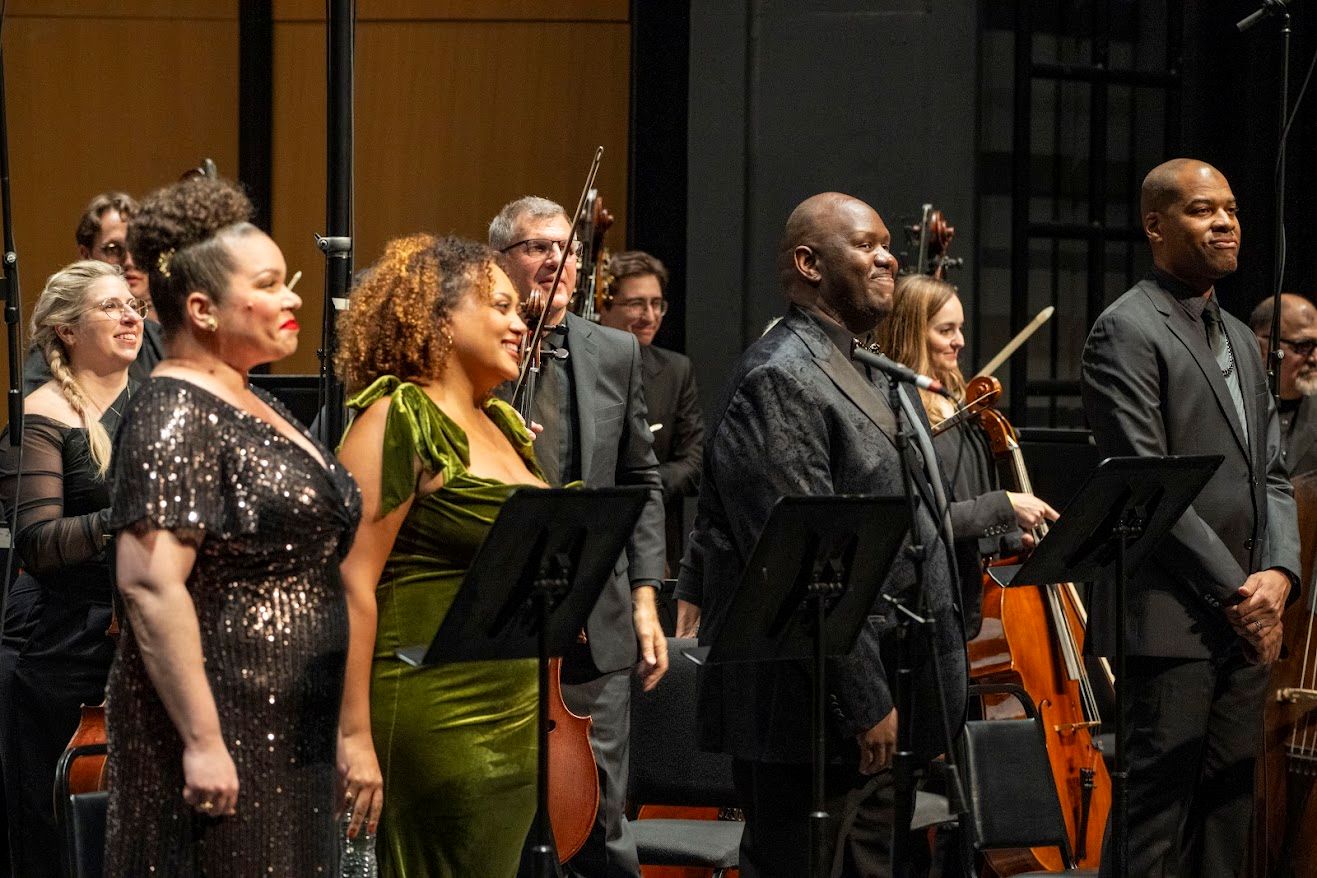

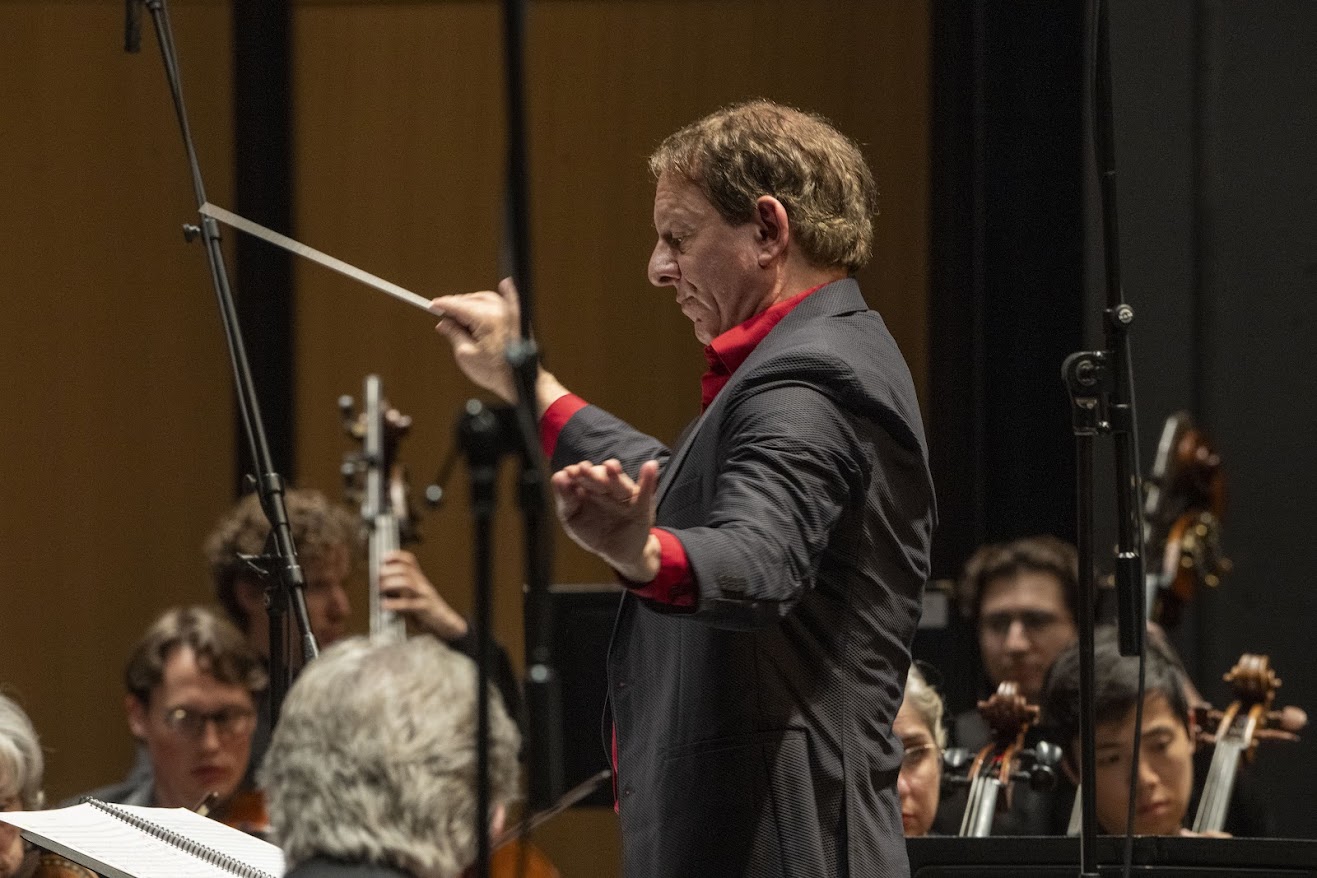
Ear Taxi Festival 2025 continued its run of excellence with an Anchor Performance by the Chicago Philharmonic at Harris Theater on Saturday night. Under the direction of Scott Speck, Marta Aznavoorian joined the Chicago Phil for the world premiere of Invictus, a piano concerto by Chicago-based composer Stacy Garrop.
Following intermission, the Chicago Phil and Scott Speck were joined by a group of amazing vocal performers for an astonishing work, African American Requiem by Chicago native Damien Geter. Soprano Tiana Sorenson, mezzo-soprano Leah Dexter, tenor Cameo Humes, and bass Khary Laurent formed a fabulous quartet together. The Apollo Chorus, under the direction of Stephen Alltop, offered excellent diction and fugal interplay. Festival Executive Director Tim Corpus promised this concert would be huge, and he was right.
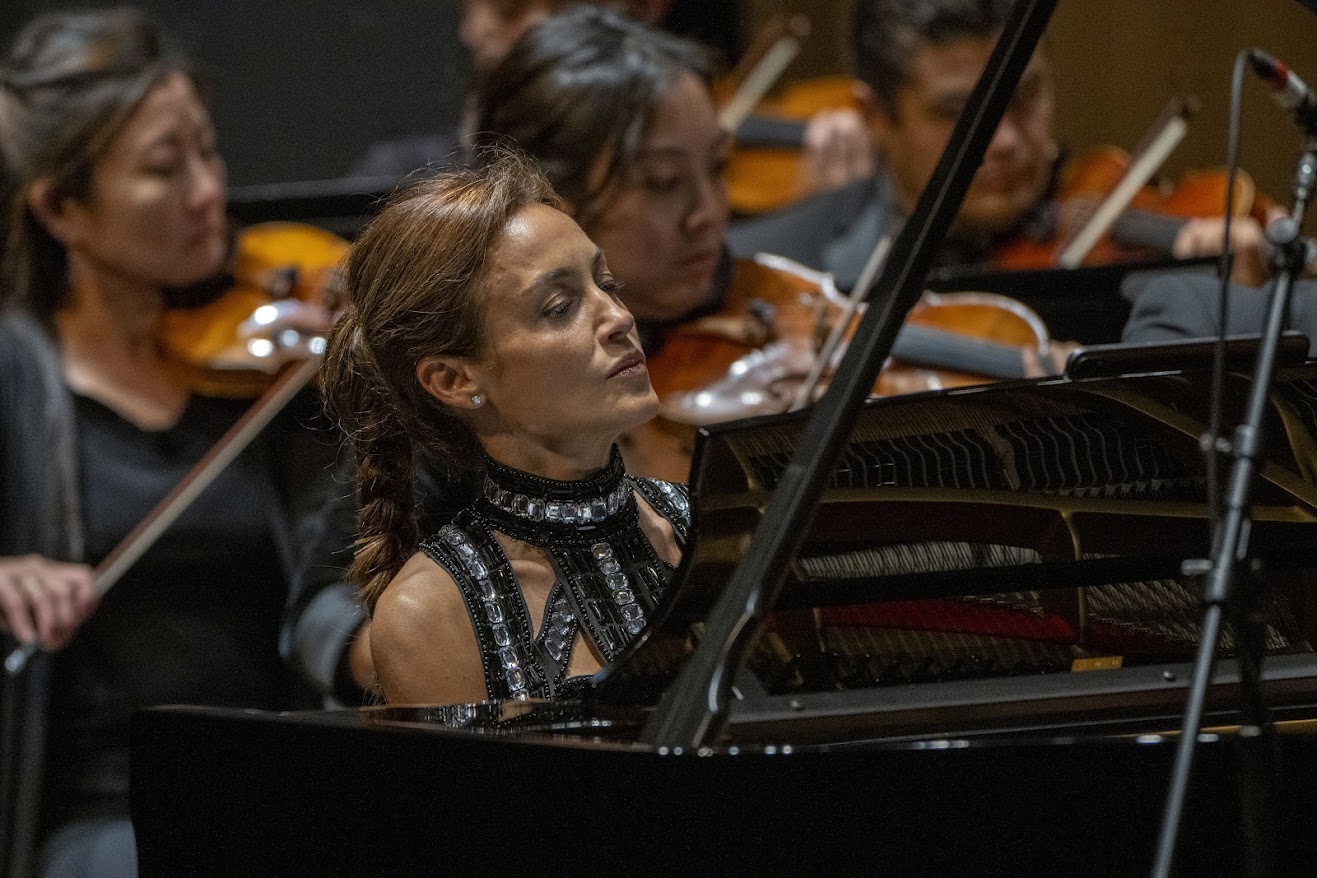
Garrop based Invictus on the poem of the same name by William Ernest Henley, with each of the concerto’s four movements setting one of the first four lines of the poem to music. Noting that the Latin Invictus stands for unconquerable or undefeated, Speck described how the piano struggles to rise up, only for the orchestra to push it down.
The first movement “Out of the nights that covers me” starts with Aznavoorian banging notes and chords at the bottom of the piano, as she was joined first by the basses playing deep notes. As the rest of the orchestra sounded in, it created a humming sound like a swarm of bees. Eventually gentle sounds were backed up violins and woodwinds. Aznavoorian was very passionate through a cadenza toward the end of the first movement. At times she was hard to hear over the orchestra.
The second movement, “Black as the pit from pole to pole,” allowed Aznavoorian to show off amazing fingering techniques with a series of perfect runs where she played every note like the previous one. The movement ended in a rambunctious passage with the brass sounding over strings and drums, while Aznavoorian’s hands bounced from one end of the keyboard to the other.
The slower third movement, “I thank whatever Gods may be” was eerie yet luminous. As the violins quietly murmured at the top of their range, Aznavoorian played very gently. The winds and brass added seemingly random melodies. It ended with were passages of pizzicato on the strings that were not played precisely.
As the finale, “For my unconquered soul,” went forward, the piano kept trying to rise up. In answering it, the orchestra created a deflating sound, like balloons losing air. Finally, the piano and orchestra built up together to an exciting climax, although the piece ended quietly. All in all, it was very enjoyable premiere and the standing ovation was very deserving.
For the concert’s second half 200 performers filled the stage for Damien Geter’s African American Requiem. According to his bio, Geter “infuses classical music with various styles from the Black diaspora to create music that furthers the cause for social justice.”
Over the Latin Mass, Geter offered haunting glimpses of challenges African Americans have faced in this country. One example was an aria on Eric Garner’s tragic statements “I can’t breathe” as he died in the hands of the police. Tenor Cameo Humes sang it beautifully, getting quieter and quieter until he barely whispered.
Geter integrated other African American themes into the Requiem. While the chorus was singing “Mors stupebit,” soprano Sorenson, tenor Cameo Humes, and bass Khary Laurent were singing Lead Belly’s “There’s a Man Going Around,” and the orchestra various sections backed it all up. At its conclusion the audience applauded.
Singing together the quartet’s vibratos and tones blended wonderfully, especially in the “Offertory,” where, backed by gentle orchestration, they created a heavenly sound. In the “Kyria,” mezzo-soprano Dexter’s beautiful voice was aided by movement in her arms and hands.
The “Lacrimosa” was set to the “Star Spangled Banner,” which a clarinet first quietly played over a steady roll on the snare drum. Wherever the word “free” would have been sung, the melody paused. It was overlaid with the chorus singing the Latin “Lacrimosa.” Later, over the “Sanctus” Geter wove “Kum-Ba-Yah,” sung by Tenor Humes and the chorus, which swayed and clapped from back of the stage. The orchestra also joined in the fun.
The orchestra displayed many moments of excellence. During the “Tuba,” a brass chorale led the way. In other times, they backed up the chorus and soloists wonderfully.
The only downside was the length, which seemed to affect the audience near the end, when Dexter sang an extremely moving passage of Ida B Wells’ writing, “Lynching is a Color-Line Murder.” It was a mind-numbing explanation of the horrors Black people faced in Illinois. By this time, however, the performance had already run over an hour. Immediately afterward several audience members got up and left. It was a shame they did. A short time later the ending was very enjoyable, and the standing ovation was warranted.
Hosted by New Music Chicago, the Ear Taxi Festival continues through Sunday, November 2. Tonight, Violist Michael Hall will be performing several works at Blackstone Memorial Library, 4904 S. Lake Park Ave, Chicago, Monday, October 20, 6:00 pm.
Tomorrow there are two concert choices. The music of Gustavo Leone, Professor Emeritus from Loyola University, will be celebrated at Fourth Presbyterian’s Buchanan Chapel with several local performers. The program includes Leone’s String Quartet No. 4. 126 E. Chestnut, Chicago, Tuesday, October 21, 7:00 pm.
Second, Horatio May Chapel will be the venue for She Rises, a program of chamber music by women composers, including Florence Price’s String Quartet No. 2 in a-minor. 5800 N Ravenswood, Chicago, Tuesday, October 21. 7:00 pm. For more information, click here.
