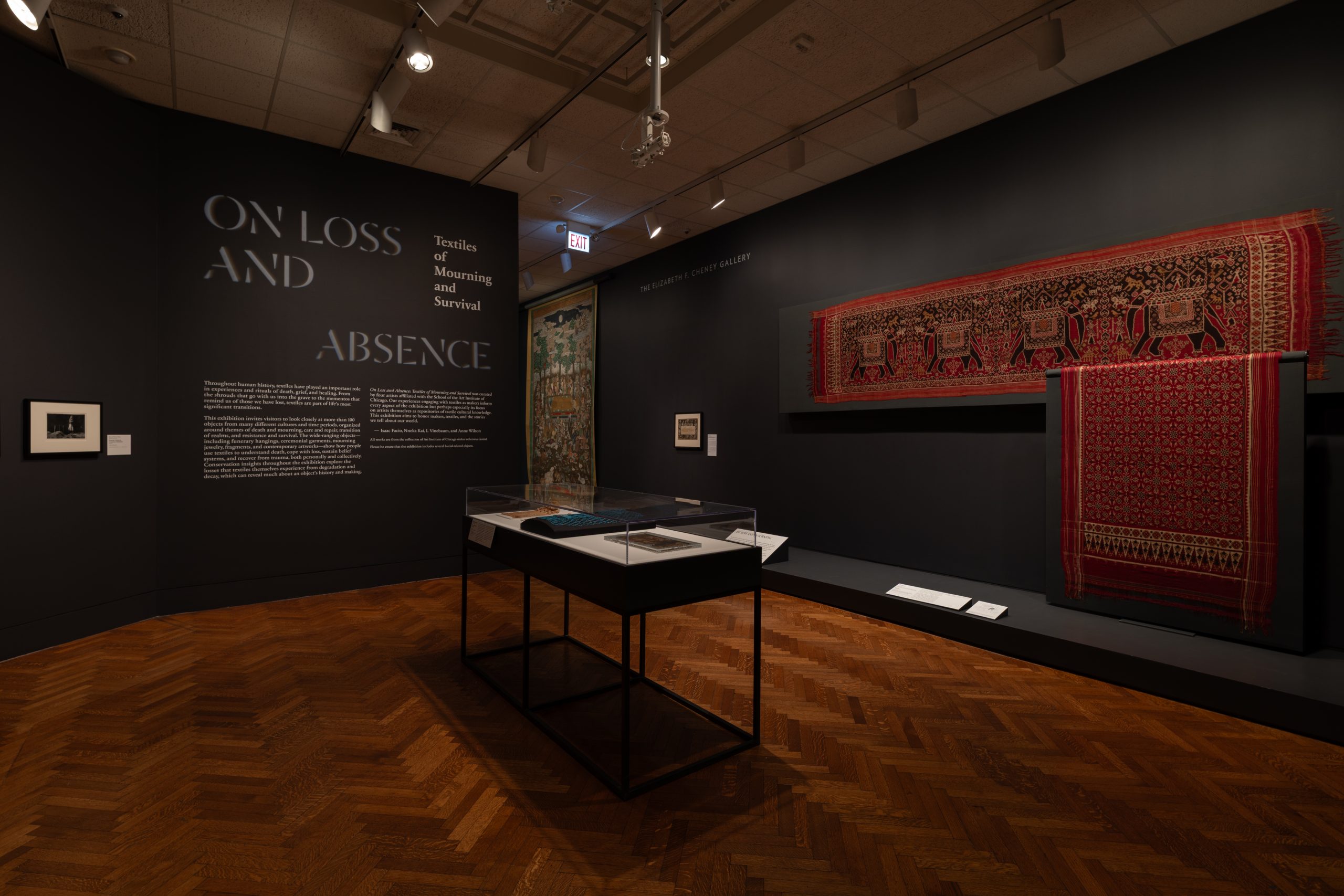
The exhibition On Loss and Absence: Textiles of Mourning and Survival is now on view at the Art Institute of Chicago. Anne Wilson, one of four curators who undertook this highly complex and moving exhibition, spoke with us. “This is an exhibition about loss and absence and textiles in their ubiquity across time periods, across places, across cultures, the connections textiles have to humans and these very meaningful life events: life and death.”
One thing was immediately evident walking through the textile galleries: this show is one to breathe in completely. Yes, through the eyes of course, but also the special experience that lies beyond the visual. This is one of those shows that will follow visitors long after they leave. It is thoroughly thought-provoking. It is quiet and poetic with moments that are joyous and lively. But no matter what a viewer brings of themselves to this show and no matter how it is they experience it, deep emotions will be invited into that experience. It is evident while walking through the galleries with other visitors viewing the show, a deep emotion is palpable. Viewers were visibly engaged, considering the inescapable facts of human existence: loss, mourning and survival. The show is a full acknowledgment of the mortality of ourselves, of loved ones, of cultures. But it is also a celebratory exhibition, a reclaiming of life and memory, culture and ritual.
The opening exhibition text reads, “This exhibition invites visitors to look closely at more than 100 objects from many different cultures and time periods, organized around themes of death and mourning, care and repair, transition of realms and resistance and survival.” These themes result in a kind of visual narrative that invites the viewer to enter these themes through the objects.
From the start of the show in the first galleries, an array of mourning objects and garments deal with the loss of the human body and textiles’ deep connection to the experience of loss and mourning. On display are ceremonial pieces to be worn by the living to honor the deceased or in a funerary context the deceased would be wrapped in these textiles or they would line the burial place itself. This exhibition asks visitors to consider their thoughts about loss and mourning and its inevitable attachment to their own mortality. The exhibition not only makes the inherent complexity of the subject of mortality accessible, it makes it something to ponder as in a meditation. Beyond mortality and mourning, the work moves us through the other themes that speak through the objects. The conversations between the galleries and the objects within them discuss how we consider care within these challenging life moments through the spiritual realm, through ritual and through the act of resistance.
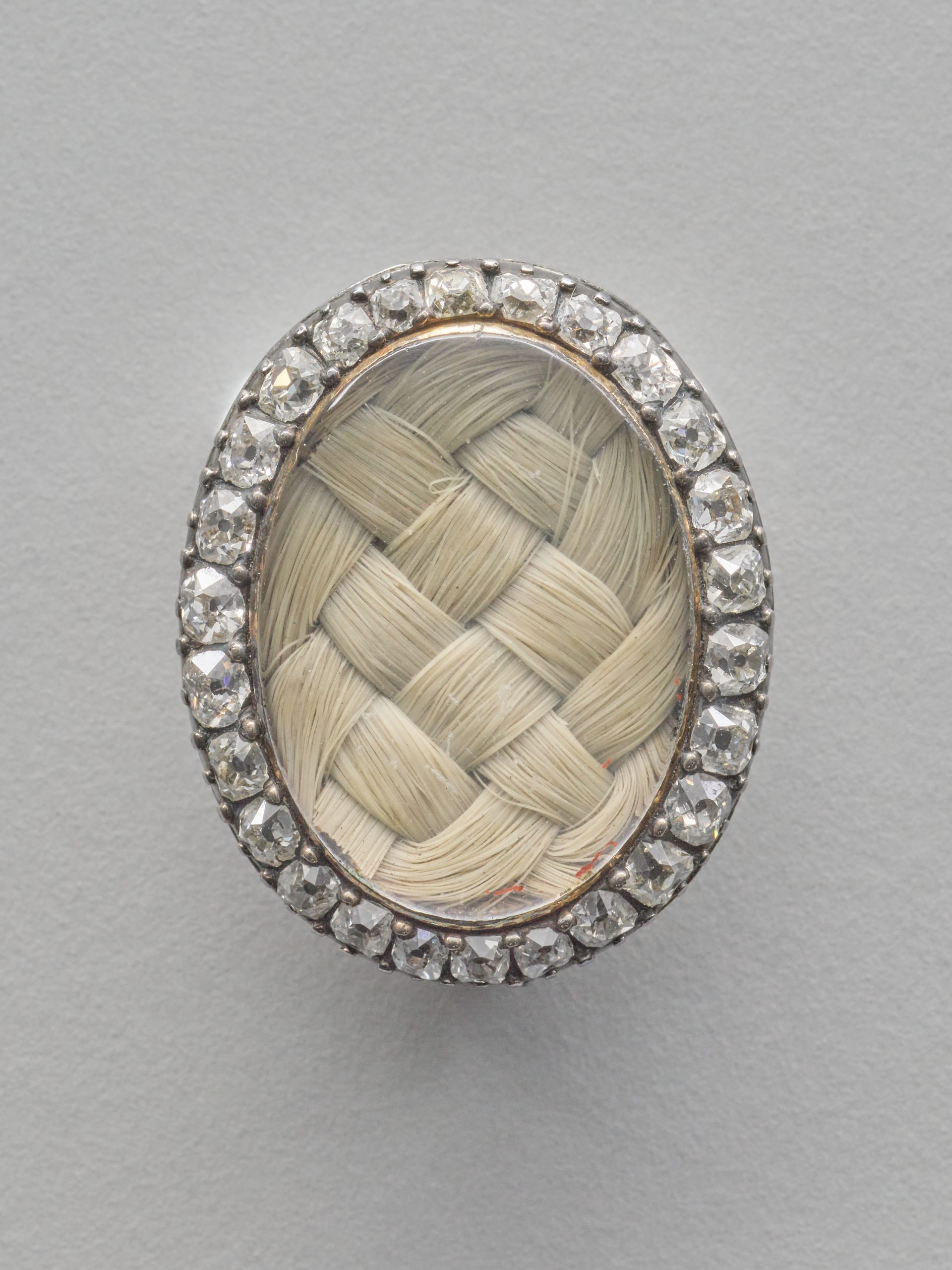
Many of the objects in the exhibition are memorials but also express the action of memorializing whether they are vestments or ceremonial wrappings used in ceremonies or work created by artists to express an act of memorializing. The powerful curation of the exhibition facilitates viewers’ experience with the objects, the objects themselves often in visual conversation. The 1827 Memorial Pin above and Nick Cave’s 2023 work, Untitled, are in visual conversation.
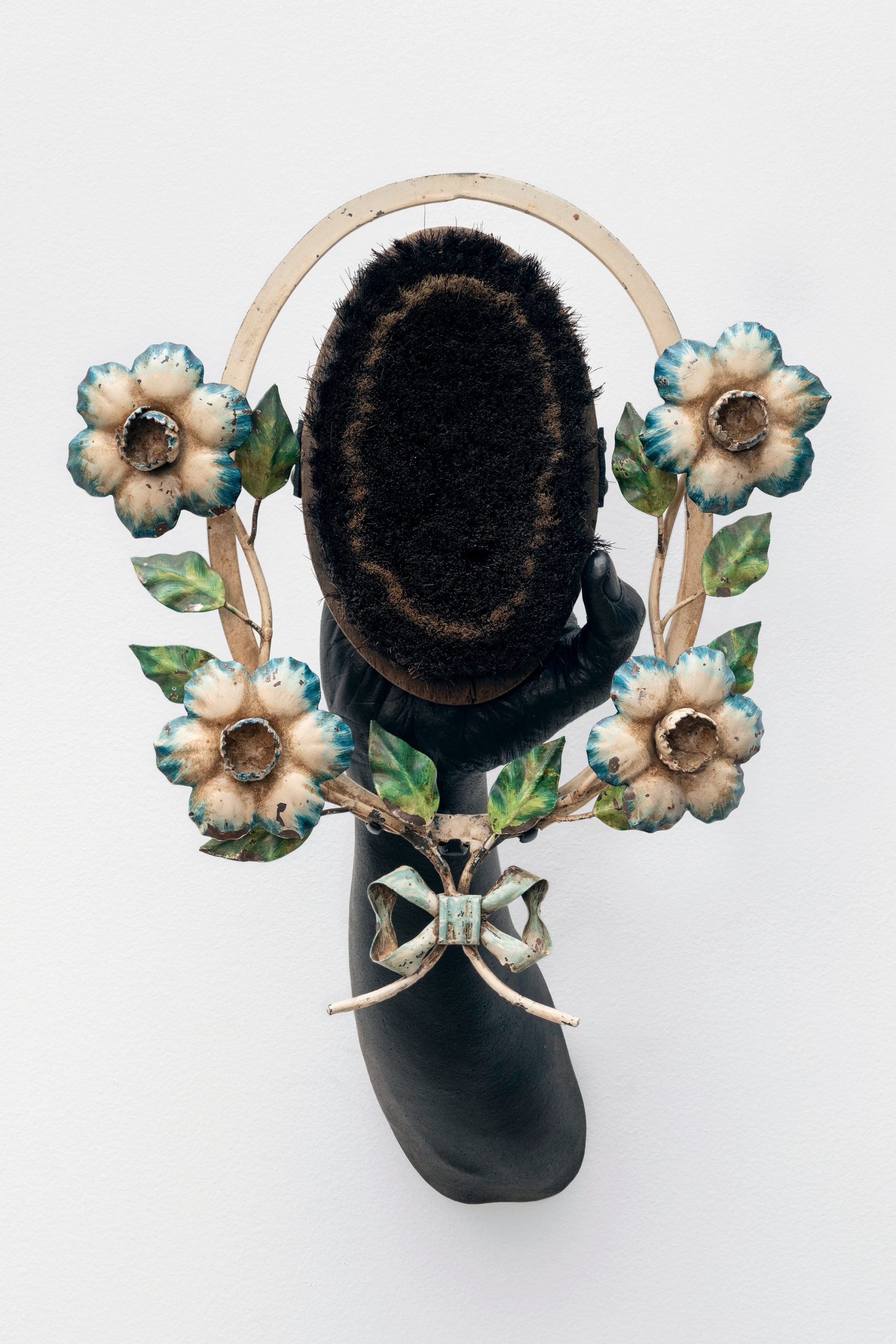
Although these are objects from very different time periods and created from different media, they are both ways of memorializing. Both of these objects possess a part of a person. In Memorial Pin, hair of a Robert Muirheid is woven and under glass, surrounded by diamonds; the pin is a way for the wearer to memorialize the deceased and very much a product of its time for those of means. The found hairbrush in Cave’s work possesses whispers of a history of race in America. The hairbrush, shaped much like a mirror and held up to the viewer, invites contemplation while the presentation echoes a funerary wreath. It is an act of mourning the loss of innocent Black lives throughout the history of America while it is a memorial to those lives lost to police brutality and systemic racism and a call to action.
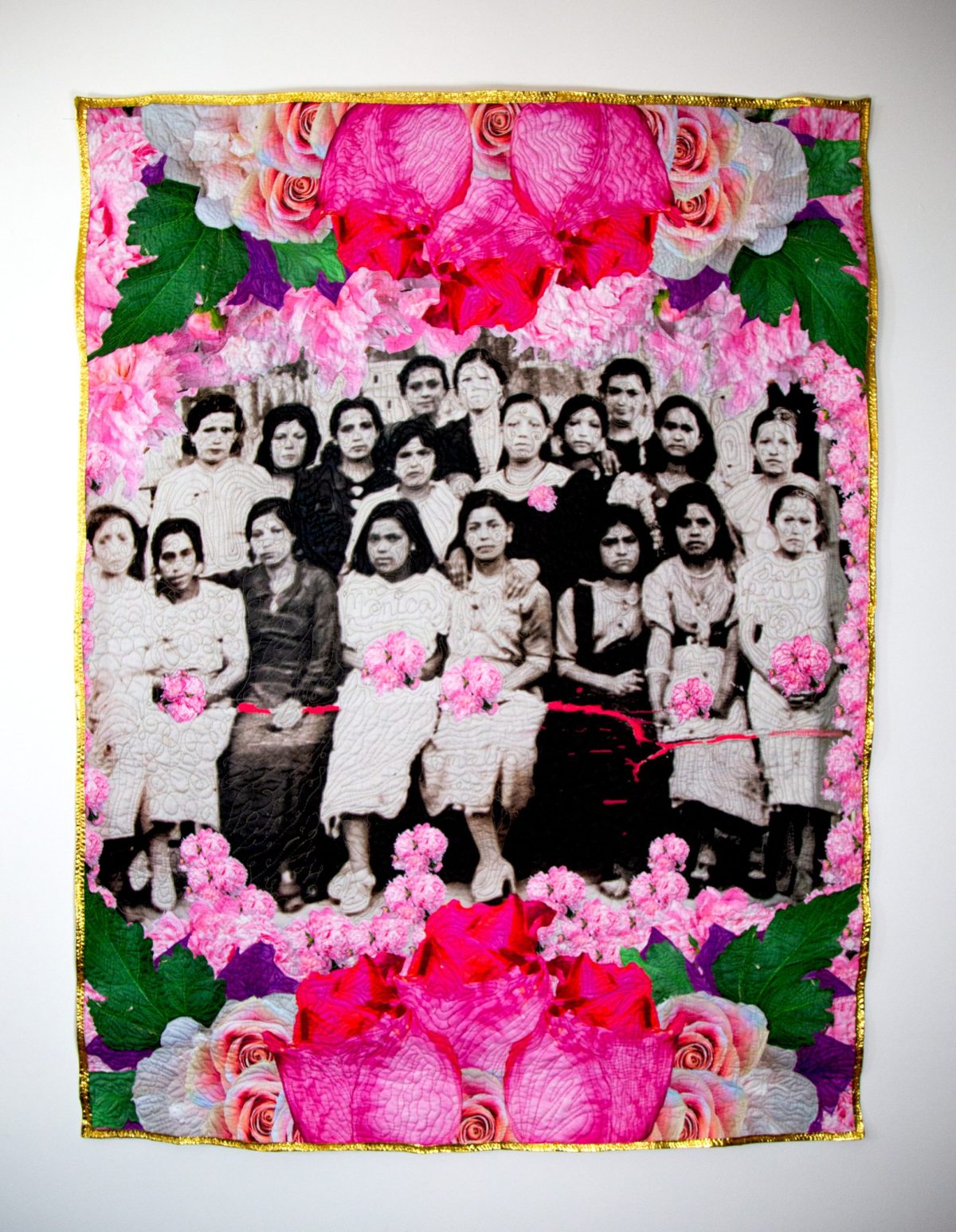
Carina Yepez’s collaborative work based on a photograph from her grandmother’s friend, Amalia, hangs brightly near the somber Nick Cave works, mourning samplers and small mourning objects. But this work is also somber despite its colorful floral framing of the recreated photograph. The artist collaborated with her aunt, Maricela Herrera, and her mother, Lula Yepez, and the collaboration furthers the work’s embrace and celebration of the spaces of women sharing their stories, hopes and dreams even amid the challenges of oppression in society. The collaborative bond of creating celebrates the connections between the women making the piece while the process and resulting work both mourns and celebrates the women in the photograph. This piece is a powerful statement of agency and freedom.
As visitors continue through the exhibition, there is a teaching moment with a video showing the painstaking and incredible conservation work of the textiles in the show. Surrounding the video are fragments of textiles to give viewers a close-up into the power and delicate remains of textiles from a multitude of time periods, regions of the world and cultures. This is a compelling and engaging addition to the exhibition, bringing the viewer closer to what makes the history of textiles so special—the innate immediacy of the artform. The immediacy of creating textiles through processes that feel inherently meditative and as this exhibition shows, how textiles intimately exist for mourning, remembrance, ritual and identity.
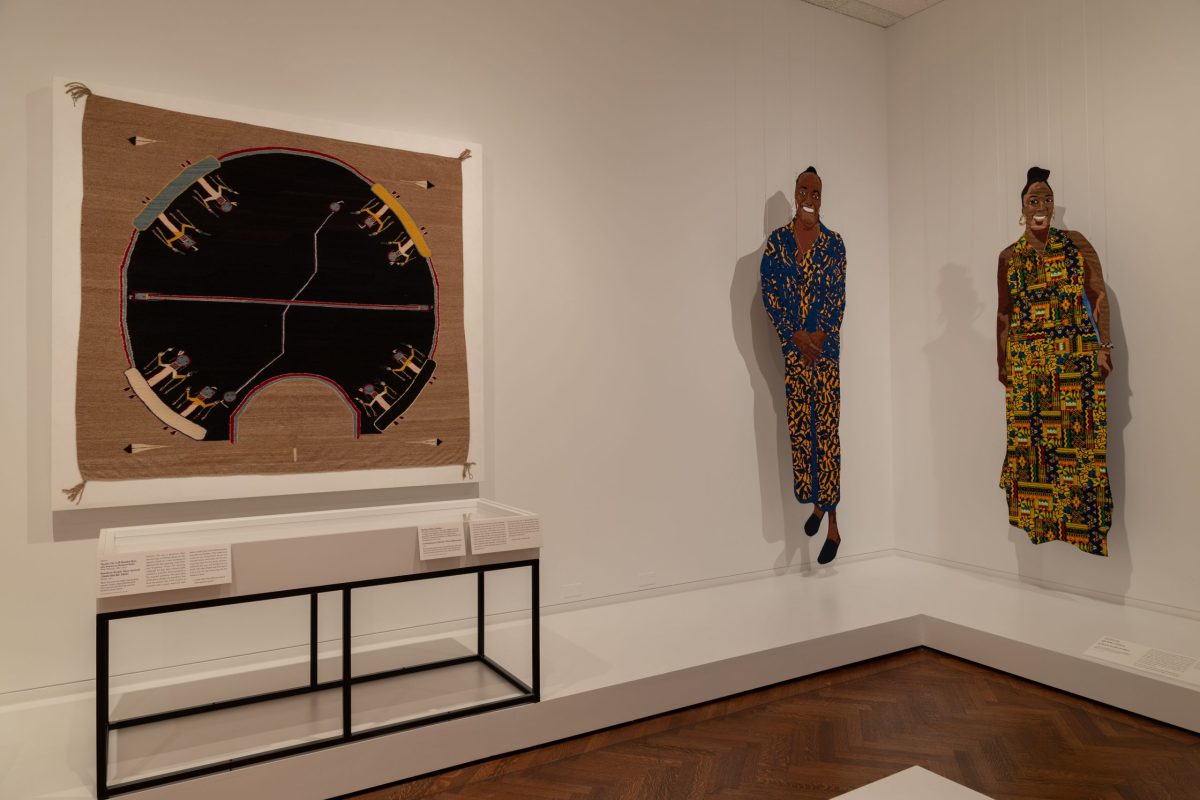
Dorothy Burge’s textile portraits of La Tanya Jenifor-Sublett and Michelle Clopton stand ten feet tall and depict two women who are survivors of the prison industrial complex. The size of the portraits signals visibility and hope, agency and courage and acts of resistance to regain their freedom. These portraits celebrate activism and community and how these actions combat injustice. The bright textiles employed by Burge embrace La Tanya and Michelle as they connect with the viewer as figures of resistance and justice.
In one way or another, we all think about mortality and even ritual, whether it be religious or spiritual, an act of ritual or memory, or an act of resistance meets resilience. While visitors walk through these galleries and take it all in, it will be an experience of thoughtfulness and, yes, mourning. But it is also inspirational and gets us thinking about how individuals have been remembered, how cultures have been remembered, how art is not just pretty but deep. This show quietly guides viewers beyond aesthetics (although everything is beautiful), it guides us into the beauty that is sitting with mourning, loss, and life. Hands made these objects. Hands with some kind of emotional pain, general grief, community, warmth directed these objects and the curation of the exhibition itself. In this exhibition, there is history—spiritual, emotional, intellectual. But in this show, we also see and definitely feel an empathy that is so needed always but especially now. If there was ever a time for On Loss and Absence: Textiles of Mourning and Survival, it is now.
On Loss and Absence: Textiles of Mourning and Survival is on view at the Art Institute of Chicago, 111 S. Michigan Ave., through March 15. Information on days, hours and admission here.
Support arts and culture journalism today. This work doesn't happen without your support. Contribute today and ensure we can continue to share the latest reviews, essays, and previews of the most anticipated arts and culture events across the city.he city.
