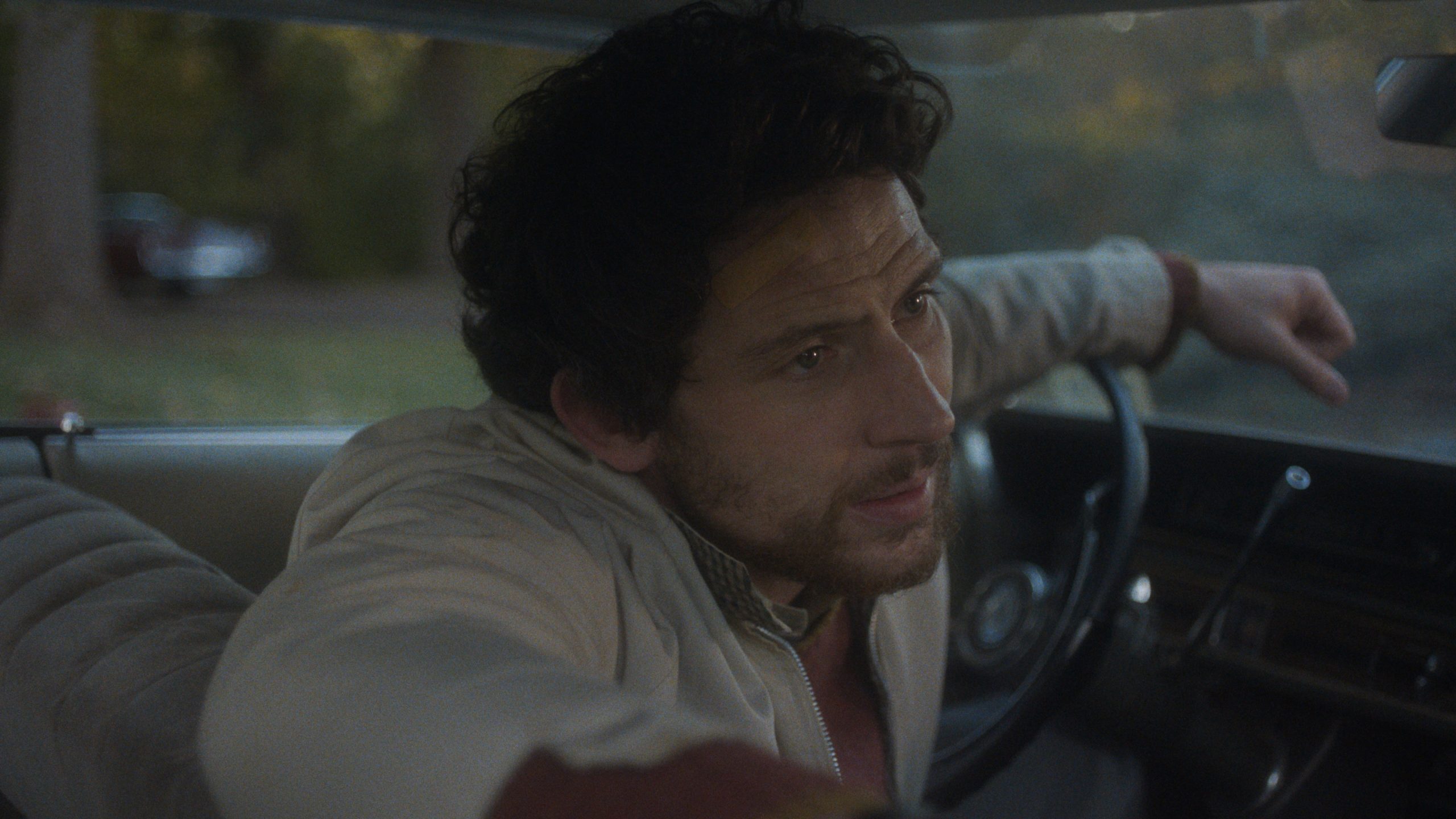

The Mastermind is an indie flick, a heist movie, a period piece, and a meditation on American life, but what I failed to realize the first time I watched it is that it also has an excellent score. You can imagine my surprise when I saw that it was playing at MUBI Fest with a live orchestra. I already knew I loved the film. But I went to MUBI Fest hoping to see and hear what I had failed to appreciate musically on my first viewing.
Writer/director Kelly Reichardt is known for slow, understated movies about normal people (Wendy and Lucy, First Cow, Certain Women). The Mastermind is no exception. Inspired by true events, it follows the story of JB Mooney (Josh O’Connor), an unemployed suburban dad who plots to steal artwork from a local museum. JB’s parents (Hope Davis, Bill Camp), wife (Alana Haim), and children (Sterling and Jasper Thompson) are disappointed, yet seemingly unfazed by his disengagement with them, and life in general.
The family goes through the motions of life together, visiting museums, sharing family dinners, and running errands. Everyone appears content with the ordinariness of everyday life, except for JB. Reichardt captures JB’s restlessness through his passive looks, his slouchy, unanimated body language, and the score. He looks like a checked-out, unambitious man, but when the music plays, we know JB’s mind is at work.
The soundtrack plays minimalist avant garde jazz. We mostly hear trumpet, drums, and bass, but that’s enough. This movie has style. And not just musically—the subtle stylistic choices of the clothing, haircuts, cars, and architecture let you know we’re in the 1970s without taking on a campy, retro aesthetic. It looks understated, unintentional, and cool. Even the way JB and his wife relate to each other, and the unearned respect he gets from his parents, remind us that we’re in a slightly different time.
JB speaks very little to his family, even though there is so much happening inside of his head. He moves slowly. His face is often expressionless. He says just enough to appease everyone else. His domestic life is uninspired, but his internal thoughts run wild. This is where I first noticed the music. When the orchestra came alive with improvisational jazz, it’s not to celebrate the heist. It’s to show the excitement—and chaos happening inside of JB’s mind. This sharply contrasts with what we see from him outwardly.
Josh O’Connor plays JB flawlessly, fully embodying his character’s charm, aloofness, and desperation. It’s hard to believe that this is the same guy from The Crown or Challengers.
Alana Haim (yes, from the band, Haim), who plays JB’s wife, Terri, isn’t as versatile, but brings a certain controlled intensity that we’ve seen variants of before in The Drama and Licorice Pizza. Terri is quiet and calm, but also willing to hit her husband in the head with a heavy 1970s telephone when the situation calls for it. Coincidentally, this incident leads to JB going on the lam.
The cast is rounded out by Fred (John Magaro) and Maud (Gaby Hoffman), JB’s art school friends. Fred is excited and supportive of JB, while Maud is disgusted by his actions. They see JB for who he really is. Fred celebrates his audacity and sense of adventure, while Maud detests his selfishness. Ironically, JB is more honest with and seen by these two than by anyone in his own family. This is also in the latter half of the movie, where there is noticeably less music. In the second half of the movie, the music dies down.
The music seems to be a substitute for JB’s honest words when he’s excited, scared, or activated, but can’t express it. We don’t know how he’s feeling from his face, body language, or words. We know because we hear the trumpet and the bass go. When he’s with his friends, he’s more raw. He doesn’t need the soundtrack.
The music comes back strongly in the final scenes, when JB calls Terri, apologizes, and asks for money. His mind lights up; he’s scheming again. We hear the bass thump. Terri hangs up. We hear the music again a few minutes later when he’s robbing a little old lady to buy bus fare to get to Canada. And again when his running finally comes to an end. It's over. The music finally stops for good. For JB, the rush was incredible.
Whether you’re a student of music, or a little more inept, as I am, The Mastermind will have the ability to connect with you. JB’s desire for glory and his individualistic pursuit of it are relatable on some level, even to the meekest among us. In many ways, he’s just a normal guy hoping to do something extraordinary. Though he fails miserably, it’s hard to hate him.
The Mastermind screened recently as part of the one-weekend event MUBI Fest, and is now streaming.
If you enjoyed this post, please consider supporting Third Coast Review’s arts and culture coverage by making a donation. Choose the amount that works best for you, and know it goes directly to support our writers and contributors.
