This is the third in our series of articles on The Art of Survival, in which we explore how small Chicago arts organizations are surviving post-COVID and weathering the anti-humanist and anti-diversity actions of our federal government. This work was made possible in part by funding from the Alliance Matters campaign, an initiative of Chicago Independent Media Alliance (CIMA) and the Field Foundation. We have one more article in the series and we’ll report on that at the end of this article.
Authoritarians like to ban books, especially when those tinpot despots are weak, dim and unpopular. The current wave of grown white men being afraid of ideas crystallized around the right-wing campaign against Nikole Hannah-Jones’s Pulitzer Prize-winning collection of American history essays, The 1619 Project. PEN America recorded over 10,000 public school book bans in 2023. Book bans in Tennessee were the largest national increase in 2025, rising from 350 to 1,252 titles, while the banned book list in Texas rose to 1,512.
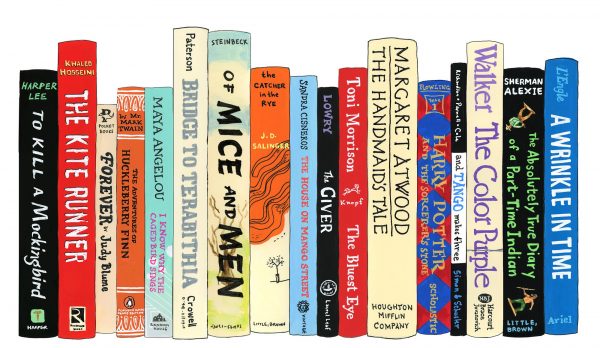
Illinois banned book bans in 2023. “We refuse to let a vitriolic strain of white nationalism coursing through our country determine whose histories are told, not in Illinois,” said Governor J.B. Pritzker. Under this law, libraries or schools that attempt to ban books will lose state funds and must adopt the American Library Association’s Library Bill of Rights or something similar.
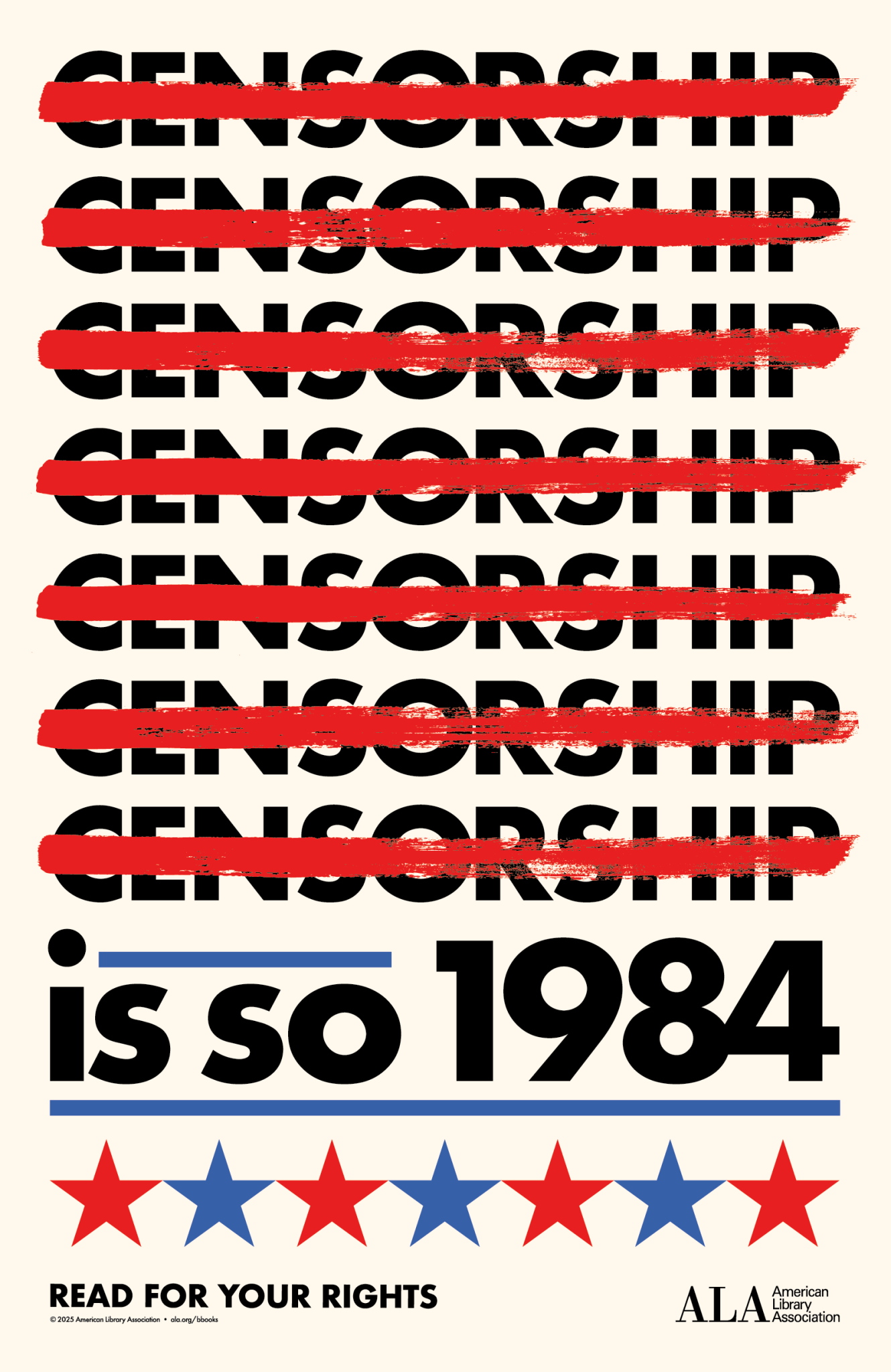
Read Banned Books
The official library card signup month is September (but encouraged year-round, of course, for reading and much more), and ubiquitous Little Free Libraries continue a brisk community book exchange. The ALA, Honorary Chair George Takei, with partner organizations like the ACLU, will host the annual Banned Books Week from October 5-11, 2025. Third Coast Review, implementing a grant from the Chicago Independent Media Alliance, first surveyed Chicago theaters and now chats with area independent bookstore owners to get a carrel-eye view of how they’re weathering the commercial book space post-coronavirus lockdown and during this federal government’s assault on free speech and ideas.
Bookstores are “Third Places” in Communities
How should we think about books in our current AI-assisted culture, especially since anti-intellectualism has further infected our body politic? Real reading takes time, space and solitude, plus books don’t necessarily offer the addictive dopamine rush or instant gratification of smart device use. Bookstores provide an important “third place” (not home or work) during the COVID-19 pandemic and beyond.
Bookstores Provided Crucial COVID Coping and Entertainment
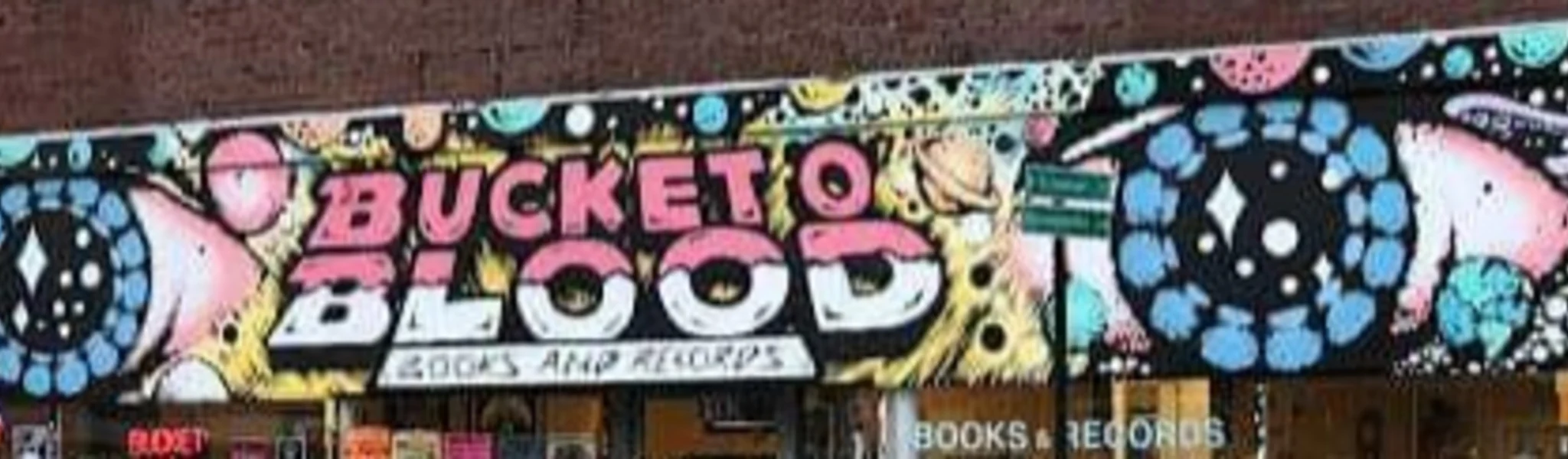
Avondale’s Bucket O’Blood Books & Records ratcheted up their community-first mindset during the pandemic, adding jigsaw puzzles to books, records and movies to their no-contact delivery service during the shutdown. Clients often purchased a few extra books, since entertainment options were limited. “Even years later, we still have customers talk about how much they appreciated our making deliveries during the pandemic,” said owner Grant McKee. “And we’ve been able to broaden our product selections to introduce newer authors and marginalized voices.”
Just east in Roscoe Village, Roscoe Books continued to connect with customers even after the storefront was shut down too (and also continued to pay the staff). The store took orders online as well and offered free home delivery in the neighborhood and $1 delivery for those outside. “Customers were looking for a way to obtain books and were happy to give local businesses a chance,” said owner Erika VanDam. During the shutdown, she and her team arranged the 1,200 square foot store’s interior to be more efficient for processing orders, like breaking down displays to make room for sorting and pickup tables.
Milwaukee Avenue is a Bookstore Hub
During COVID, Wicker Park’s Volumes Bookcafe quadrupled online sales, and also “did pickups, deliveries, blind dates with puzzles—we pivoted at least half a dozen times,” said owner Rebecca George. Several staff moved from the city following the pandemic and the store also lost its space in March 2021, going online and into popup events until they found a new space down the street a year later (in addition to Volumes, there are quite a few bookstores on or near Milwaukee Avenue, because of high foot traffic, a propensity for small businesses and avid readers). When the world reopened, Volumes remained more cautious and is hosting fewer events. To process that moment, George recommends Michael Lewis’s The Premonition: A Pandemic Story and Clare Pollard’s novel Delphi.
Bookstores Remained Nimble During COVID Shutdown
“As hard as the pandemic’s first year was, I believe our store became a better, stronger and more efficient business,” VanDam added. “My staff and I learned to work together in new ways and put some helpful systems in place. And I learned that as a business owner, I had a greater ability to adapt to new situations than I realized.” She promotes Weike Wang’s Joan is Okay and Dani Shapiro’s Signal Fires because of “the lovely job of portraying those early days.”
Post-COVID, “Bucket O’Blood has been doing quite well,” McKee said. They’ve seen a huge boom in those buying several types of fiction, including horror, fantasy, and dystopian science fiction, perhaps to prepare for our current Orwellian/Atwoodian reality. McKee says that Sarah Pinsker’s Song for a New Day and Philip K. Dick’s The Penultimate Truth, published in 1964 and set in 2025, presaged the type of struggles we’re currently experiencing.
Local Bookstores Support Anti-Corporate Boycotts

Timothy Wurman, owner of Lakeview’s Three Avenues Bookshop, says his store is still benefiting from the anti-Amazon sentiment that started during the pandemic, although they opened in November 2022, at the tail end of the shutdown. He recommended LeUyen Pham’s picture book Outside, Inside as an informative kids’ look at the pandemic, as well as Danny Caine’s How to Protect Bookstores and Why: The Present and Future of Bookselling (who also wrote How to Resist Amazon and Why).
Three Avenues’ mission is to highlight marginalized voices and connect communities through literacy and books. “Bookstores and libraries are community hubs where information and ideas are discussed and highlighted,” Wurman said. By featuring books and curating displays, they inherently push back against attacks on democratic values.
Online Book Events During COVID and Beyond
The Abraham Lincoln Book Shop, Inc., Chicago's second-oldest oldest bookstore founded in 1938, increased online offerings during the pandemic like Take a Break with History, which still airs the first and third Friday of the month, as well as live author events on Facebook.
Chief of Staff M. Sylvia Castle is less concerned about censorship and book bans. “Who would ban Lincoln books?” she wondered. “The optics would be deadly to the group trying to ban our books about Lincoln and other American presidents, the Civil War and adjacent subjects. Not to say that we are immune, but antiquarian book shops are seldom targeted.”
Pointless Tariffs Hurt Book Businesses
However, Castle is worried about this administration’s needless taxes on consumers for new books. “Paying tariffs and the current overseas transportation costs might drive book prices so high that it could destroy consumer desire for paper books,” she said. “Perhaps bringing printing, binding and the like back to America would offset the cost of shipping from China. Chicago has a long history of printing, so bringing that back might be a good thing.”
McKee feels confident that Bucket O’Blood can continue to offer what customers want because they often work with small presses, counter-culture and revolutionary publishers. But a few other bookstores that feature Palestinian authors and stories expressed concerns over an increase in threats at those events. Three Avenues is committed to pushing back against censorship and outright hate. “We fight against the systems of white supremacy every single day in our bookstore,” said Wurman. “It’s nothing new to us and we will continue to fight like we have since we opened.”
Banned Books Become Bestsellers
Jefferson Park’s Plot Twist Used Books, founded in September 2024, plans to always have banned book displays at the front of the store, since they’re usually bestsellers and offer good discussions. “Bookstores educate about the lives and challenges of the world and others,” said owner Penny Holland. “Offering diverse books, if lucky, leads to greater understanding and empathy.”
Volumes also offers a banned books section, and George is also thankful for Governor Pritzker’s anti-ban law, but she’s worried that publishers face pressure from these censorship threats. “It’s something we bring up in our social media posts, and discuss with our customers in-store,” she said. “Chicago is not a fan of banning things, so I feel safe in our reasonableness as humans in this city. We don’t silence voices; we raise them up.”
Illinois’s Governor and Chicago’s Progressive Community Supports Book Vendors
Another Lakeview comics purveyor, Chicago Comics, agrees with the other respondents that we’re lucky to live in a progressive city and can support local creators. Owner Eric Kirsammer feels good about Governor Pritzker’s free speech protections, and “we’re thankful we’re located in Chicago to provide a safe space for all sorts of ideas,” he said.
VanDam is also grateful to be in a progressive neighborhood in a progressive city but is worried about bans in the rest of the country. Roscoe Books always stocks and displays banned books, and those by a variety of authors, year-round. “The most important thing we can do right now is to keep up the good fight to showcase the widest ranges of stories and voices, and to encourage customers to seek out those books, especially if they’ve been challenged,” VanDam said.
“The most important task for bookstores and libraries to push back against censorship is to offer access to books, ideas and voices that can combat those forces,” VanDam added.
Chicago’s Bookstores Champion Critical Thinking, Diversity, Equity, Inclusion
Bookstores make capitalism into a profound way to promote critical thinking, diversity, equity and inclusion, words currently banned in federal government communication, yet at the beating heart of personal and civic literacy. Chicago bookstores are using fighting words to fight for words and are “the canary in the coalmine” of free speech rights, observed Castle.
“The Lincoln Book Shop was founded because of one of the biggest authoritarian eras in American history,” Castle said. “Every time we sell a book or item related to the Emancipation Proclamation, we do that. Every time we share Lincoln’s words and deeds, we touch the goal of defeating assaults on democracy and hate.”
“We represent both sides,” Castle continued. “Much of our material is from the Confederate side. We must keep the ugliness of hate as much as we keep the beauty of love.”
“Bookstores and libraries provide a type of freedom you can’t get anywhere,” said George. “Knowledge is the one thing you can’t remove, the most powerful commodity. We will defend books and the right to read. Always.”
Watch for Our Final Article
The Art of Survival series will conclude with a summary report next week that addresses what we found in our research and looks at broader issues of funding and repression that will continue to affect arts organizations for at least the next few years.
Support arts and culture journalism today. This work doesn't happen without your support. Contribute today and ensure we can continue to share the latest reviews, essays, and previews of the most anticipated arts and culture events across the city.
