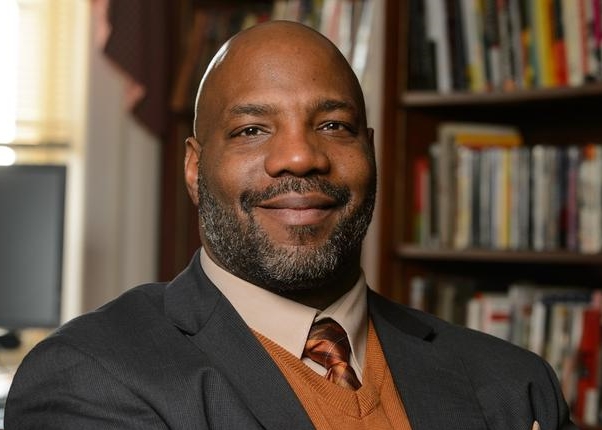
At the Chicago Humanities Festival’s Lakeview Day on Saturday, May 9, two speakers focused on the United States Constitution and how our founding document is weathering onslaught and erosion. Authors Jelani Cobb and Akhil Reed Amar spoke at two events.
The Constitution can inform art—from Schoolhouse Rock! animation to the thoughtful and poignant play What the Constitution Means to Me—and also the substance of social constructs. Jelani Cobb, Columbia University’s Dean of the Graduate School of Journalism and Pulitzer finalist, spoke with WTTW’s Brandis Friedman about his essay collection Three or More is a Riot: Notes on How We Got Here 2012-2025, which reads like a three-act play about the current crisis in American democracy, mostly culled from his articles in the New Yorker, where he is a staff writer. “Emmett Till happened many times before Emmett Till,” Cobb said about the Chicago teenager who was kidnapped, tortured and murdered in 1955 Mississippi.
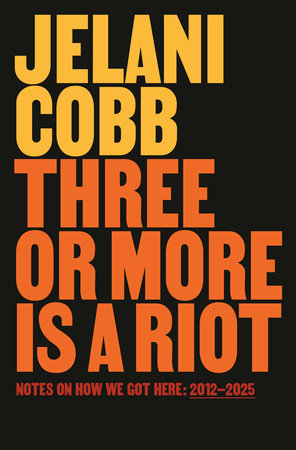
The book begins with a reflection about the assassination of Black teenager Trayvon Martin on February 26, 2012, and blends a chronicle of American race relations with reportage, since “journalism writes the first draft of history.” In 2013, author and activist Alicia Garza coined the term “Black Lives Matter” after George Zimmerman was acquitted of the crime. That phrase subsequently informed the zeitgeist of this dozen years, which also includes white supremacist Dylann Roof’s massacre of Black South Carolina congregants as well as the presidential candidacy of a certain prominent pedophile.
The United States seems to be moving toward anti-democracy, observed Cobb, and is taking an à la carte attitude toward our most important user’s manual. Even white supremacists, like Heritage Foundation president Kevin Roberts (the impetus behind Project 2025 who earned a PhD in African American History in order to more effectively undermine citizens of color), are rapidly moving to dismantle the Reconstruction Amendments (13th, 14th, 15th) to scuttle birthright citizenship and allow racist voter discrimination. This latest domestic terrorism disguised as patriotism set the stage for the Supreme Court to recently gut equal protections and open the floodgates for racist gerrymandering in the South. Cobb noted that those states often have large Black electorates, like 40% in Louisiana, and 30% in Alabama and Georgia.
“But this is us,” Cobb noted. America has always run on racism, so “don’t cook our history books, especially in the midst of our 250th birthday,” he added. He said that we need more civic maturity to grapple with these grave issues and deal with these “bat-guano corrupt and crazy right-wing populists.” (Cobb tempered his language since his six-year-old son, who reportedly sleeps with his dad’s book on his pillow, was in the audience.)
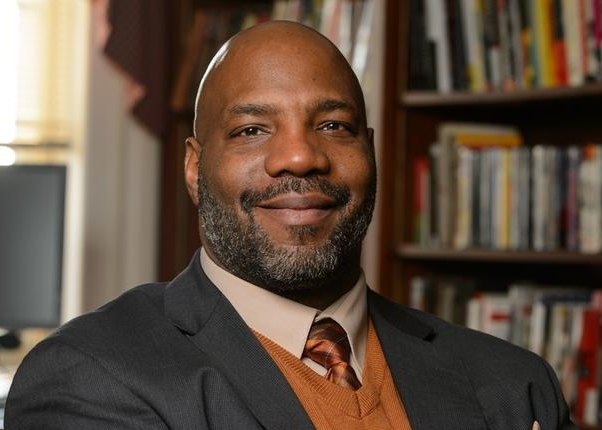
Cobb recounted a brief history of the Ku Klux Klan, noting that President Grant prosecuted those terrorists with an act that almost ended the group in 1871, but which was resurrected in 1915 after the propaganda film Birth of a Nation. That second-wave Klan, big in Indiana, added anti-Catholic and anti-Jewish pillars to their robust anti-immigrant stance, but their internal financial corruption weakened their efficacy.
“Democracy is like meteorology in that it’s somewhat unpredictable,” Cobb said. He also talked about the difficulty of defining who is the “We” in “We the people,” starting with the Alien and Sedition Acts of 1798, which authorized President John Adams to deport any non-citizen deemed “dangerous to the peace and safety of the United States” (without a trial or hearing, currently employed during ICE detentions). The 1896 Plessy v. Ferguson SCOTUS decision enshrined the “separate but equal” apartheid Jim Crow laws in a “hive-mind response.” President Lyndon Johnson attempted to stem this inequitable tide by passing voting and immigration rights legislation in 1965.
When asked, “How do we right this ship?” Cobb quipped, “We have to throw some stuff overboard.” He also lamented that, in this moment of democratic assault, many ramps to adulthood are now closing, like affordable housing. He noted that Trump is a parody of rich people, a “poor person’s vision of wealth” implementing too much gold and crude braggadocio, like his old New York buddy (and fellow assaulter) Diddy.
Cobb likened Christian nationalism to a virus currently at the Department of Justice, powered by acolytes like Leonard Leo and Peter Thiel, an infestation that will be “something our children will be fighting to fix.” He concluded the hour-long discussion the same way he frames his American History for Reporting class, saying that Iranians know and understand their country’s history, something that Americans are sorely lacking.
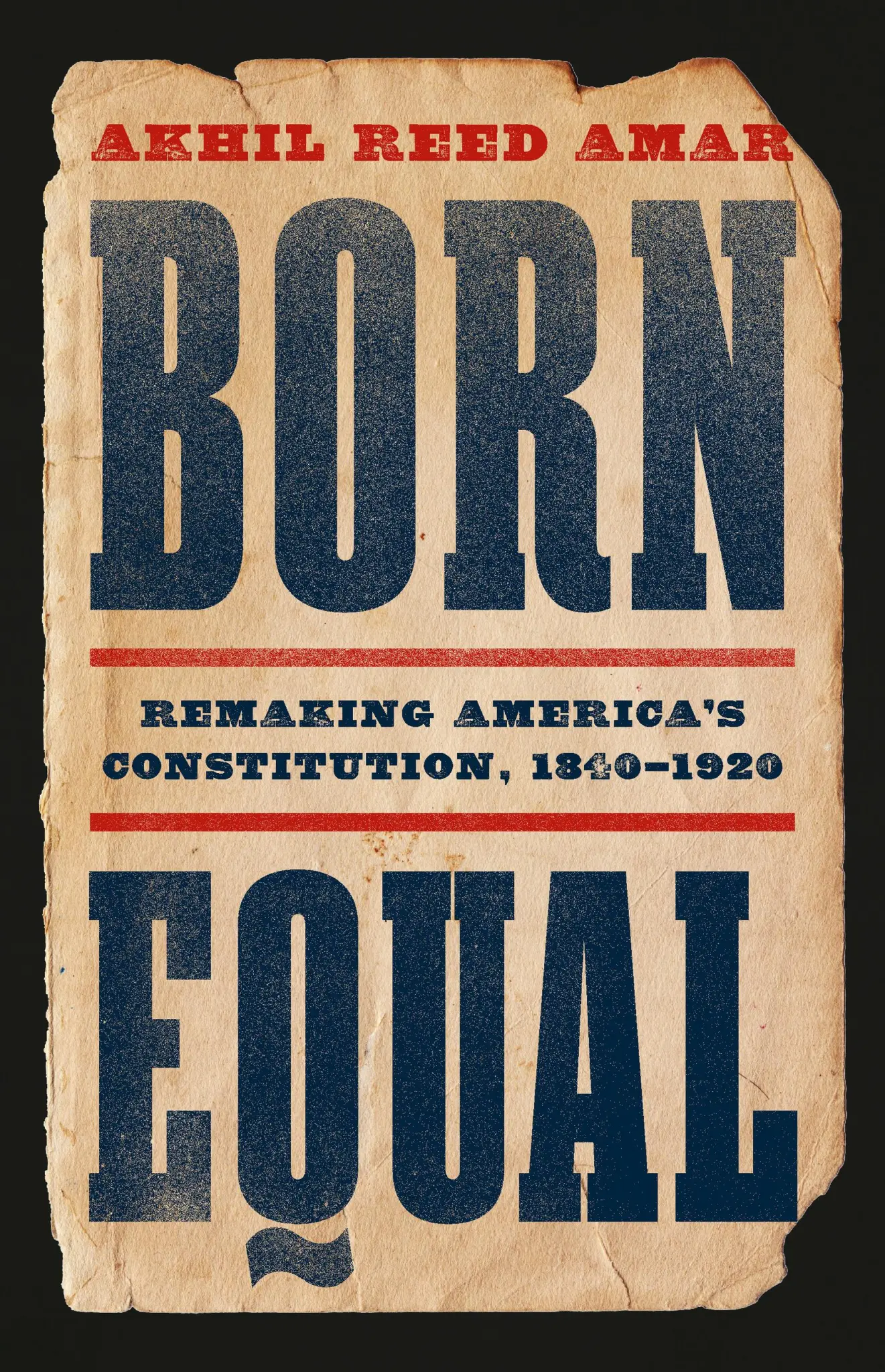
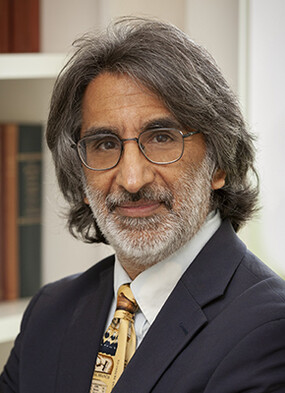
Wait Wait Don’t Tell Me! radio host Peter Sagal presented the 2013 PBS documentary Constitution USA and continues to evangelize for the primer of the American origin story at this year’s Humanities Fest. He interviewed Yale University law and political science professor and prizewinning constitutional historian Akhil Reed Amar about his book, Born Equal: Remaking America’s Constitution 1840-1920.
Amar seemed more upbeat about America’s path forward through authoritarianism, noting his friendly relationships with most members of the current Supreme Court (despite his being a liberal Democrat, he reminded us several times). He considers our Constitution a “hinge of history’ since there was no self-governance on this planet until that document emerged. Athens made a decent start, he noted, but flickered out under the reigns of kings, emperors and tsars, “thugs, all.” Having all those individual votes and separation of powers was “the beginning of modernity,” he said, “and now half the world is self-governing, including most of the European Union, our counterpart.”
But with that freedom framework came the largest military and carceral complex ever, and a portion of America’s 19th century was devoted to correcting constitutional flaws that assuaged slave owners, like 1787’s Three-Fifths Compromise and the Electoral College, which accepted enslavement and disenfranchised many in an attempt to codify being born, not created, equal.
Nineteen states already had anti-slave language, Amar said, which became the North Star to remedy the original sin of human ownership. The Louisiana Purchase doubled our land mass in 1803, but the Dred Scott decision of 1857 said that persons of African descent cannot and were never intended to be US citizens. Amar talked about Illinois son Abraham Lincoln’s humor and intelligence to challenge slavery’s expansion and sovereignty first during the Douglas debates, although he stopped short as president because he said that he didn’t have the federal authority to eliminate slavery.
Lincoln had plans to gradually phase out slavery over 50-100 years, including compensation for slave holders, a thought both “evil and stupid,” according to Amar. “The North eventually won the war, but the South won the pieces.” He added that the Civil War was really the country’s second founding. The only “zig-zagging” Constitutional amendment was the 18th, an ill-conceived alcoholic temperance limit repealed by the 21st amendment 13 years later.
Like Cobb, Amar encouraged civic literacy to combat this current backsliding of equal rights, and that the Constitution should be “a tool, not a toy.” The survival of democracy needs a road-tested, literate culture that knows our history and institutions. He warned that the only new amendments that came close to passing in recent history were decidedly regressive: defining marriage as one man/one woman (2004 and 2006) and banning flag burning (2006). “Our Constitution is one of the few things that Americans have in common,” Amar said. “Because we don’t have race, language or much else the same.”
In another Humanities Festival event last fall, Jill Lepore discussed her book, We the People: A History of the US Constitution, which recently won the Pulitzer Prize for History. The book investigates why our Constitution is so difficult to amend and describes the many failed attempts to do so.
The Chicago Humanities Festival presents more author book talks on Northwestern University Day, Sunday, May 17 (Sagal will present another Constitution Session at 4pm), as well as events in June.
Support arts and culture journalism today. This work doesn't happen without your support. Contribute today and ensure we can continue to share the latest reviews, essays, and previews of the most anticipated arts and culture events across the city.
