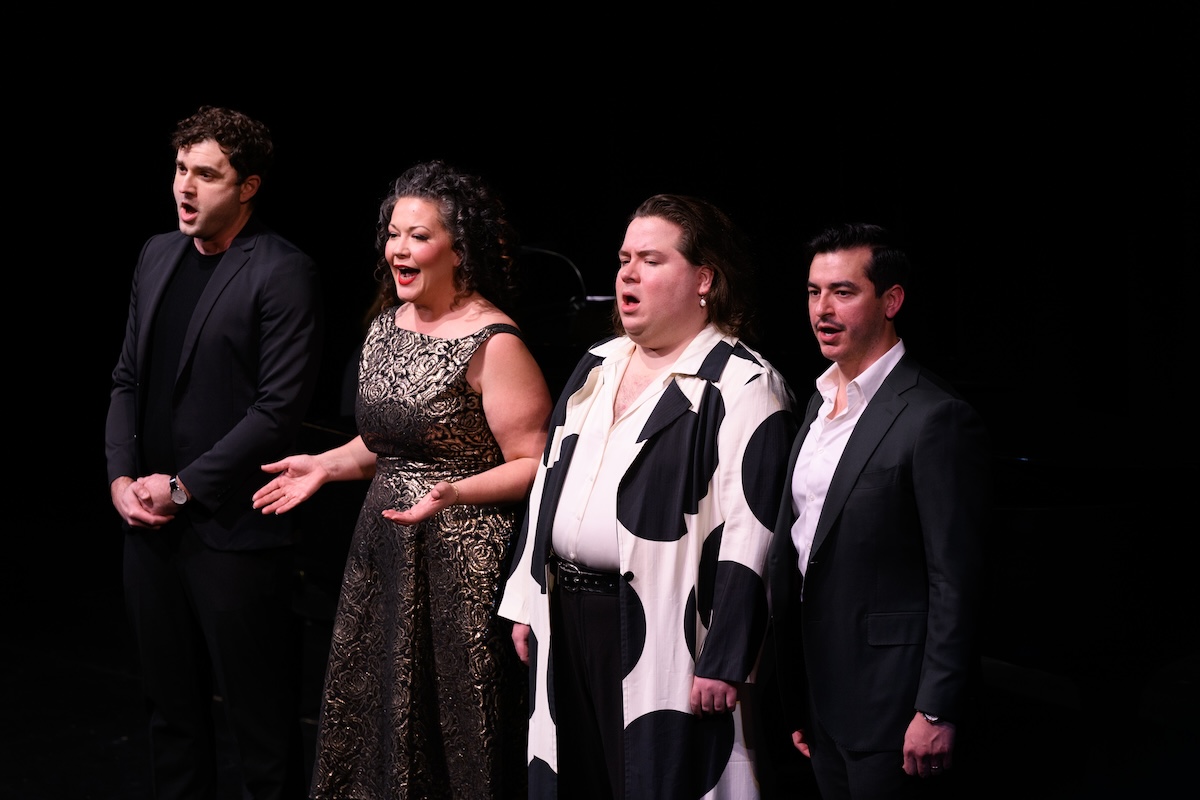

This year marks the 250th anniversary of the United States of America's declaration as a sovereign democracy. The Declaration of Independence guaranteed the citizenry the right to life, liberty, and the pursuit of happiness. The Chicago Opera Theater's concert, In America's Embrace, showcased the Works of Immigrant American composers and their well-loved songs. The world that we live in now made a lot of the songs bittersweet, and some of them made me downright angry because of promises broken by our own government.
The Chicago Opera Theater is known for new works that reflect and mine the depths of American life. I had the pleasure of seeing She Who Dared,, which delves into the real story behind the Montgomery bus boycott. I also had the privilege of covering Soldier Songs, which revealed the American thirst for violence and its aftermath. The composers featured in America's Embrace are among the many who escaped Europe with the threat of war and the rise of the Nazi Party. The quartet of singers was directed and accompanied by Laurie Rogers. The first song was from Irving Berlin's musical Holiday Inn. Soprano Tracy Cantin got off to a roaring start with "Let's Start the New Year Right." She has a lovely, unforced soprano that lilts smoothly but can pack a punch. Her stage presence in a gorgeous gold dress and a halo of dark curls charmed the audience. Rogers' piano playing is virtuosic and dramatic. The pianist and the singers made for a perfect combination.
I was thrilled to see Kurt Weill on the roster with songs and collaborations from poets and other great voices of the era. His music and sensibility were from the Weimar Germany, a time of innovation that sparked movements in the arts (Expressionism) and in architecture (Bauhaus). I have always liked Weill's quirky sense of composition mixed with a sardonic view of life. The first Weill music I heard was on the Ernie Kovacs Show. "Mack the Knife" was sung in German to vignettes of anarchic comedy. I did not know about the Broadway musicals he had scored, or the scope of his musical genius. Five Weill compositions were on the program that show his embrace of America and his ability to empathize with the immigrants and Black underclass in America
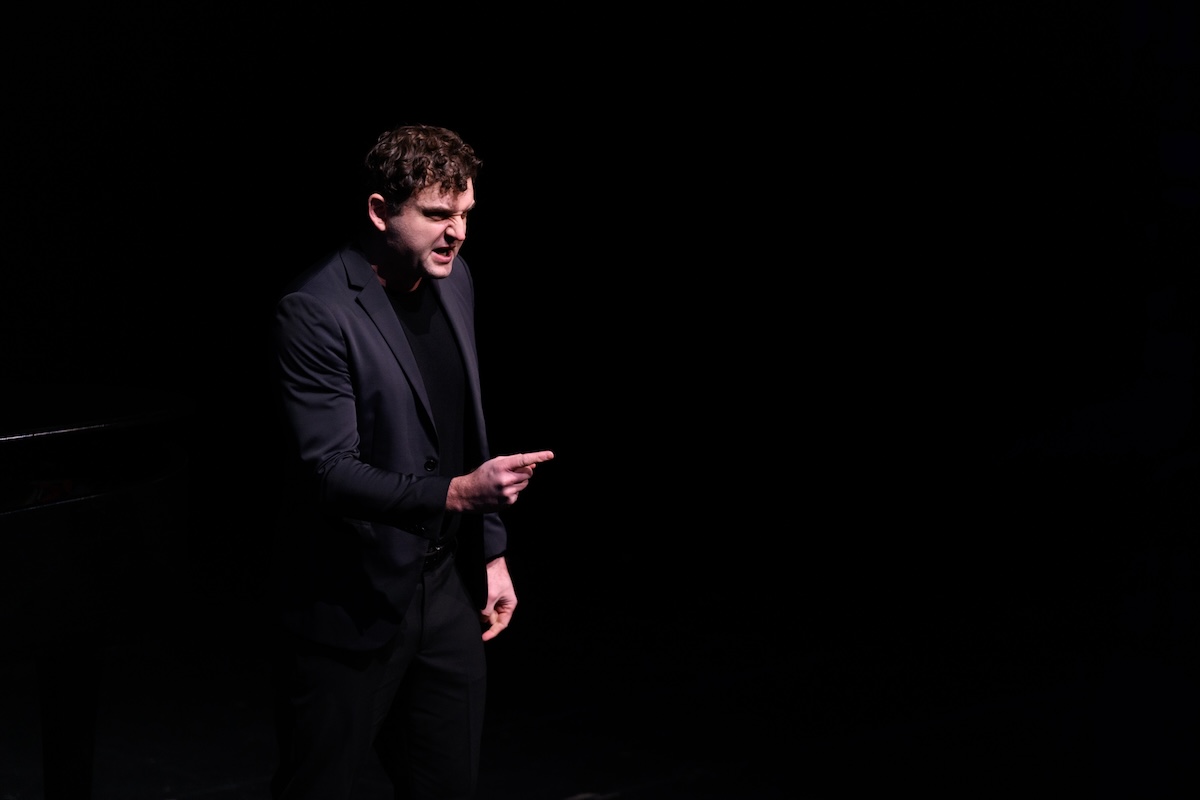
Weill is best known for his partnership with Bertolt Brecht, but In America's Embrace features some lesser-known lyricists and librettists. In 1947, Weill collaborated with poet Langston Hughes on the opera Street Scene. Hughes' poetry speaks of the tenements and people who live in them. Weill's music has a jazz and blues-inflected sound for "Let Things Be Like They Always Was." Hughes and Weill both knew what it was like to create from the disadvantage of oppression and poverty, and bass-baritone Alex Soare gave me a chill with his brooding glare and soul-rumbling delivery.
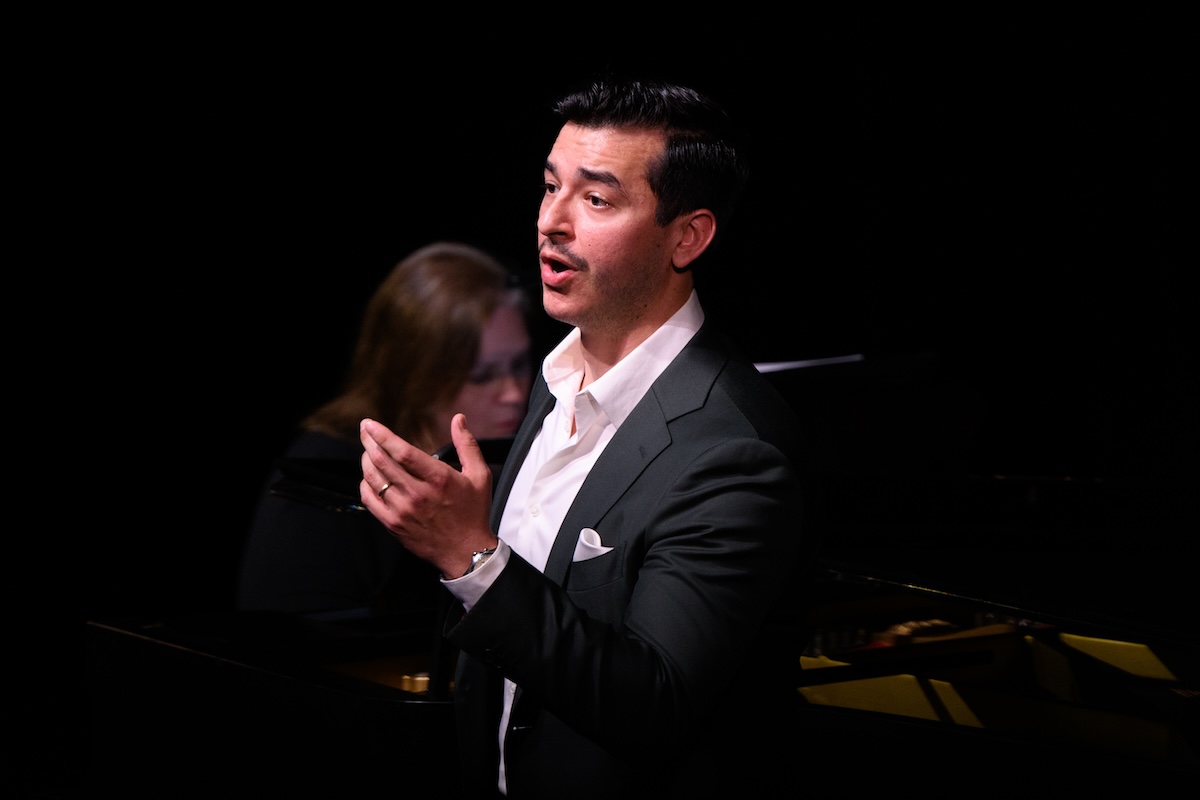
Cantin and Soare played a lovely couple who remember special moments in a comically different way, singing "I Remember It Well" from the musical Love Life. The lyrics were written by Alan Lerner, who was famously paired with Frederick Loewe for musicals like My Fair Lady and Gigi. I have to note that this song was changed to "Yes, I Remember It Well" in Gigi. Jordan Loyd was the tenor on the roster for this program. Loyd sang a robust and well-acted Don José in the Chicago City Opera production of Carmen. His ability to bring emotion to the surface is showcased with "And Where is the One Who Will Mourn Me" from Down in the Valley, with lyrics by Arnold Sundgaard.
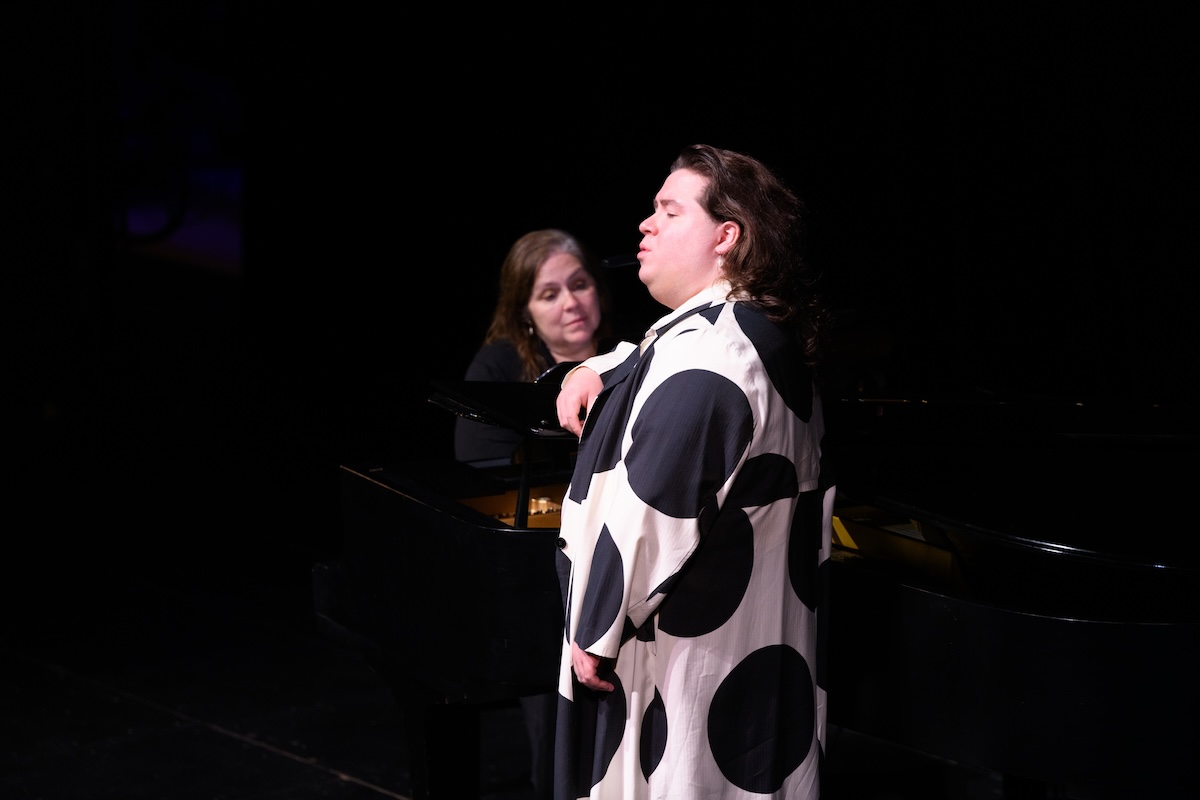
The Weill series also featured baritone Schyler Vargas singing "Johnny's Song (When Man Was First Created)," from the musical Johnny Johnson. The libretto and lyrics were by Paul Green, who was known for Southern tragedies and naturalistic themes. The song has a dark edge, fitting the style of both artists. Themes of war, trauma, and lost love are a signature of Weill's collaborations. The Doors recorded a carnival-like "Moon of Alabama." It reminds me of what a funhouse mirror would sound like. Vargas has a lovely voice and stage presence. His sound and manner would be perfect for the musical stage or the opera.
Erich Wolfgang Korngold was known for his Hollywood scores, such as The Adventures of Robin Hood (1938) with Errol Flynn. The previous year, he composed the music for Give Us This Night (1937). The film featured singers with an operatic range. Alex Soare sang "I Mean to Say I Love You" with his nimble bass/baritone. The performance was a romantic contrast to the Weill song. Cantin and Loyd also performed "Sweet Melody of the Night" and "My Love and I."
Afro-Cuban composer Tania León was featured with her song "Mi Amor Es," sung with a romantic lilt. Once again, COT brought a lesser-known but well-lauded composer to the program. León won a Pulitzer for music and Kennedy Center Honors. I found that ironic, considering the attempts to erase history and the awards given to deserving people. Miguel Sandoval was a Guatemalan composer who wrote operas and folk music. Vargas performed his 1932 composition "Sin Tu Amor," translated as "Without Your Love"
After a short intermission, the second half shot out of the gate with a song from the opera The Rake's Progress, by Igor Stravinsky. "Come, Master" has lyrics by W.H. Auden and Chester Kallman. Coincidentally, I have been delving into Auden's work, and it is fitting that Stravinsky would vibe with both poets. All three had scandal and controversy in their lives and work. When Stravinsky's Rite of Spring premiered with choreography by Nijinsky, there was a firestorm of criticism and anger. The sensualist themes and allusions to primitive rituals were considered outrageous. This added to Stravinsky's reputation as a nonconformist and pioneering composer.
Music by Lukas Foss, Aleksandra Vrebalov, and André Previn was performed. Most notable for me was Previn's opera of Tennessee Williams' A Streetcar Named Desire. I saw Renée Fleming as Blanche DuBois in a Lyric Opera of Chicago production. She was magnificent. Cantin's performance of "I Want Magic" had emotional depth and was a great portrayal of a woman clinging to an illusion of what love is and disassociating from reality.
The concert ended with Irving Berlin. It was the most emotional for me as a listener and a citizen of this country. Cantin opened with a song from Miss Liberty. The lyrics and title were adapted from Emma Lazarus's sonnet, New Colossus, inscribed on the statue that welcomes immigrants to the land of opportunity. "Give Me Your Tired, Your Poor" elicited tears from some in the audience, including me. Irving Berlin is the cornerstone of the Great American Songbook as I know it. He was an immigrant Jew who wrote "White Christmas" and the musical Holiday Inn (1942). His family was one of an influx of Jewish families fleeing the terror and hardships of fascism and bigotry. I cannot imagine my college chorale performances without singing "Blue Skies", "What'll I Do?", and "Always". The finale was "God Bless America," which set off the waterworks in many of us in the audience again.
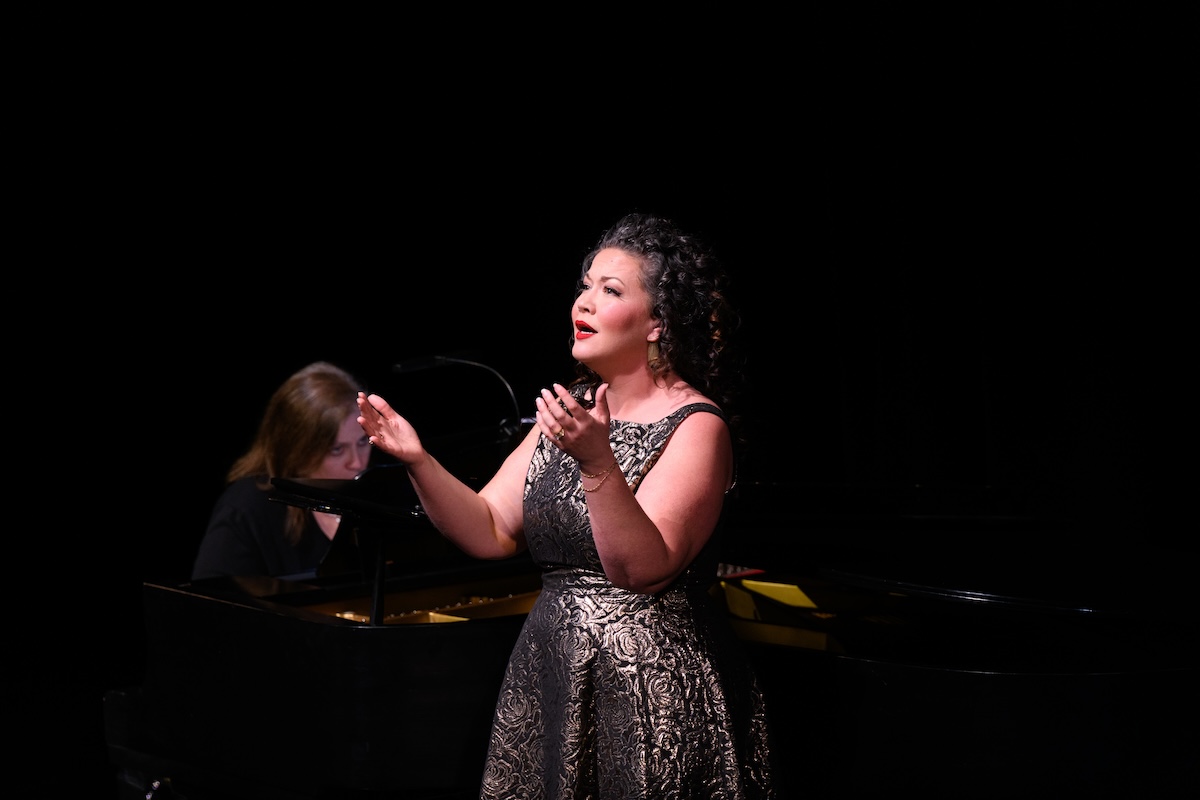
In America's Embrace was a great performance. There were no bells and whistles or elaborate sets. The singers and music director presented some selections of the most well-known and some more obscure at their purest. This was music sung on stages and around the family piano, and in some cases, when the relatives came to visit. The singers and director are known from opera companies all over the country. In my opinion, they gave performances that would stand up in any opera house. There was one performance of In America's Embrace on January 18 at the Studebaker Theater.
"God Bless America" has been appropriated by those with a different vision of America than that of Irving Berlin, the Gershwins, Weill, and so many others who built that image. America was an idea made reality, and now the lamp of liberty is being extinguished, and the golden door slammed in the face of the people once welcomed. I commend the Chicago Opera Theater for its vision of bringing new composers to an audience and for honoring those who came before them and set the standard.
If you found this post interesting, please consider supporting Third Coast Review’s arts and culture coverage by making a donation. Choose the amount that works best for you, and know how much we appreciate your support!
