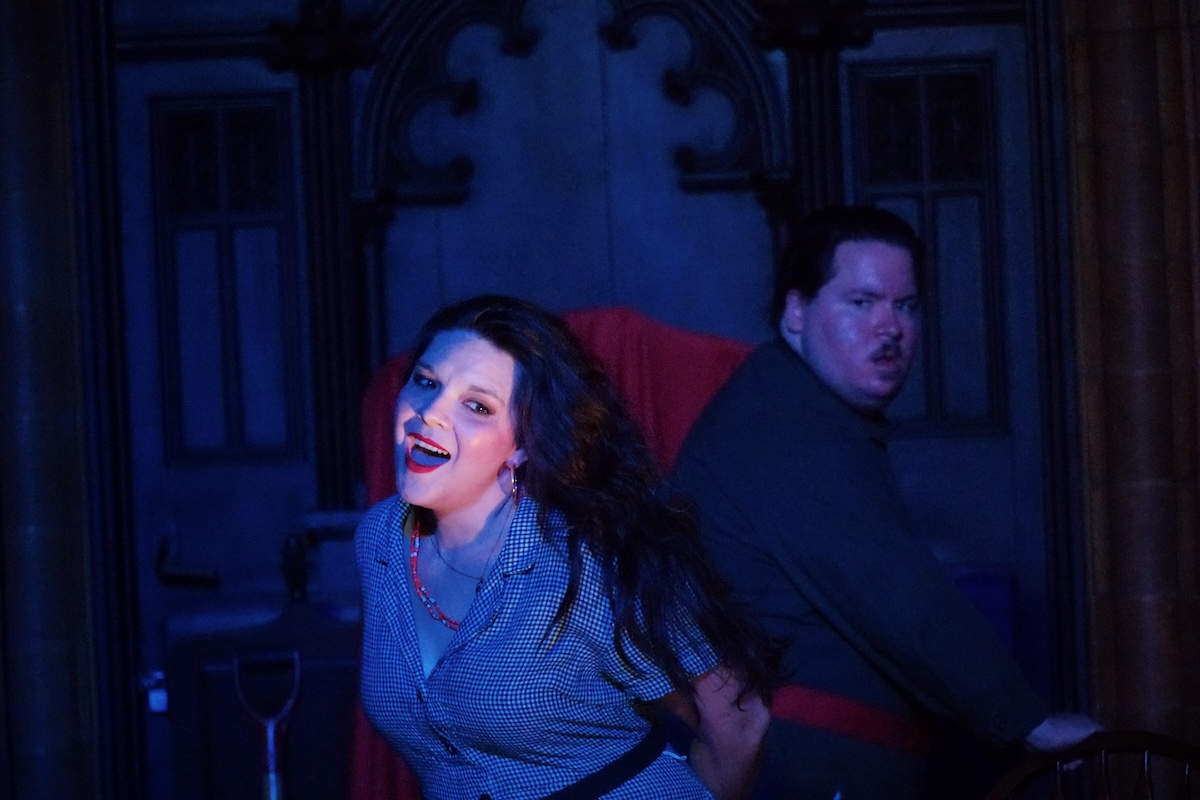

Georges Bizet wrote his magnum opus 150 years ago. Carmen is an opera of spectacle, passion, and the darkness of obsession. It has been sung in the greatest houses of Europe and America. It's a good bet that parts of the opera have been sung in chamber settings. Last weekend, the Chicago City Opera staged Carmen at the Horatio N. May Chapel, built in 1899 and located in Rosehill Cemetery, aligning well with both the performance and the storyline. The Gothic/Romanesque chapel is small, with dim lighting and no air conditioning. The setting matched the sultry weather of Seville. In addition, the structure is made for music, with every note heard clearly and unaltered by acoustic baffling. Rose Freeman directs the production.
The cast of Carmen was robust, singing the main characters and choral parts. Angela Born played the role of Carmen. Born is a soprano who has sung over 30 roles in her career as a theater artist and singer. Her soaring pure soprano brought the fiery gypsy woman to life. Jessie Lyons plays Micaëla, Don José's sweet and virginal girl from back home. Lyons has a pure lyric soprano that reaches silky high notes without a hint of strain.
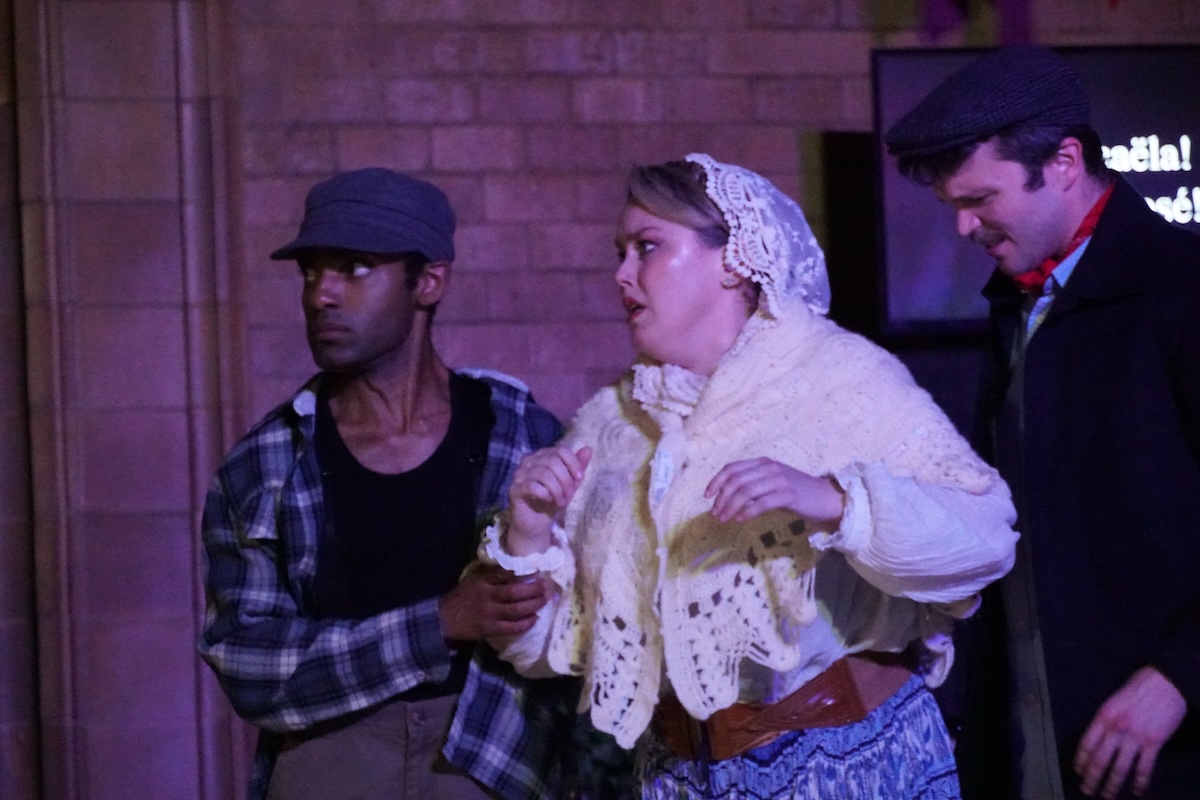
The main characters, Don José and Escamillo, are played by Jordan Lloyd and Keaton Payne, respectively. Lloyd's portrayal was hypnotic and beautifully sung. His angelic looks belied the rage and passion he has toward Carmen, but that is also what makes him perfectly cast. Like Micaëla, Don José is from a rural village in Spain, who joined the army to become a soldier and serve his country. His life was mapped out for him, including the girl his mother trusted and approved of. Lloyd's acting skills are on point as he segues from a good country boy to a man lured and obsessed by the classic vamp. His body language changes, and his expressions transform into the "thousand-mile stare," all the while singing with stellar power.
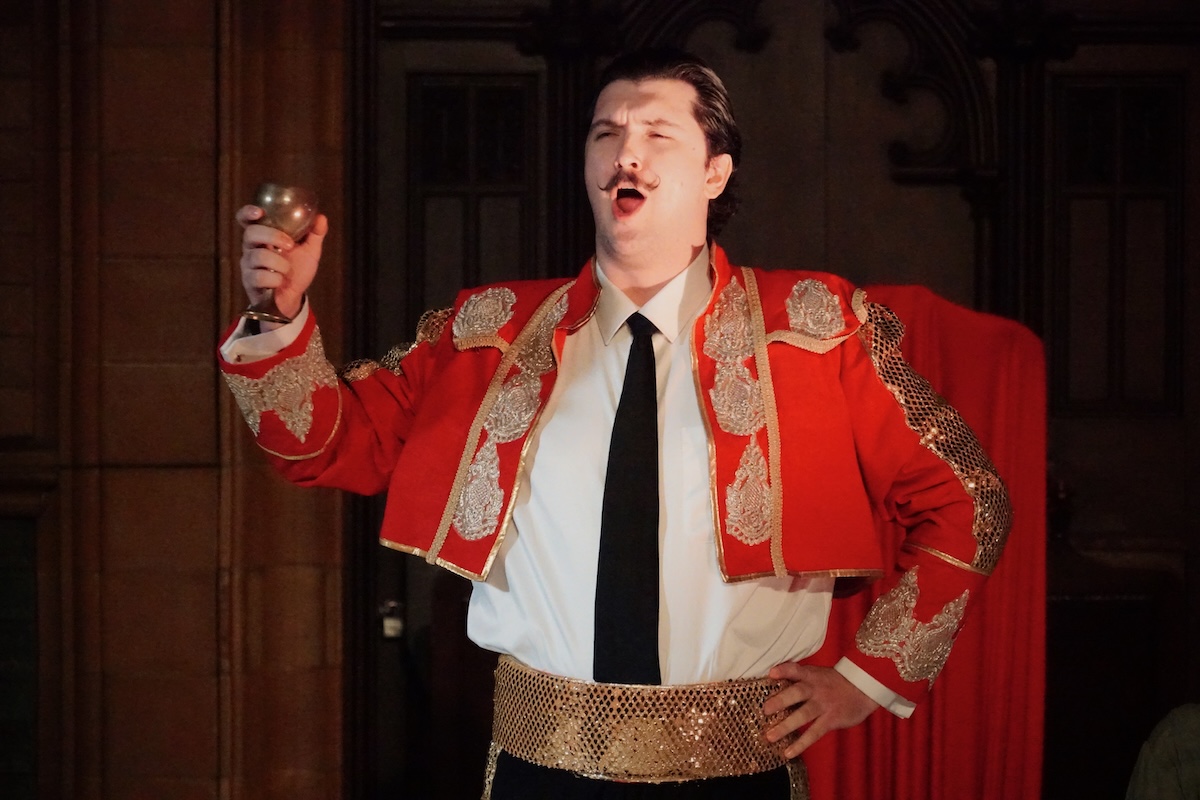
Keaton Payne has a gorgeous baritone and plays Escamillo with a comic flair. He reminded me of actor Erik Rhodes in The Gay Divorcee (1934). Payne's Escamillo is all swagger and confidence with a wink to the Latin lover trope. His baritone is solid, rich-sounding. I loved the moustache, which was a cherry on top of much-needed comic relief. He was a perfect foil to Born's simmering Carmen. Escamillo is a toreador, who is like a sports superstar from the Millennium. Carmen could not pierce Escamillo's heart as she did with Don José. I think that the intimate performance space and minimal set allowed more of the story to come through.
When I have covered other stagings of Carmen, the characters seemed expressionistic and sharply drawn. I loved the Joffrey Ballet staging, which was an exemplary performance of the doomed gypsy seductress, but Chicago City Opera brings new dimensions to the characters. Diana Monacelli and Jaime Sharp played Frasquita and Mercedes from Carmen's posse of barflies and thieves. Monacelli has a distinctive soprano that stands out just enough while still blending into the chorus. Mercedes has a charismatic stage presence, as well as a warm mezzo-soprano voice.
Baritone Louis Floyd was great as Captain Zuniga. I liked the portrayal of Zuniga as a woman officer. It would not have happened in the era when Carmen was set, but Floyd's charismatic and powerful performance as an arrogant officer was undeniable. Baritone Kevin Wheatle did double duty as Lieutenant Moralès and thief Le Dancaire. Both characters are shady, and Wheatle excels at delineating distinct characteristics in each of their portrayals. Matt Peckham played smuggler Le Remendando with subtlety. It is a peripheral character, but Peckham's voice stood out as distinctive without upstaging.
Rose Freeman directs this production of Carmen with a steady rhythm to the movements and staging. The set is minimalist with swaths of red cloth on different levels in the altar area of the May Chapel. It was a brilliant juxtaposition of blood-red set against the dark walnut and oak arches. In another minimalist touch, the orchestra in this production consisted of pianist Jordan Crice and conductor Alexandra Enyart. Crice played well and deserved a better-tuned piano. Enyart is a confident conductor and directs both the piano and the vocals. The performance lasted 2.5 hours, including an intermission, but it kept me on the edge of my seat.
Overall, the Chicago City Opera presented a fine set of performances that were unique from any of the Carmen portrayals I have seen in person or on PBS. It is a relatively new organization that takes calculated risks with unique and even daring choices for casting and staging, but they make those choices stand out and shine. I would have liked to see a more robust integration of the minor characters. They have good voices, but are more peripheral to the action. For example, when Frasquita and Mercedes are reading their fortune, Carmen is off to the side. I think that she should have been watching more closely. That felt clunky, as if she were not hanging out with her best friends.
I could have done without the Rosehill preplanning pitch from the cemetery manager, but it was worth enduring for such a satisfactory performance. This Carmen was curated for a chamber music setting and succeeded in delivering a powerful and intimate performance of Bizet's masterpiece, which he did not live to see become one of the most performed operas of the 19th century. It is a testament to Bizet's genius and the Chicago City Opera's vision of presenting opera as more accessible to performers and audiences.
The Chicago City Opera presented Georges Bizet's Carmen on October 3 and 4 in the Horatio N. May Chapel, 5800 N. Ravenswood, in historic Rosehill Cemetery.
If you found this post interesting, please consider supporting Third Coast Review’s arts and culture coverage by making a donation. Select the amount that works best for you, and know that we appreciate your support.
