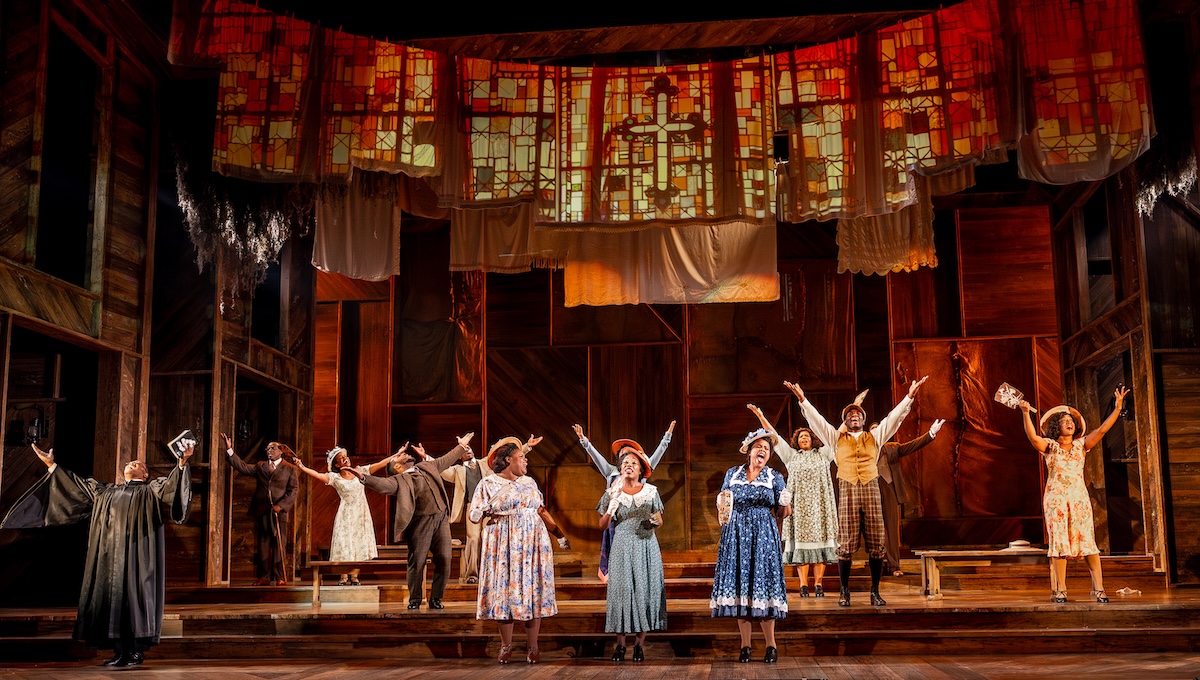

The energy in the Goodman Theatre's larger Albert Theatre was palpable even before Monday's premiere of The Color Purple began, and it built upon itself as the evening progressed towards its inevitable standing ovation. (Most standing ovations seem inevitable these days.) So, why, then did all that energy seem so misdirected?
One answer, perhaps, is that when every song, every emotion, every reaction and every bit of staging is dialed up to 11, it is hard to notice, let alone appreciate, a true bit of storytelling or effective theater when it occurs on stage. There was talented singing, athletic dancing, and enough ups and downs and not-quite-surprises to fuel more than one miniseries, but, when the dramaturgy is this melodramatic, who's to be surprised when all you get is melodrama?
Time for a disclaimer. Alice Walker's Pulitzer Prize winning novel is a masterpiece; Steven Spielberg's movie is, well, Spielbergian, but still a notable achievement. But when this musical first hit Broadway almost 20 years ago, the reception was decidedly mixed, despite its long run and frequent tours (the first of which sat down in Chicago for almost six months).
It took the 2015 revival, John Doyle's careful, spare direction, Jennifer Hudson's star power and—above all—Cynthia Erivo's stage-shattering New York debut to establish The Color Purple's reputation as both an audience pleaser and a critical darling. I saw that performance, and—ten years later—it still hasn't left me. This production at the Goodman fails to escape its shadow.
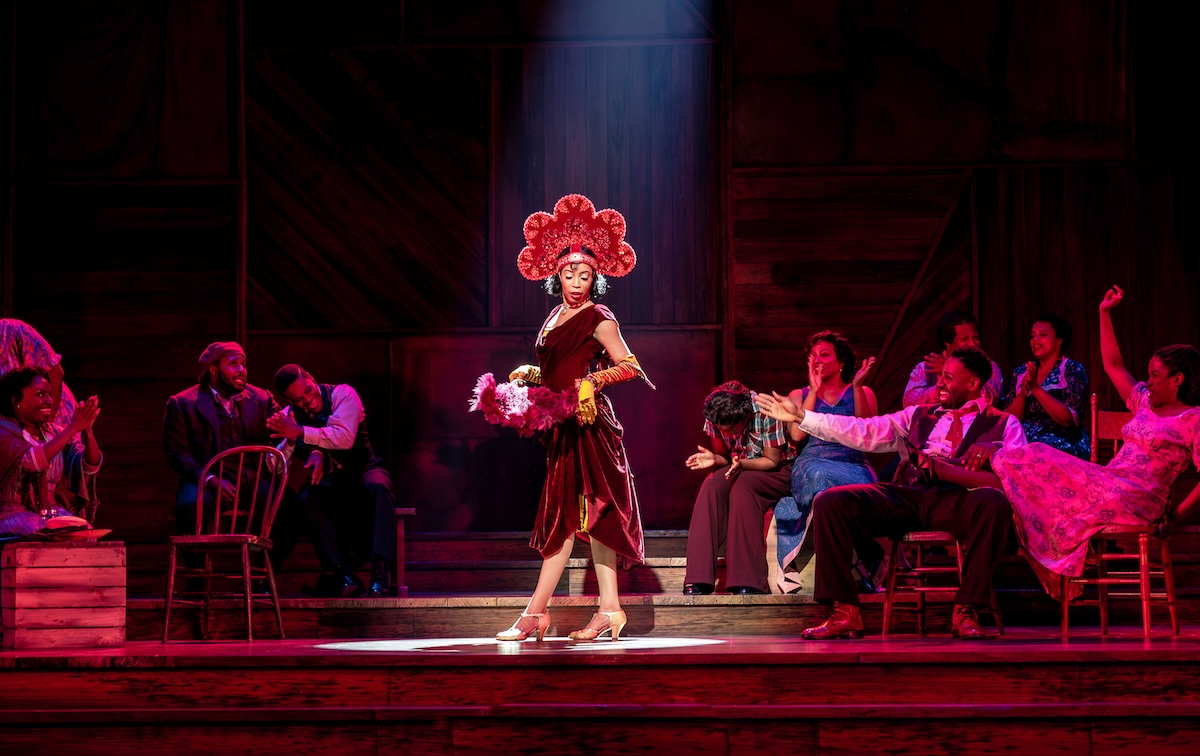
We are now a long way removed from some of the initial criticism lobbed at The Color Purple: that its characters (especially the men) are two dimensional; that, with few exceptions (notably, the 11 o'clock number "I'm Here"), its songs are unmemorable (despite being written by a creative team that includes the composer of "Boogie Wonderland"); that its book by Marsha Norman plays like a Cliff Notes version of Walker's original. In this production, and without Erivo's soul-capturing performance, those faults are laid bare.
The team behind the Goodman's production of The Color Purple is not exactly unfamiliar with the material. Director Lili-Ann Brown has helmed the show at least twice before, in St. Louis and here at Drury Lane. Several others of the creative team are also back for a repeat: choreographer Breon Arzell, music director Jermaine Hill, Samantha Jones for costumes and Arnel Sancianco for the (spare) set designs. Some of the onstage talent are also reprising their roles: Sean Blake (Ol Mister), Gilbert Domally (Harpo) and Nicole Michelle Haskins (Sofia.) But, I am afraid this is an instance of familiarity breeding, if not contempt, at least complacency.
Brittany Mack (who originated the role of Anne of Cleves in Broadway's Six) is a likeable Celie: we pity her when she suffers; we celebrate when she rejoices. But her performance fails to make the enduring impression of Erivo—who could? Aerie Williams, as Shug, the romantic interest of more than one of the other characters, has a beautiful voice - perhaps the best in the cast—and she effectively illustrates why everyone loves her character.
But, this crowded stage and crowded story deserve better. The production's overall impact is diminished by its lack of subtlety. The emotional highs and lows are so exaggerated that they lose their authenticity, making it difficult to connect with the characters on a deeper level. The staging, while energetic, often feels chaotic and unfocused, detracting from the narrative rather than enhancing it, and ultimately falls short of capturing the profound emotional depth and nuance of Walker's source material.
For those who have experienced the magic of the 2015 revival, this production may feel like a faded copy of that masterpiece.
The Color Purple runs through August 3 at the Goodman Theatre, 170 N. Dearborn St. Running time is 2 hours and 50 minutes with one intermission. Tickets are available at the Goodman website.
For more information on this and other productions, see theatreinchicago.com.
If you enjoyed this post, please consider supporting Third Coast Review’s arts and culture coverage by making a donation. Choose the amount that works best for you, and know how much we appreciate your support!
