

In the world of gender dualities, a playground finds boys competing at physical games while girls chat and jump rope. Sentinels, which just ended a short run in a co-production between Theo Ubique and CPA Theatricals, pulls from both sides. The 75-minute play imagines a hidden society of young university women who are determined to overcome such divisions.
Created by Marilyn Campbell-Lowe and Kim D. Sherman, Sentinels takes us through 80 years of a campus organization that models itself on Yale’s Skull and Bones. Skull and Bones began in 1832 as a clandestine club for college men to build bonds that would further their professional lives. Five female students at the fictional Joan of Arc University in Milwaukee take inspiration from the Yale group, name themselves Sentinels and commit to secretly supporting each other and the women who come after them.
Hopping from the present to 1967, 1952, 1945 and 1973, they assume a new character in each era who must push against traditional expectations in order to move up the ladder of achievement. Their superpower is an ability to master the competitive male game—be it a mathematical equation for NASA or a speedy pregnancy test—while continuing the chat- and jump-rope intimacy of women.
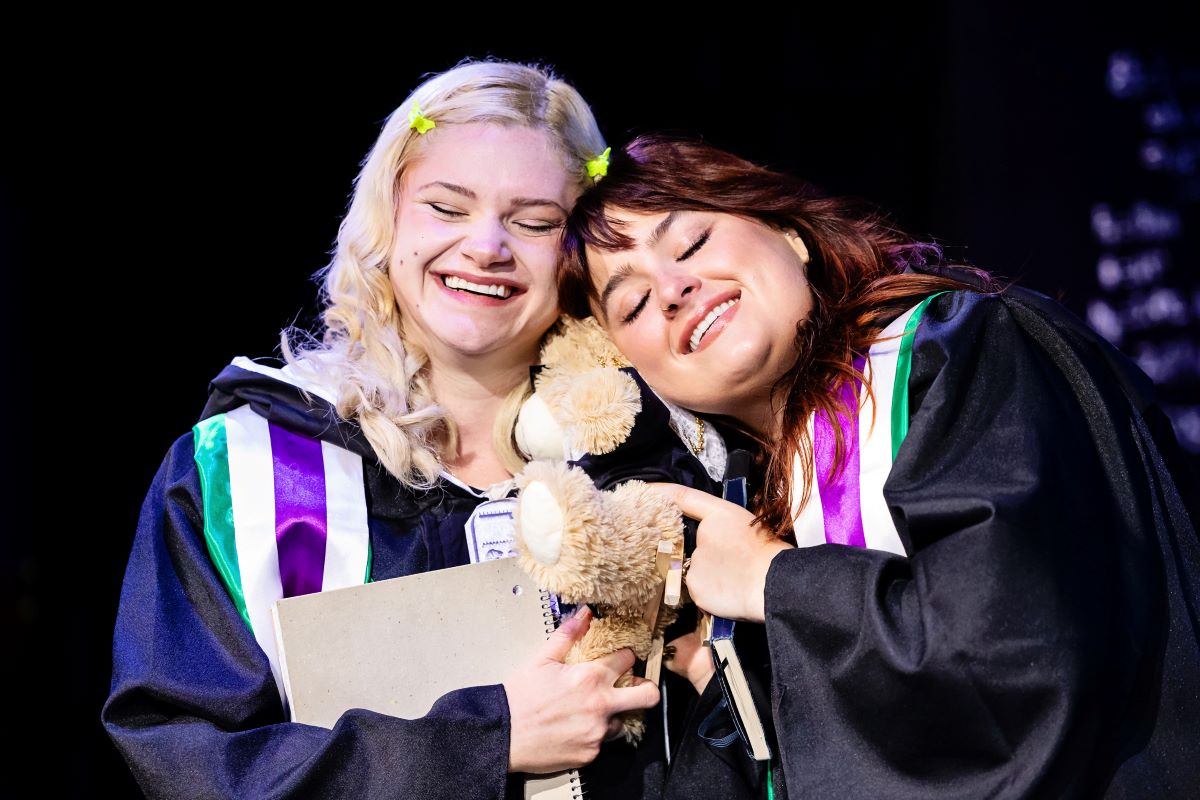
Directed by Christopher Pazdernik, the youthful, earnest ensemble (Arwen-Vira Marsh, Maliha Sayed, Joryhebel Ginorio, Sophia G. Dennis, Dani Pike and Anne Sheridan Smith) strives to “reserve a seat at every table” where important decisions are made. No easy task in mid-20th-century America and, as the first and final scenes set in 2025 make clear, not much easier today.
Ironically, the second to last scene occurs in 1973 when one woman presents a rack of test tubes and invites her fellow Sentinels to pee into a cup to determine whether or not they are pregnant. For anyone familiar with the little boxes in the feminine care aisle at Walgreens, the bulky origins of home pregnancy kits are fascinating. Now fast, disposable and inexpensive, these tests still determine only motherhood, not fatherhood. “Why is everything on us?” someone asks. Has anything changed?
Delightful fashions by costume designer Anna Rogers accurately convey the time period of each scene. The script, too, with references to polio vaccine development, Cold War tensions, the Japanese surrender and Roe v Wade, keeps the non-linear progression straight for the audience. That is Sentinels’ strength as well as its weakness. Through dialogue that’s often on-the-nose, the conflicts, as well as the women’s responses, are spelled out.
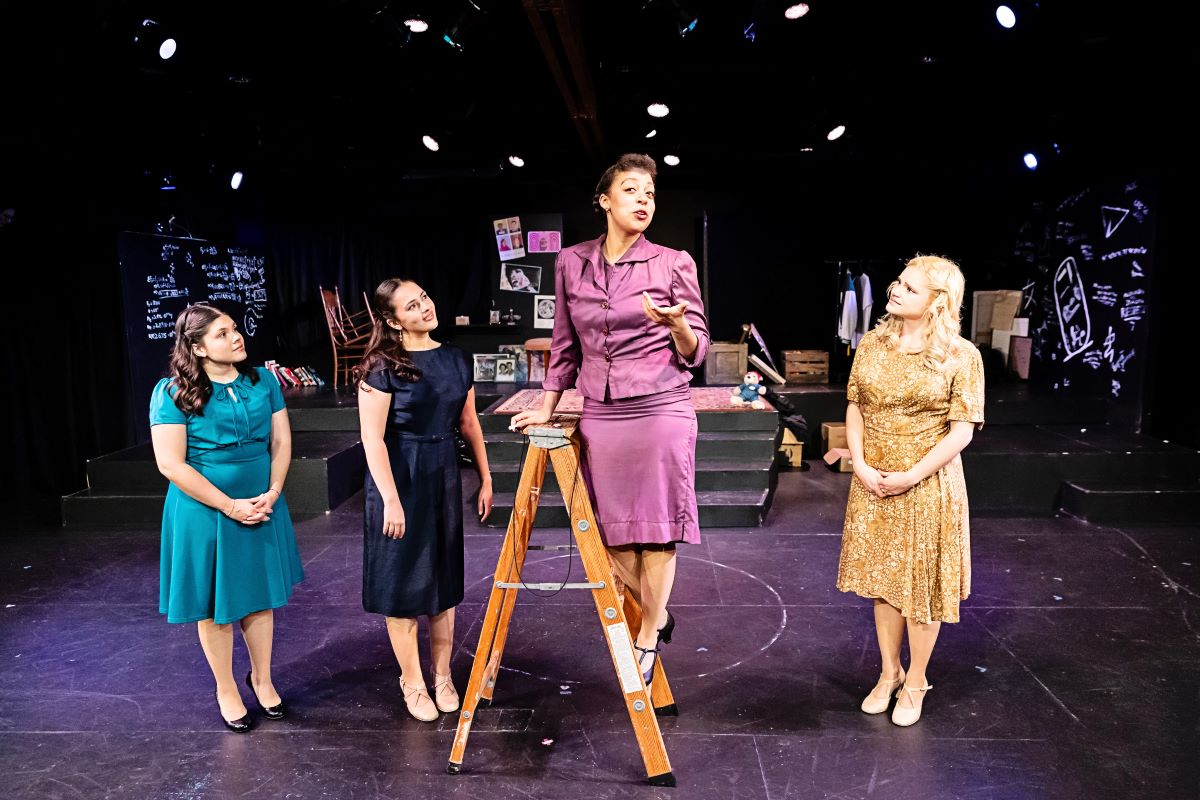
It's interesting to note that Skull and Bones eventually admitted Blacks, women and LGBTQ members. Its history is mottled and bumpy, nuanced and complicated. If only Sentinels could better reflect such messiness. In its present state, the show sticks too tightly to its mission. We might not know exactly what obstacle comes next but we’re sure that these women will assume specific positions, spar briefly and then come to a resolution while reminding each other to “challenge the impossible,” “speak up” and “dream big.”
Fortunately, humor offsets the platitudes and keeps the production from becoming self-righteous. Sentinels concludes with a full musical number. For me, it was the biggest surprise of the entire show and highlighted the lovely voices of each cast member. Like the comedy imbedded in the script, the characters could take off their heavy walking shoes and begin to soar.
Sentinels ended its run at Theo Ubique in Evanston on August 10. For more information on Sentinels, go to CPA Theatricals.
If you enjoyed this post, please consider supporting Third Coast Review’s arts and culture coverage by making a donation. Choose the amount that works best for you, and know how much we appreciate your support!
