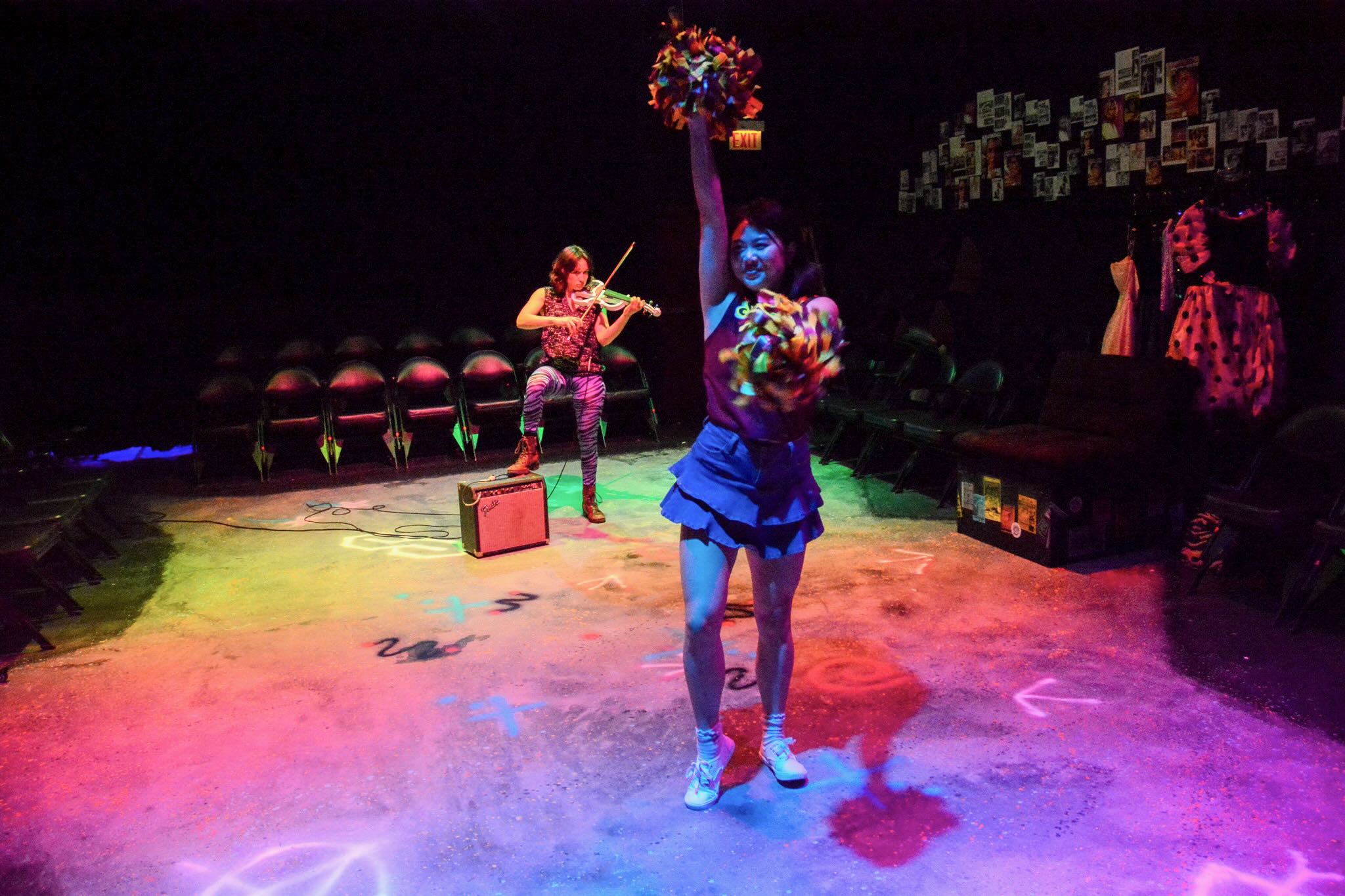

The F*ck House, now being staged by Strawdog Theatre, is a comic coming-of-age story about two 13-year old girls. The world premiere by playwright Susan H. Pak brings us a story that will probably make parents of 13-year-old girls shudder while at least some of the girls will shriek with joy. Christina Casano directs her two cast members smartly but the play is too long and all those costume changes take time too (more on that later).
Mo (Emily Zhang) and Steff (Olivia Lindsay) are best friends ready to begin junior high in a Chicago suburb. It’s the 1980s (the story would be totally different with mobile devices and social media). Mo is obsessed with getting on the cheerleading squad and practices incessantly. Steff is indifferent about this, but agrees she might try out for the band so that they could go to football games together. (Lindsay is a clown and violinist and gets to show her musical chops at several points during the play.)
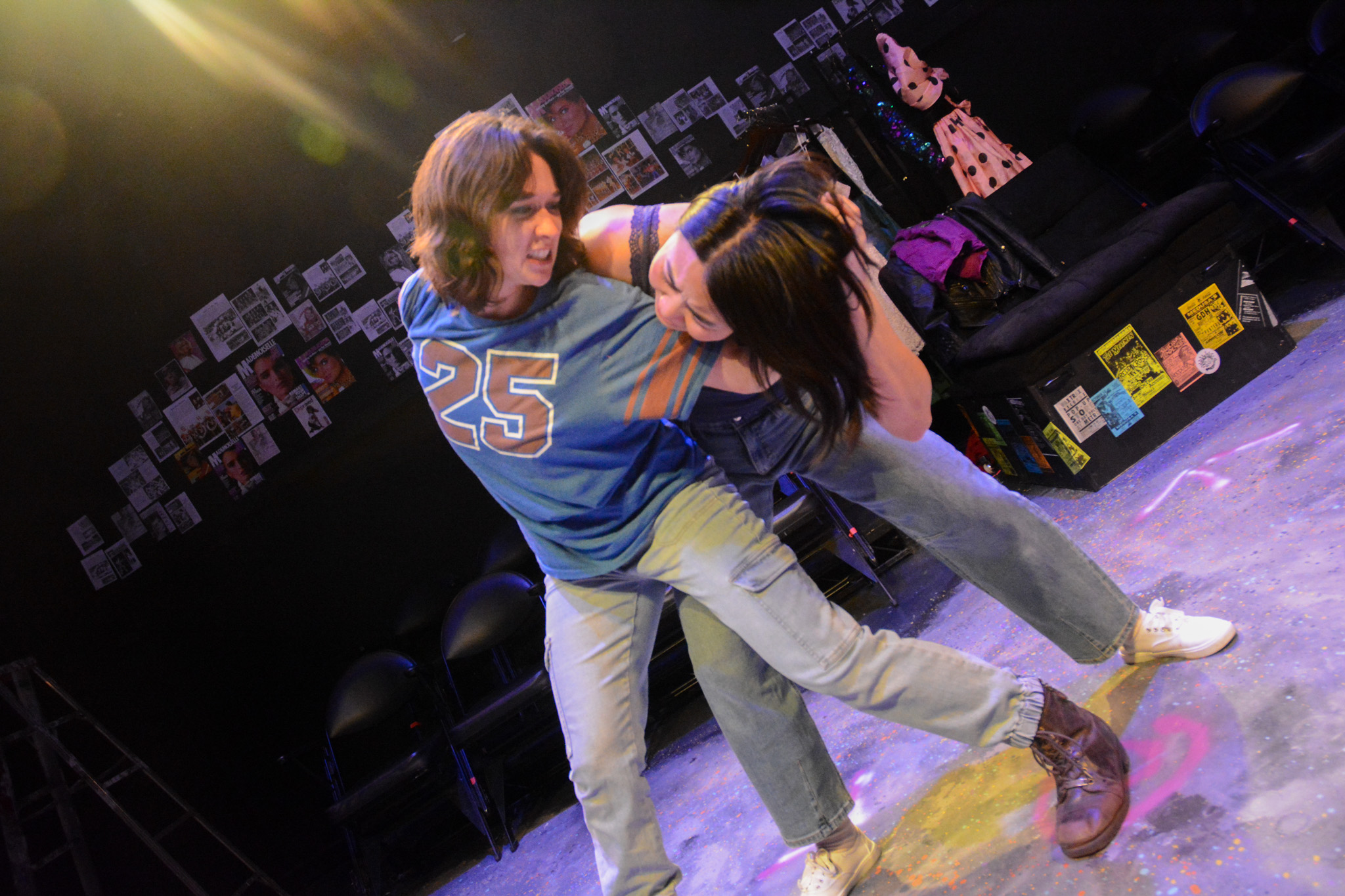
The F*ck House takes us through the trials and tribulations of being a junior high girl. Hoping a boy will look at you, trying to make friends with the popular girls, getting your first period, and flirting with much older men. Both girls are part of troubled families. Mo just wants to be normal, like everyone else. She’s Korean American and reports on the racist smears and nasty comments she hears. Steff wants to be grown-up before her time. She’s the one who is eager to date older guys who will “buy us booze so we can get smashed.” Steff observes: “We’re in junior high now. We need to take care of ourselves.”
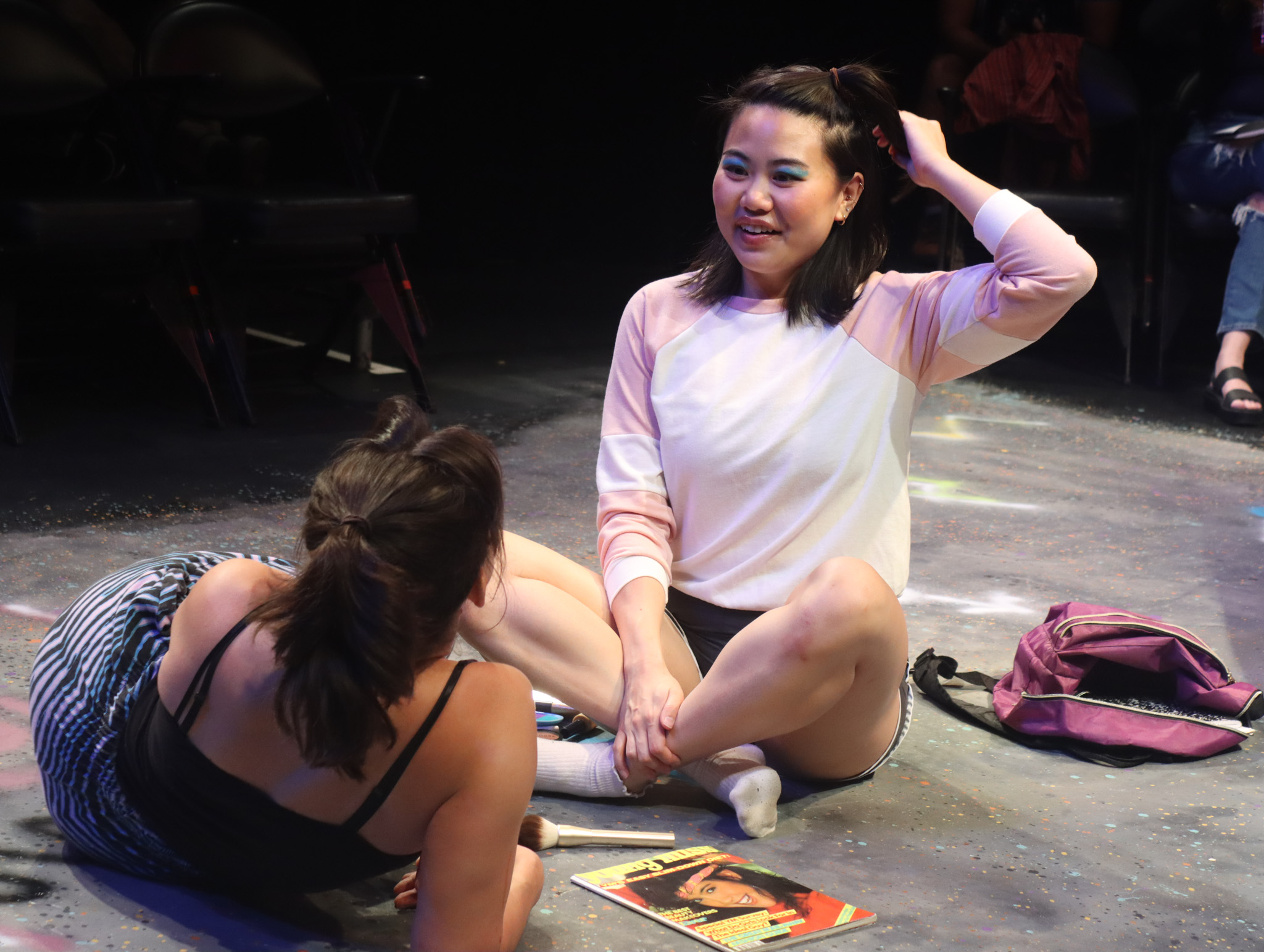
The play’s title refers to what Mo calls the vacant houses (apparently party houses) in a desolate area where they are driven by Steff’s older stepbrother, who also is sort of her boyfriend.
The black-box space at Theater Wit is set with seats on four sides, so Mo and Steff have abundant area for their highly physical performance. When you enter the theater, you’ll notice that costume racks appear in several places around the stage; these costumes are part of the performance. Mo and Steff change clothes every five or ten minutes for the two-plus hour play. That’s a lot of t-shirts, shorts, and skirts plus a couple of formal gowns. The costume changes are signaled by a slight dimming of the lights and, in essence, the play pauses briefly. The performers’ undergarments provide plenty of coverage; there’s no nudity. But the unscripted costume changes probably add 15-20 minutes to the play. A comic drama like this should run 80 or 90 minutes with no intermission, so minimizing the costume changes and trimming the script, especially in the second act, would help.
Casano directs her two talented and energetic actors with a deft hand; both are believable as junior high girls, even though they are probably 10 years older than their characters.
Aly Greaves Amidei is costume designer and scenic design is by Nina Castillo D’Angier. Lighting is by Ellie Humphrys and sound design by Heath Hays. Movement direction is by Ellie Levine. Emily Szymanski is stage manager.
Susan H. Pak has taught playwriting, screenwriting, television writing and web series writing at the university level for over a decade, as well as at Chicago Dramatists where she was a resident playwright. Her plays center on the ways in which Asian Americans, and in particular Korean American women, resist the seduction of protection through assimilation.
The F*ck House, a new play developed through Strawdog's BIPOC Playwright Residency, continues through October 12 at Theater Wit, 1229 W. Belmont Ave. Tickets are available for $10 to $80. Running time is 2.25 hours with one intermission.
For more information on this and other productions, see theatreinchicago.com.
If you enjoyed this post, please consider supporting Third Coast Review’s arts and culture coverage by making a donation. Choose the amount that works best for you, and know how much we appreciate your support!
