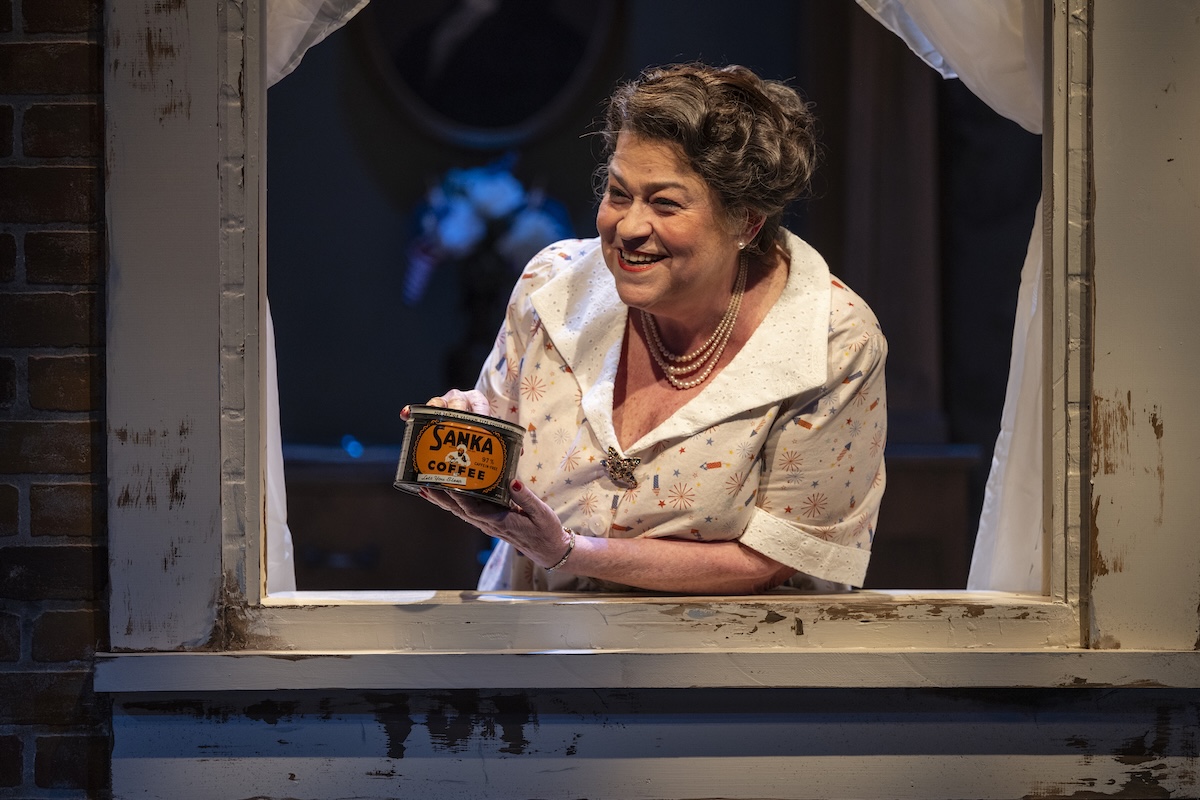

If you have tickets for Northlight Theatre’s The First Lady of Television, you may think you are going to see a comedy about the beloved Molly Goldberg and her 1950s sitcom. Let me alert you that this is more than a comedy; it’s a drama about the rise of McCarthyism in mid-century America and its effect on artists, actors and TV shows.
James Sherman’s world premiere play, directed by BJ Jones, is the story of one day in the life of The Goldbergs, a middle-class Jewish family who live in the Bronx. Sherman sets his story in a 1950 television studio, as the cast rehearses for the sitcom, which is considered one of the first programs of that genre. The “first lady” is Gertrude Berg, who overcame much of the male patriarchy of the era to write and produce her own show.
Cindy Gold plays Gertrude Berg and her television character, Molly Goldberg, with charm and determination. As warnings of possible sponsor loss threaten the future of the show, Molly holds firm and supports her actors (one of whom is considered “controversial” in that era of HUAC—the House Un-American Activities Committee).
As the play opens, Molly welcomes her TV audience. Leaning on her windowsill, she reports on how busy she is getting ready for the Fourth of July and reminds us why we celebrate this holiday. “So many families. You know, our family and the O’Reillys on the second floor and the Capezios on the third floor. Everyone came for freedom.” The idea of freedom is her transition to the sponsor message; she holds up a can of Sanka and tells us that “you’re free to drink your coffee with caffeine or without. And If you’re like me and you don’t want caffeine in your coffee, thank goodness, there’s Sanka coffee because Sanka has ninety-seven percent of the caffeine taken out and they leave in the sleep.”
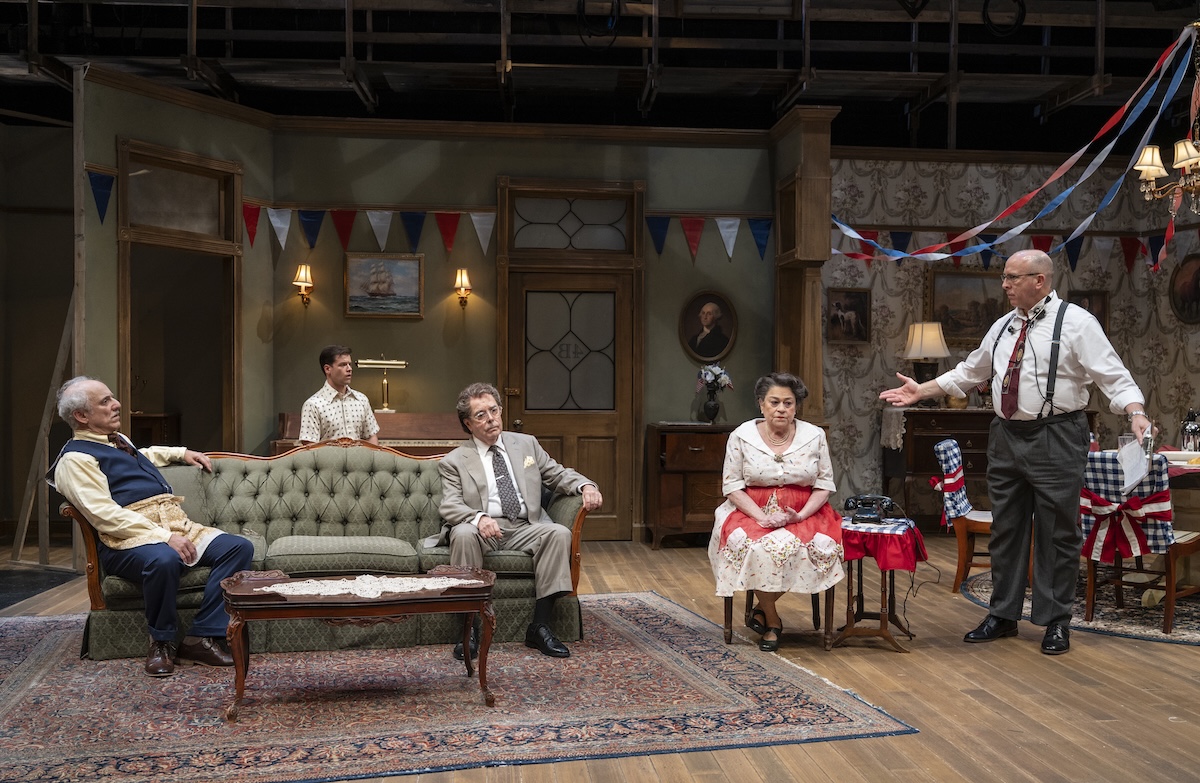
Actor Philip Loeb as Molly’s husband Jake (played by William Dick) is the focus of the controversy that becomes the central theme of the play. Philip was a founder of Actors Equity and the American Federation of Radio Artists and he’s a dedicated union man. We learn that Jake and his partner run a dressmaking shop and they’re behind schedule on some orders. That may mean some work on the holiday.
When director Walter (Joe Dempsey) tells them it’s time to take a break, Eli (Uncle David, played by Mark David Kaplan) tells the younger actors—Larry, who plays Sammy Goldberg (Ty Fanning) and Arlene, who plays Rosalie (Sarah Coakley Price)—that it’s because of Philip that “actors get rehearsal pay and breaks and limits on how many hours they can be in rehearsal.” Philip’s union activity is why the committee is after him, Eli says. “They want to bust the unions. So they say the Communists are running the unions.”
The three older actors tell Larry and Arlene that in the 1930s, Communism was quite popular in this country. Eli says, “The Fascists were taking over Europe. Communism was what all the hep cats were into. Particularly the artists.” The Marxists wrote all the best plays, Philip says.
Arlene, concerned about her future career, says, “If people think we have Communists on the show, we’re going to get canceled.”
Rehearsal resumes. It’s the next day and after the Fourth of July parade, Molly serves her all-American dinner: Red, white and blue blintzes.
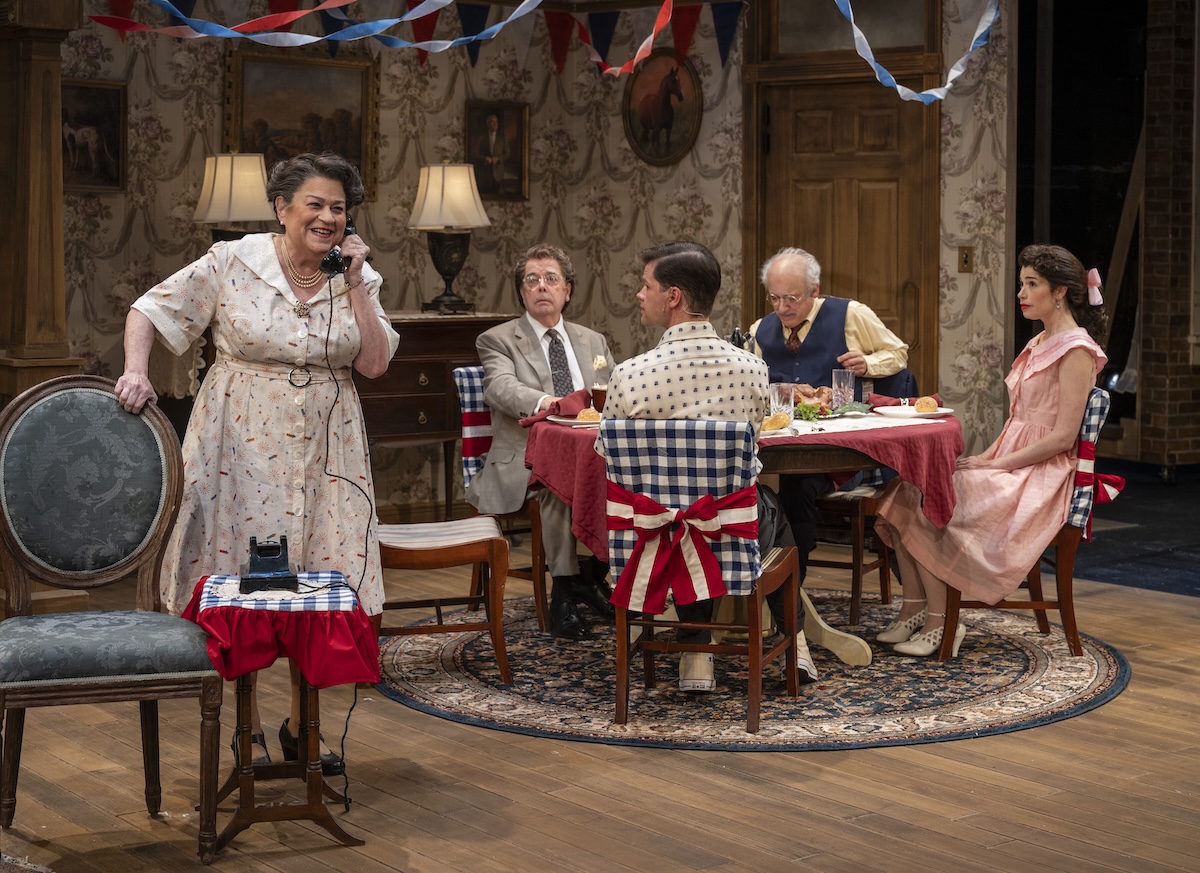
Later in the rehearsal, they take another break because Gertrude gets the phone call she has been waiting for—from an eminent person. She tries to convince him to take action against the blacklist. What will Gertrude do?
The play ends as Molly rehearses her opening speech for act two of The Goldbergs; she breaks character and makes a defiant closing statement.
There’s a lot going on in the television studio and in Sherman’s play, but director Jones keeps the action on an even keel so it’s always clear which role each actor is playing. Cindy Gold's sparkling performance is matched by those of William Dick and Mark David Kaplan, who both draw the most from their roles. The set, designed by Jeffrey D. Kmiec, presents a proper middle-class living/dining room of that era. Props are by Nicolas Bartleson. Lighting design is by Lee Fiskness and sound design by Andre Pluess. Raquel Adorno is costume designer. Stage manager is Katie Klemme.
Playwright Sherman, a Chicago native, began his professional career as actor and writer at Second City. He was a member of Victory Gardens’ Playwrights Ensemble; a dozen of his plays premiered there including The God of Isaac and Beau Jest. His play, Chagall in School, was produced here in 2022 by Grippo Stage Company.
Northlight Theatre is celebrating its 50th season; you can see The First Lady of Television through October 12 at the North Shore Center for Performing Arts, 9501 Skokie Blvd., Skokie. Running time is 75 minutes with no intermission. Buy tickets here for performances Wednesday-Sunday.
For more information on this and other productions, see theatreinchicago.com.
Support arts and culture journalism today. This work doesn't happen without your support. Contribute today and ensure we can continue to share the latest reviews, essays, and previews of the most anticipated arts and culture events across the city.
