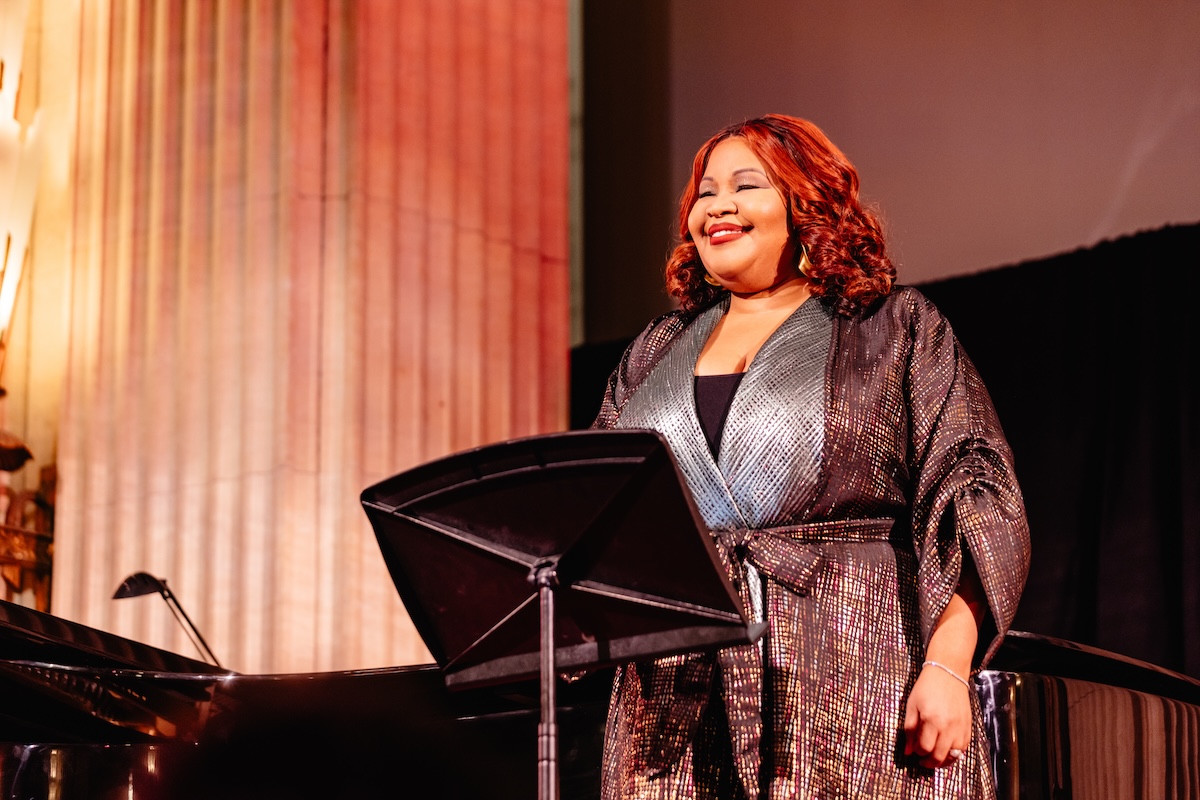

Soprano Karen Slack, accompanied by the Ryan Center pianist Michael Banwarth, performed a program of compositions by Black composer Florence B. Price on Saturday. The First United Methodist Church-Chicago Temple was the perfect setting for selections from Slack's album Beyond the Years, which won the 2024 Best Classical Solo Performance with accompanist Michelle Cann.
Slack performed several selections from Beyond the Years, as well as other selections that Price had composed during the Black Chicago Renaissance. Price set music to the words of poets of the Chicago and Harlem Renaissance, including Paul Laurence Dunbar, Helene Johnson, and Georgia Douglas Johnson. Price was a teacher and also delved into the poetry of Lord Byron George Gordon, Don Vincent Gray, and David Morton, as well as composers Schubert and Ravel.
Price's compositions evolved from the unabashedly romantic and elaborate compositions of the 19th century, leaning more towards gospel spirituals that emulated European music than the music from which the blues evolved. Slack infused music with a depth and soul that perhaps could not have been imagined when it was first published. The concert opened with music from other composers. Maurice Ravel's "Kaddish, from Deux mélodies hébraïques" is a traditional Jewish prayer of praise, sometimes sung after the death of a loved one, to glorify the name of God. It was a stirring beginning to a concert that carried such emotional and spiritual gravitas.
Slack and Banwarth were in sync with each other, their rhythms flowing and rests precisely timed. Schubert's "Gretchen am Spinnrade" ("Gretchen at the Spinning Wheel") was a delightful example of musical onomatopoeia. The music was an allegro paean to dizzying love. The concert then delved into an exploration of Price's layered and elaborate style, which emphasized dramatic melody and sweeping arrangements. The romanticism of Otto Leland Bohanan and Paul Laurence Dunbar's poetry heightened Price's style. Yearning, love, and loss were themes not only of human romantic love but of yearning for freedom and having one's voice heard.
Price's music came to Slack after a circuitous journey from a discovery in a derelict house in St. Anne, Illinois. In 2009, Vicki and Darrell Gatwood were rehabbing that house and made a discovery that would bring a star of the Chicago Black Renaissance back to the fore of classical music in the millennium. The St. Anne house was the summer home of Florence Price. It stood empty since she died in 1953, and had been vandalized and sustained water damage. The box of music was relatively undamaged and made the journey from Little Rock, Arkansas, to the Curtis Institute of Music, where Karen Slack and Michelle Cann had their musical training.
After the intermission, all of the music was selections from the album Beyond the Years. Price's music is very much in the style of Rachmaninoff and Schubert, with dramatic crescendos and mellismatic notes. It is also influenced by her Southern Black heritage, which incorporates blues, traditional spirituals, and folk motifs. Slack is beautifully emotive and adds an air of defiance to some of the songs. She sang "What Do I Care For Morning" with her hands on her hips, chin thrust out, and dramatic haughtiness. It was an air of 'how dare you wake me with all of this sunny noise?' Helene Johnson's poem spoke to a romantic penchant for mysterious moonlight and the caress of darkness. Price wrote her own lyrics for "Spring." She had a love of nature and how it moved the human spirit to love and goodness.
"Life and its weal are to give and feel. The soul, the heart that can break with a pain of ecstasy." I believe that there is such a thing as a composer's sensibility; Price's was steeped in the Romantic era and also reflected her Black heritage. Slack's interpretation was definitive that the two can coexist. Her stage presence is that of an opera diva, but her last encore was a joyous, gospel-inflected tune, elegantly grooving like her self-described girl from Philly.
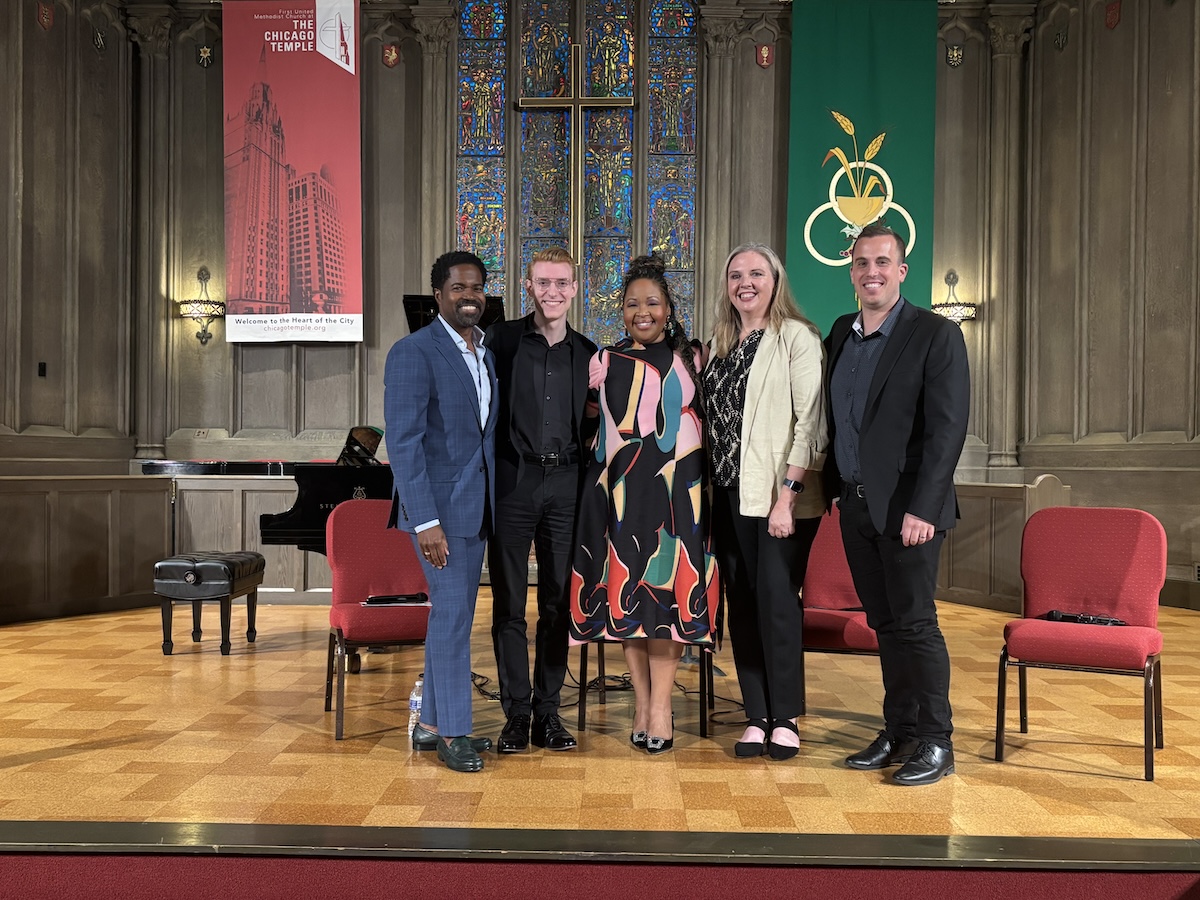
A thought-provoking panel discussion followed the concert, hosted by Roderick Hawkins, an associate dean at Northwestern University. Beyond the Years album producers Tamara Acosta, Stephen Spinelli, and Karen Slack joined in the discussion. It was a first-person account of their collaboration with ONEcomposer, the organization responsible for restoring and advancing the many works of Florence Price. They also shared the excitement of Ms. Slack's Grammy Award win.
Karen Slack: Beyond the Years was presented as part of Lyric Unlimited, which offers education and community engagement to those who may not regularly be exposed to or have access to classical music. It is also an opportunity to find and nurture young talent in the Chicago area. Please visit lyricopera.org/lyricunlimited for more information. Also, please visit Karen Slack's website to learn more about her journey to a Grammy for Best Solo Performance in Classical Music.
If you enjoyed this post, please consider supporting Third Coast Review’s arts and culture coverage by making a donation. Choose the amount that works best for you, and know how much we appreciate your support!
