
Arthur Miller’s Death of a Salesman is an American classic so excellent, so full of wisdom and raw emotion, that any production stands to be a helluvah show. Now at the Greenhouse Theater Center, the Gwydion Theatre Company provides its interpretation, directed by Scott Westerman. It’s a well-designed production with mostly strong performances, though weird interpretations and deviations from the show’s intent muddle what could be a greater show.
The drama follows a couple days in the life of Willy Loman (Rick Yaconis), a desperate salesman whose slip into insanity coincides with a visit from his estranged son Biff (Jimmy Piraino). His wife Linda (Annie Slivinski) watches in despair as the man she loves clings desperately to the American Dream, unable to admit to himself he’ll never be “somebody.”
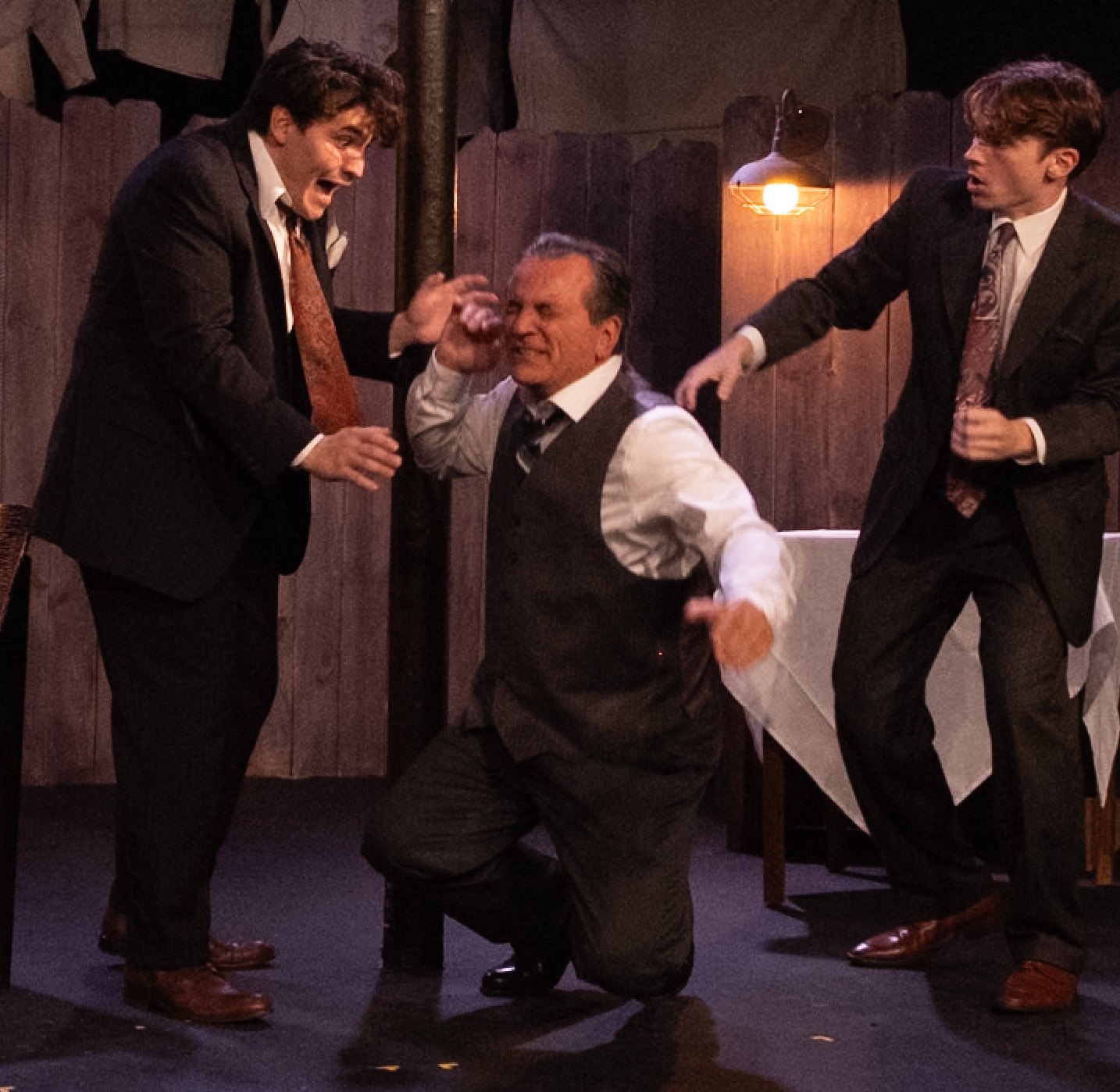
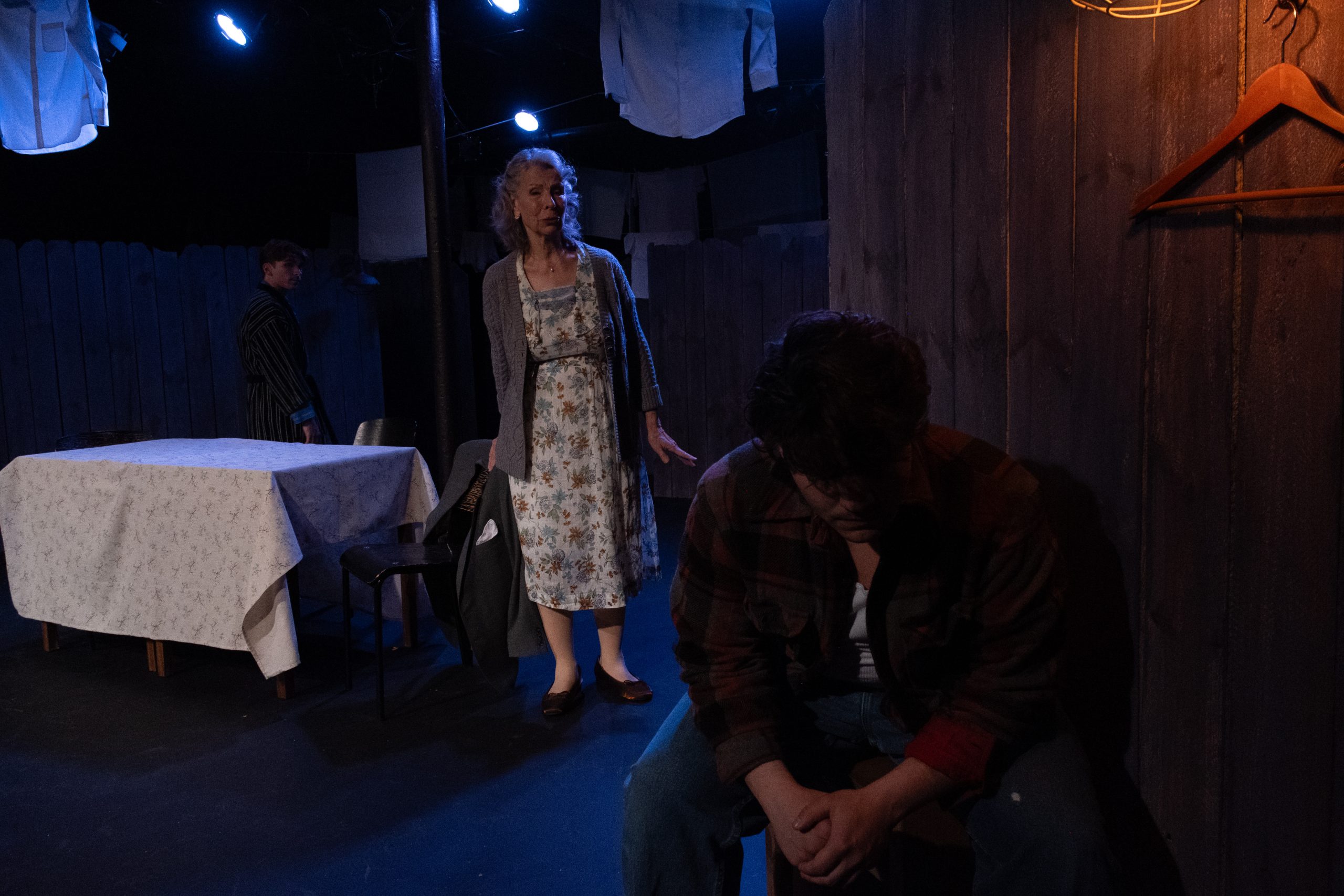
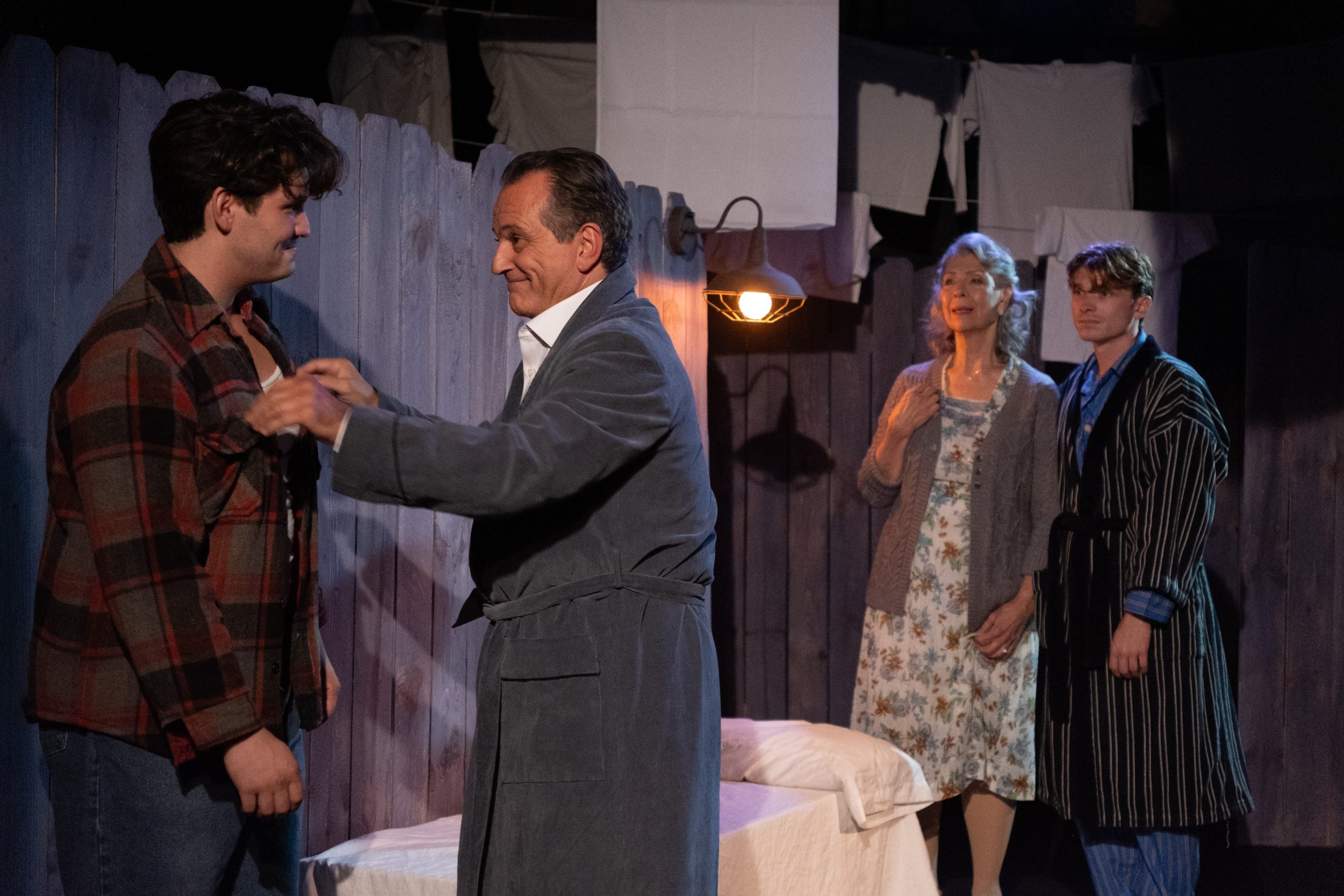
The stage design is simple but effective. Productions that follow the script to a T set the action on raised levels, but in The Greenhouse Theatre Center’s Up Studio space we’re working on flat ground. Lighting designer Sam Bessler makes the stage dynamic, though, separating and exposing the different rooms of the Loman home with crafty light cues.
The coolest technical decision is the inclusion of industrial sconces hanging from the wood fence backdrop. Sometimes, when Willy’s psychosis overpowers him, the sconces hum and surge like a nuclear meltdown. Willy hangs his coat beneath one of the sconces, creating, when it illuminates, the image of a ghostly businessman whose head is a fading light. Clever.
I take issue with some of Rick Yaconis’s decisions, though. His interpretation of Willy Loman, in the first act, carries a certain controlled sternness he ought to correct. From the play’s outset it’s clear Willy is losing it. Already he’s contradicting and talking to himself habitually. Yet Yaconis’s Loman doesn’t seem quite unhinged enough.
After his son Happy interrupts a hallucination, Willy cries, “You’ll retire me for life on seventy goddam dollars a week? And your women and your car and your apartment, and you’ll retire me for life?”
The play suggests we see Willy as a man lashing out in confused delirium. Yaconis, however, is too much in control. He’s an angry dad, more tyrannical than befuddled, and so the audience’s sympathy doesn’t extend as far as the show could allow. Yaconis reaches that frenzied state in the second act, but he sacrifices opportunities for real pathos in the first.
Yaconis also deemphasizes some important moments. For example, in one scene Willy is begging for his brother’s advice, “Dad left when I was such a baby and I never had a chance to talk to him and I still feel—kind of temporary about myself.”
It’s a real gut punch of a line, and super insightful. But Yaconis doesn’t bring the emphasis or emotion the scene requires. He says the line quickly, throws it away. Good acting is sometimes about taste, about recognizing the script’s golden moments. When Miller gives you a gift you slow down, face the audience, enunciate. Yaconis lets some of the best lines brush by.
Annie Slivinksi as Linda Loman has, in my mind, the correct taste and actorly instincts for Arthur Miller. Her Linda is explosive with pain. Some audiences are sensitive to melodrama, but in a sad play I want a good cry throughout. With her loud, desperate performance, she squeezes every tear from these eyes, and I thank her for it.
She more than understood the assignment when she begs her sons show compassion for their fading father, “He’s not the finest character that ever lived. But he’s a human being, and a terrible thing is happening to him. So attention must be paid.”
It’s raw and intense. I wish I saw more of it in Willy.
The supporting cast is largely impressive. Jimmy Piraino’s Biff is a sympathetic smoldering James Dean type. Grayson Kennedy plays the manipulative Happy as a familiar man child, though he ruins the play’s tone a few times reaching for comedy. R. Slavick as Charlie is a standout, capturing the character’s earnestness and joviality.
I do take issue with Terrence Mayfield Jr.’s portrayal of Bernard, Biff’s friend who grows up to be a powerful lawyer. In the second act Bernard, knowing Willy is obsessed with class jealousy, tries to conceal his success, while he asks Willy difficult questions about Biff. He’s a standout character, class conscious enough to understand Willy’s perspective and compassionate enough to help him.
But for some reason Mayfield’s Bernard is cruel to Willy. The way he delivers the lines implies Bernard is braggart, even though he importantly is not. When he asks Willy about Biff his tone is interrogatory, as if he already knows the answers to his questions. It doesn’t really make sense, and feels like a total misread of the character.
People who have seen other productions of Death of a Salesman may find this one weak by comparison. But it is still a powerful theatrical experience. This sad show made me cry like a baby. How could I complain?
Death of a Salesman by Gwydion Theatre Company continues at the Greenhouse Theater Center, 2257 N Lincoln Ave., thru October 26. Running time is 3 hours with a 15 minute intermission. Tickets are $34.00.
For more information on this and other productions, see theatreinchicago.com.
If you found this post interesting, please consider supporting Third Coast Review’s arts and culture coverage by making a donation. Choose the amount that works best for you, and know how much we appreciate your support!
