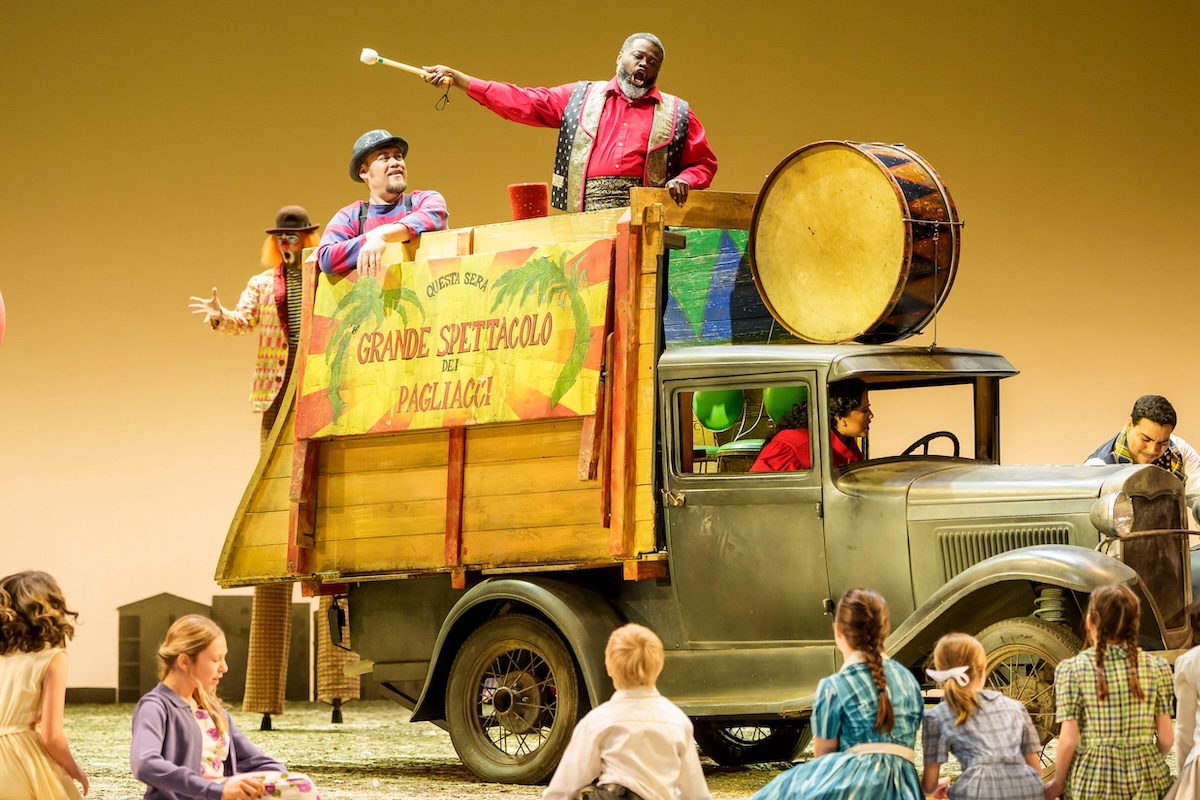

The Lyric Opera of Chicago gives us a fall doubleheader with two classic Italian operas rooted in the verismo tradition. Pietro Mascagni's Cavalleria rusticana (1890) and Ruggero Leoncavallo's Pagliacci (1892) departed from the late 19th-century Romantic tradition. Both operas draw on the themes of poverty, adultery, and jealous rage, weaving them into two of the most well-known operas.
I can only imagine what the vibe was in Rome when Cavalleria Rusticana featured a pregnant, unmarried leading character—lo scandalo! I can tell you the vibe at the Lyric was electric on Saturday from the moment we heard tenor Seokjong Baek as Turiddu. Baek was offstage singing to Lola (Camille Robles). Baek has a classic tenor with an emotive, rich vocal cry. However, there is a problem with Lola. She is married to the local shipping and cartage boss, Alfio (Quinn Kesley).
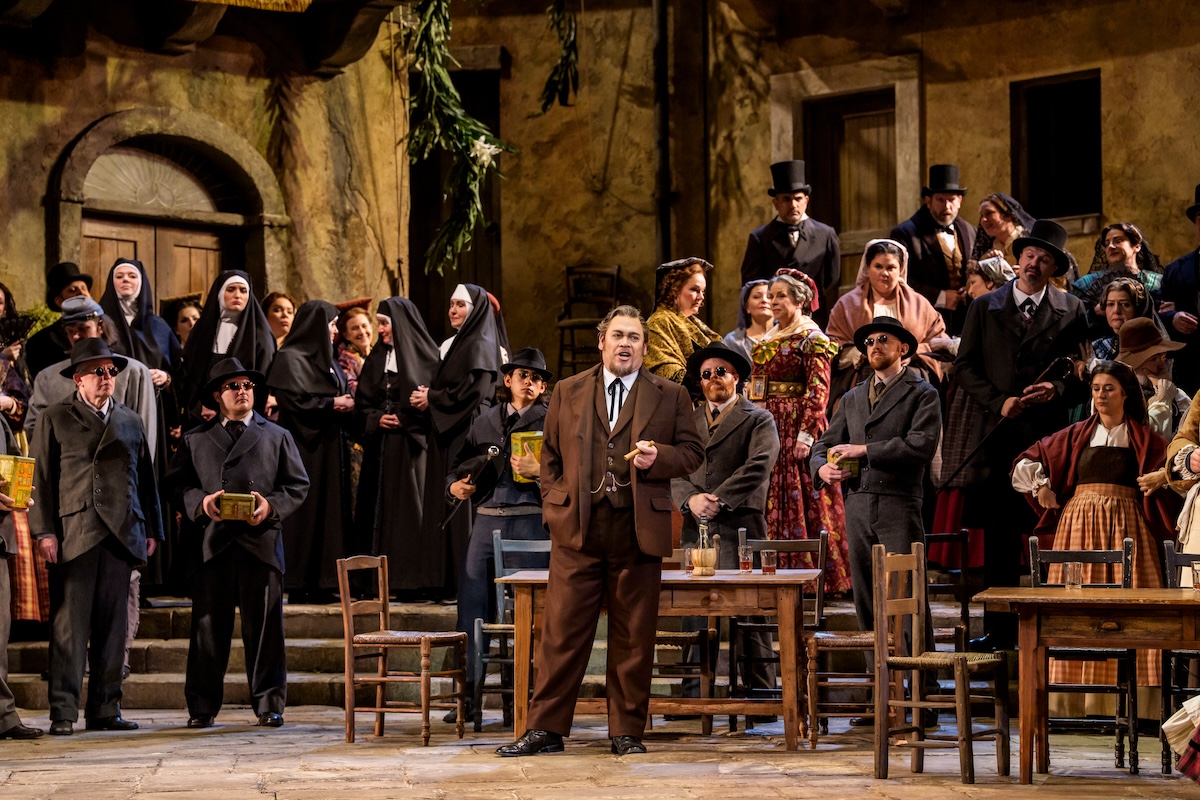
The action and troubles in Cavalleria Rusticana would be a blues singer's dream today. Turiddu left his girlfriend, Santuzza (mezzo-soprano Yulla Matochkina), with the souvenir of an out-of-wedlock pregnancy. Santuzza runs to the tavern of Mamma Lucia (contralto Lauren Decker) to look for her errant boyfriend. Did I mention that this opera takes place on Easter Sunday? The setting is a small town in Sicily, with parochial attitudes that keep Santuzza from attending Mass. Meanwhile, the whole village, including Alfio and his fedora-wearing henchmen, is heading to church on a holy day of obligation.
Mascagni composed the music, with the libretto by Giovanni Targioni-Tozzetti and Guido Menasci. While the music still has the beautiful and lush tone of romanticism, the story is indeed rugged. I also think that, although cavalleria translates as chivalry, the term is almost an oxymoron. Chivalry is about honor, truth, and courage, which is the opposite of how men behave in the small village. It is unusual to hear a contralto in such a significant or leading role, but Decker's rich voice reached depths with ease and not a quaver. Matochkina is fabulous in what turned out to be a very physical role. The entire opera has her in a state of desperation, panic, and extreme grief. I think that Matochkina showed a perfect amount of restraint in a story meant to shock and serve as a morality tale.
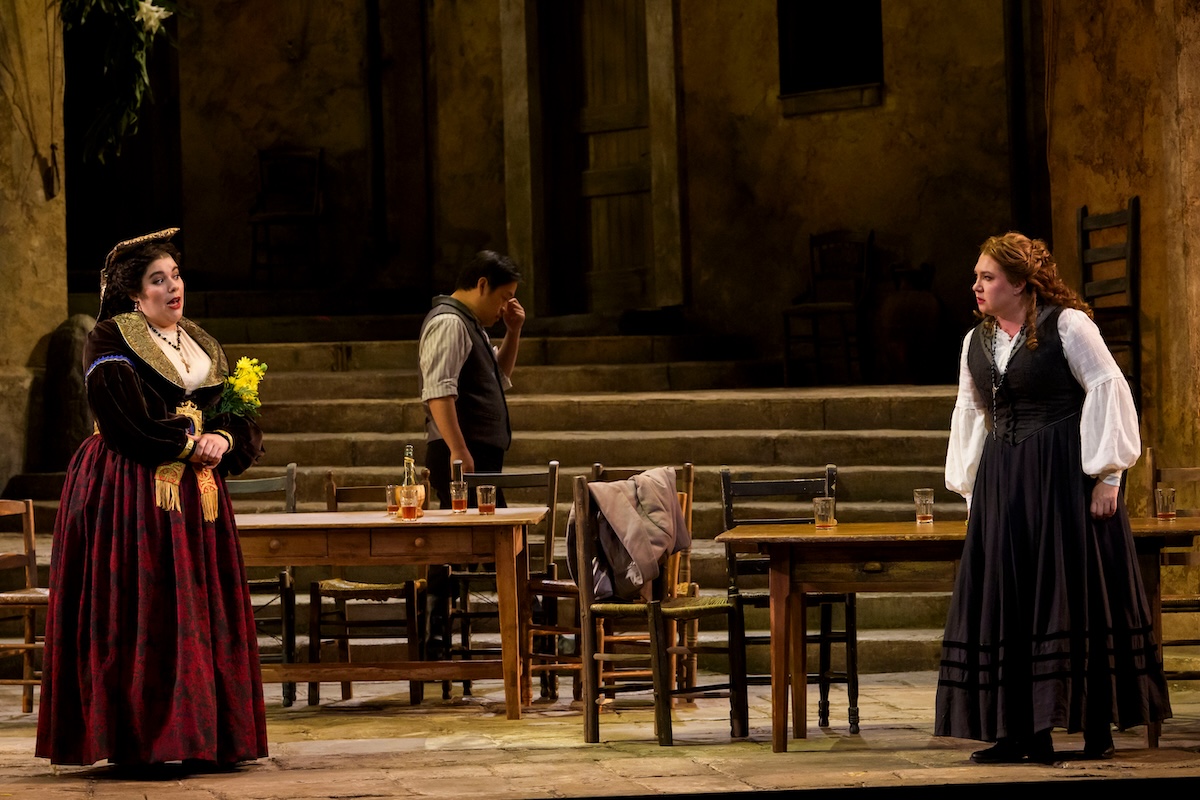
I was psyched to see Camilla Robles in the Lola role. She previously played Musetta, another shady dame in La Boheme. That production was also done in a verismo style, revealing a more realistic portrait of the harshness of the demimonde, particularly for women. Robles plays a great "bad girl" who gets away with things because of her social status. I give a shout-out to Quinn Kelsey, who plays the villain in both Cavalleria Rusticana and Pagliacci. His baritone is as menacing as his stage presence.
The Lyric Opera chorus is a dazzling spectacle for Cavalleria Rusticana. Chorus director Michael Black does his usual excellent job of bringing a massive number of voices to the stage. This production features two choruses on stage, a supplementary chorus offstage, and a passel of children and adult supernumeraries. It is a massive production for a relatively short opera, but director Peter McClintock corralled the cast and extras expertly. There is no superfluous action. It was Easter Sunday in a small Catholic village, and the excitement level would have been dizzying. Michael Yeargan had double duty as both costume and set designer for both operas. The set for Cavalleria Rusticana had levels with a church at the top of the steps. It added to the excitement and the physical action. You have to see Matochkina thrash about on the stairs while singing. It is splendid casting.
Maestro Enrique Mazzola's vision of the Lyric Opera as the "people's opera house" is evident in both productions. He conducts with passion and brings out the subtleties in familiar music, making it new again. There are several current Ryan Center singers and alumni. The stage beautifully mirrors the city of Chicago's diversity. People of all stripes can see themselves onstage singing vintage classical music and new music at the Lyric, and I am all about it.
The Intermezzo of Cavalleria Rusticana was chosen as the theme for Raging Bull (1980). It is one of my top ten movies of all time with parallel themes and settings. The opera is about the conflicts of everyday people laid bare. The film is the same and was shot in a cinéma vérité style in black-and-white. When Mazzola raised the baton for Intermezzo, I had to catch my breath. I had never heard it played live, but now, the Lyric orchestra has set the bar for what it should sound like.
There is irony that game seven of the World Series was happening at the same time as Pagliacci burst onto the Lyric Opera stage. Game seven was predicted to be a classic thriller. However, I was very excited to see Pagliacci live, especially with tenor Russell Thomas in the eponymous role. It is one of the great tragic operas and, indeed, an exciting classic, with music and libretto by Ruggero Leoncavallo. The opera was introduced with a prologue sung by Quinn Kelsey, who plays the villain Tonio. I thought it was really cool to have Kelsey sing about looking beyond the costumes for the emotions of the people, in front of the curtain, in a tailored suit.
Pagliacci premiered in Milan in 1892 and was a huge success that Leoncavallo never topped with his subsequent operas and compositions. This production is set in postwar Italy, after the carnage and fall of fascism. Parts of Italy were reduced to rubble, and I would presume the national psyche was shattered as well. Circuses and carnies were not held in high regard, but the broad, sometimes vulgar entertainment was a welcome break for poorer people. Canio (Thomas) and his troupe roll into town, and there is a lot of excitement.
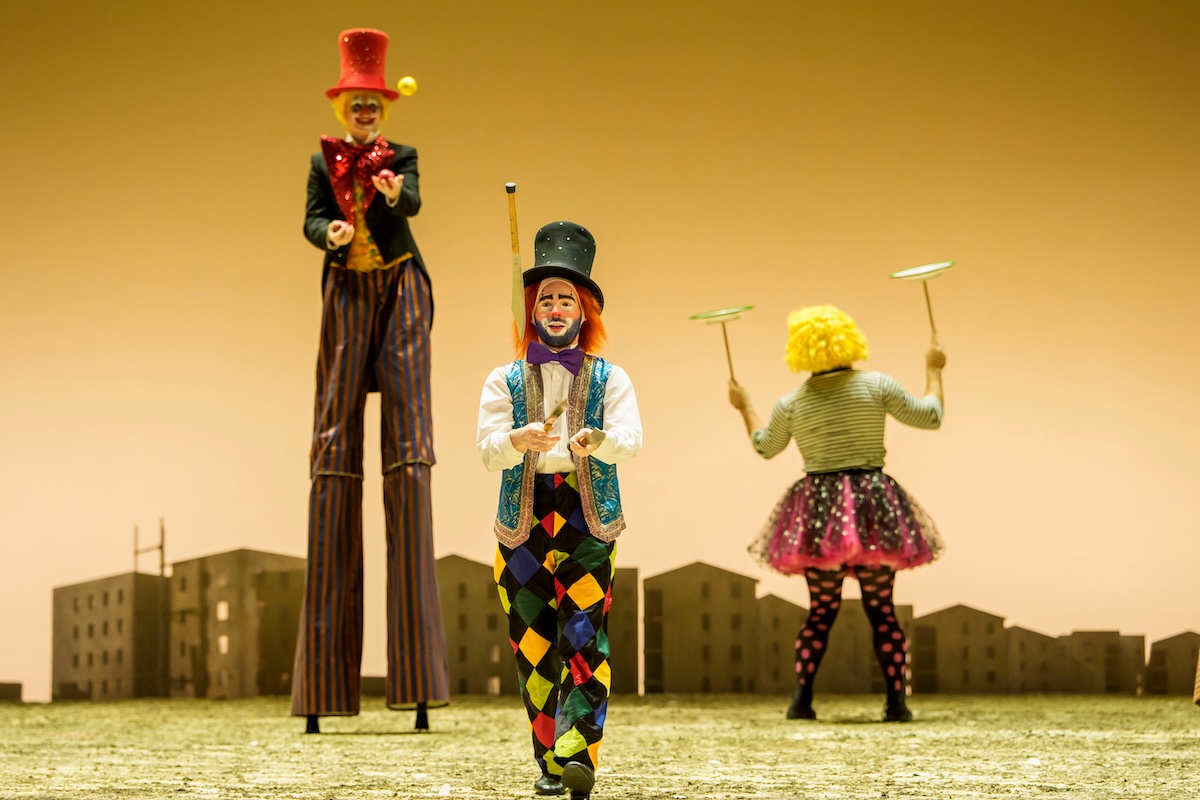
Once again, set and costume designer Michael Yeargan triumphs with a truck caravan driven onto a stage that looked like a rural setting. This production of Pagliacci was set in Calabria. The large chorus and supernumeraries fill the stage, carrying their chairs to watch the show. Peter McClintock directs it well with impeccable staging that conveys a sense of crudeness and chaos. There were people on stilts, jugglers, and a plate spinner! It was indeed like a circus with overstimulating visuals and music.
The story is a classic tale of what is behind the character of the clown. He is made to look jolly and to amuse people by debasing himself, but underneath, there may be pain and rage. Canio is antagonized by the suggestion of Tonio (Kelsey) hitting on his wife, Nedda (soprano Gabriella Reyes). Thomas is an imposing stage presence who makes it look effortless for him to turn from joy to tragedy. I remember him as a heroic soldier in Aida who bravely faced ruin and death for the love of a woman. Reyes is luminous as the adulterous and passionate Nedda, who plans to run off with Silvio (baritone Luke Sutliff). The chemistry between Nedda and Silvio sizzles and becomes even more licentious as they couple in full view of Tonio.
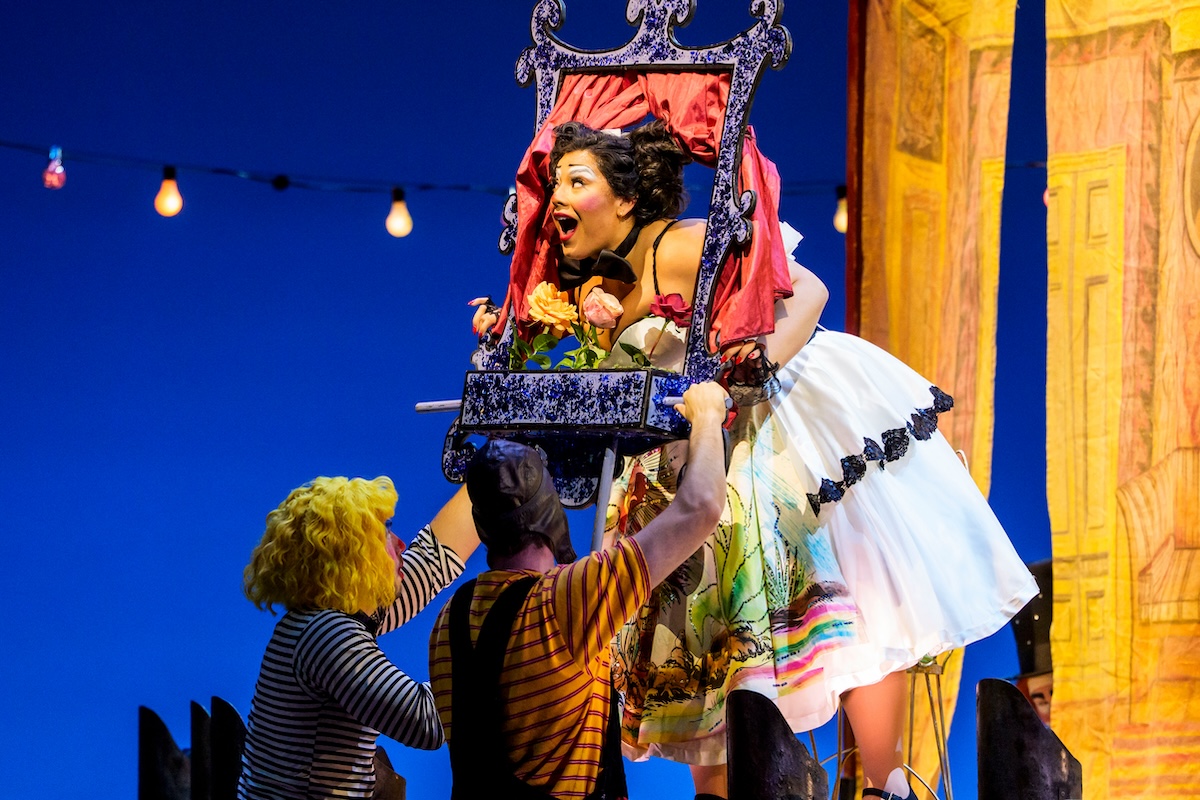
Kelsey's Tonio is especially odious as he tries to get his way with Nedda. Makeup and wig designer John Metzner does a superior job of giving the clowns in this production a look that does not disguise their humanity. Tenor Daniel Luis Espinal plays the sympathetic clown Beppe. His role is not significant, but his voice and acting make an impression. I remember him as a spurned suitor sharing the stage with Russell Thomas in Fidelio. Espinal has a magnetic stage presence that makes his role memorable.
Thomas is deservedly the star of Pagliacci. His tenor is beautiful, and he is an expressive actor who has played heroes and villains, turning that pathos up to 11 in his performance as Canio. His character seems in a trance as he prepares to put on the costume and sings the famous "Vesti la giubba" aria. Thomas holds his own and makes the role his. There was thunderous applause when he finished the aria.
The Lyric Orchestra was superb as usual. The opera features more than one climactic song, and Maestro Mazzoli brings that drama to the score without overwhelming the singers. Pagliacci is among the more "commercial" operas referenced in film, television, and popular music. Fun fact: Smokey Robinson's "Tears of a Clown" is based on Pagliacci. Robinson hosts Sirius XM's Soultown and tells stories about his writing inspiration.
Pagliacci is a feast for the senses, depending on how you feel about circuses. I was never a fan of the American circus form. I found the clowns to be creepy, even before Stephen King's Pennywise. No one knows what is behind the thick greasepaint. I definitely lean more toward Cirque du Soleil clowns, such as Mauro from Cortéo. I also have a special empathy for the character of Canio, who was driven to an unspeakable act. The postwar setting of Pagliacci evokes Roberto Rossellini's film Open City (1944), another example of cinéma vérité. I highly recommend that you catch a performance and bring someone who may appreciate being introduced to opera as a cool thing to do with amazing music and brilliant performers.
Cavalleria Rustica and Pagliacci runs just under three hours, including a 30-minute intermission. The double bill runs through November 23 at the Lyric Opera House, 20 North Wacker Drive. Get your tickets here.
For more information on this and other productions, see theatreinchicago.com.
Support arts and culture journalism today. This work doesn't happen without your support. Contribute today and ensure we can continue to share the latest reviews, essays, and previews of the most anticipated arts and culture events across the city.
