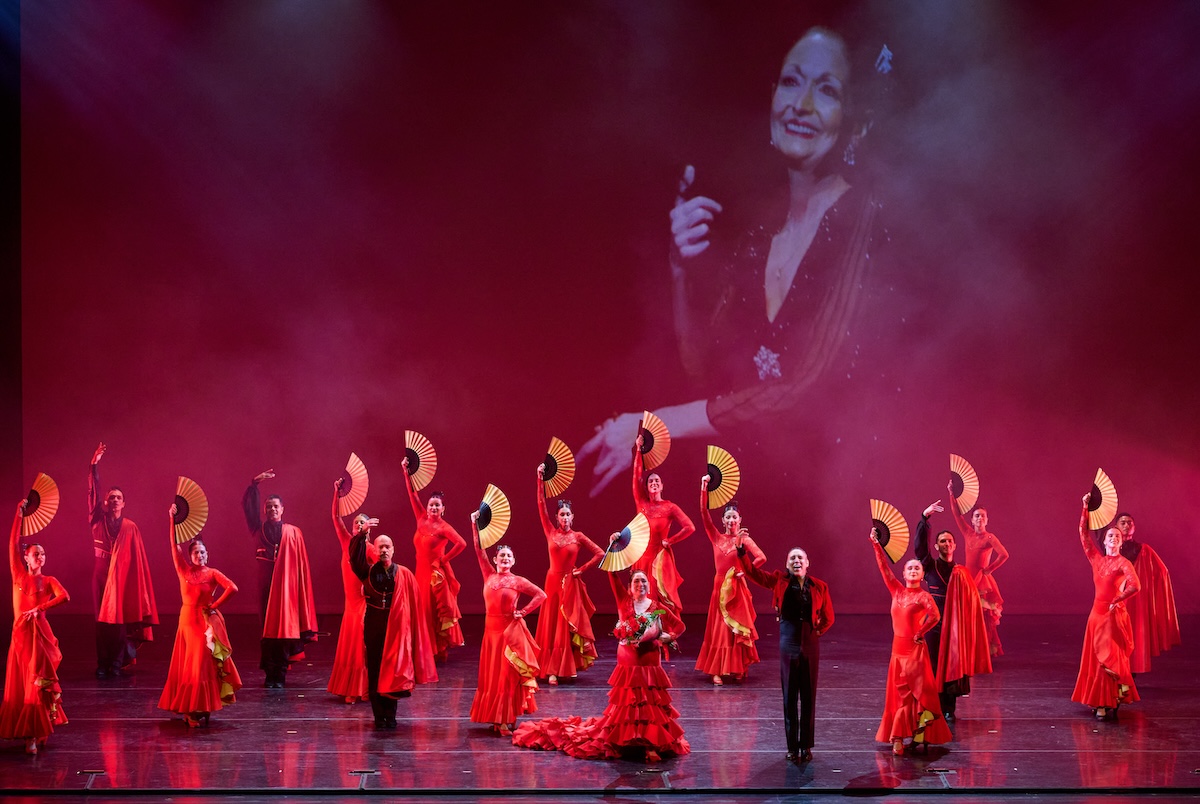

Ensemble Español Spanish Dance Theater celebrated its 50th anniversary on Saturday at the Auditorium. It is another treasure in Chicago's glittering and vibrant cultural scene, .yet another distinguished dance company rooted in our city. Dame Libby Komaiko founded Ensemble Español in 1975 at Northeastern Illinois University after studying with Giordano Dance and José Greco, among others. Her legacy lives on in the beautifully stylized precision movements of flamenco and bolero dancing. I believe that she would have been exceptionally proud to see the ensemble bring Spain to Chicago through dance.
A live musical act highlighted the performance. It felt like being in Spain, in the plaza, with the sonorous, romantic voice of José Moreno accompanying himself on guitar. His mesmerizingly raspy tenor reached the rafters, evoking Andalusia by firelight. Flamenco singer Patricia Ortega, flamenco guitarist David Chiriboga, and percussionist Javier Saume Mazzei accompanied Moreno, adding a fuller, richer sound. Ensemble Español covers many styles of flamenco. My favorites in Act I were Duende Gitano (Solea por Bulerias), an expressive and particularly passionate dance honoring the Romani foundation of flamenco, and Danza del Fuego, which translates as "dance of fire."
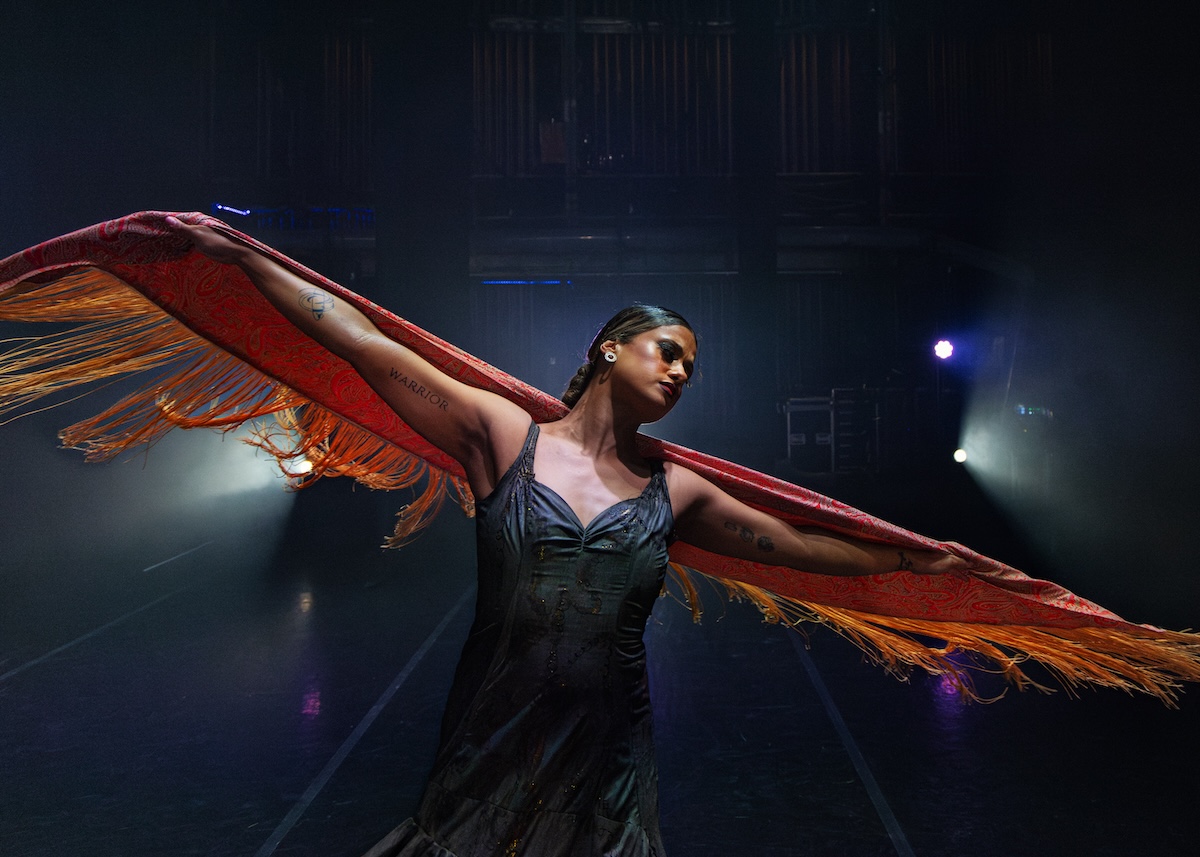
All of the performances had fire. The movements were highly stylized and precise, and the audience responded with exuberant applause. The three guest dancers performed with the ensemble for the anniversary performance. Ivan Aguayo and Martin Ortiz are both accomplished ballet dancers. Nestor Corona is a fantastic dancer and the principal of Chicago High School for the Arts. Another guest artist was Claudia Pizarro Lara, a member of Casa Triana Flamenco. Lara contributed to the choreography for the evening's performance. All of the guests and company dancers were outstanding.
The performance concluded with a stunning bolero dance to Ravel's Boléro (1928). This dance was choreographed by the founder, Dame Libby Komaiko, in 1993. The bolero music category evolved from Castilian folk music and was perfected in Cuba. It is slow and sensuous music with equally sensuous movement. Ravel's composition starts pianissimo and builds to an incredible fortissimo blast at the end, and it is mirrored in the choreography. The women dancers flash beautiful fans essential to seduction and indicating passion. The men twirl capotes de brega—red capes used by the toreador in the finale to a bullfight, signifying victory. A photo of Dame Libby Komaiko was projected over the ensemble at the very end. Artistic director Irma Suarez Ruiz has preserved the vision and excellence of Dame Komaiko. The Ensemble Español performances are authentic and enrich the Chicago arts scene.

It was an outstanding performance marred by dim lighting and a cursed fog machine or dry ice. Dark blue or vivid red gels nearly obscured a couple of the dances in the stage lighting. Add what looked like gusts of fog, and it may as well have been in the dark. I get that it is a "vibe," but so are flamenco dancing and the ensemble's gloriously colorful costumes. The overly dramatic lighting was unnecessary and detrimental to enjoyment of the performance. Fortunately, there was less of it in the second act, but the disappointment remained. The art can stand on its own.
Ensemble Español Spanish Dance Theater's 50th anniversary performance took place November 15 at the Auditorium, 50 East Ida B. Wells Drive.
Support arts and culture journalism today. This work doesn't happen without your support. Contribute today and ensure we can continue to share the latest reviews, essays, and previews of the most anticipated arts and culture events across the city.
