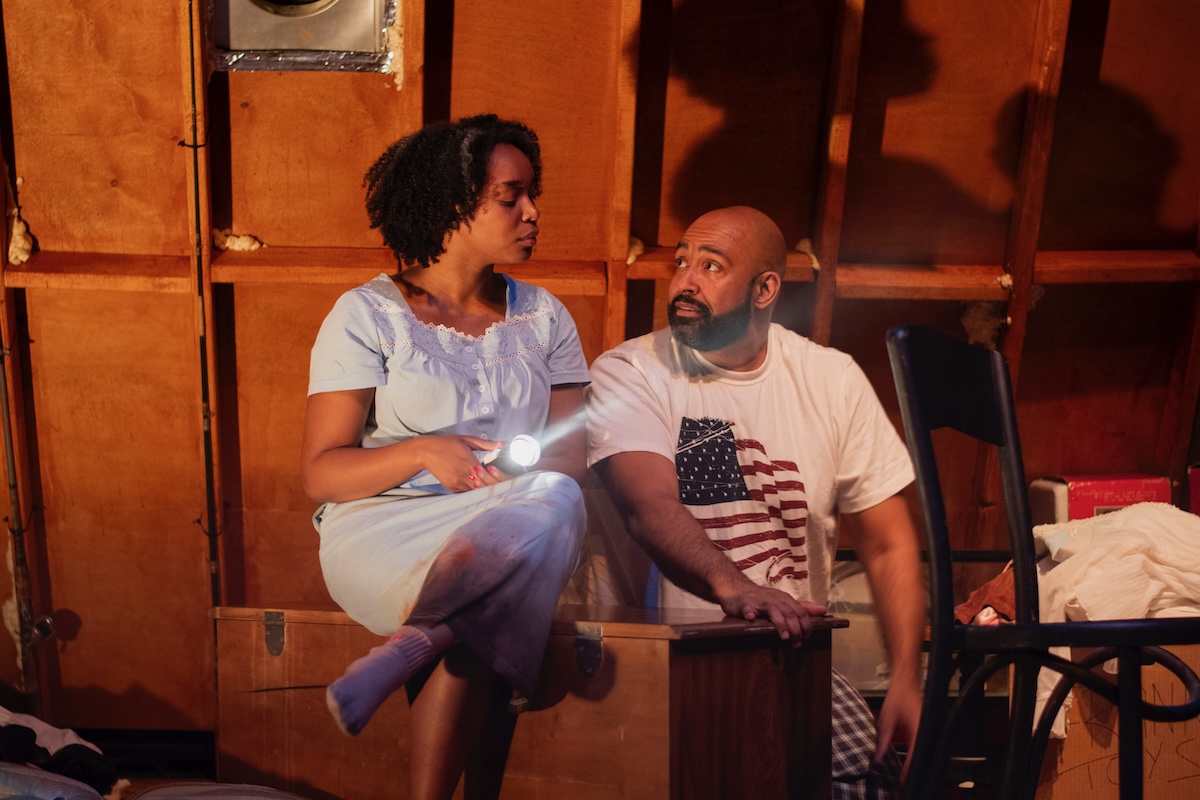

Rising Water is one of a trilogy of plays by John Biguenet about Hurricane Katrina; the other two plays are Shotgun and Mold. It has been 20 years since America woke up to the horrifying video and photos of New Orleans under water. In Rising Water, we meet Camille (Kristin Thomas) and Sugar (Jelani Julyus), who live in the Lower Ninth Ward, closest to the levees breached by the Mississippi River. Their house is intact, but they wake to it filling with muddy water and waste. Some great writing emerged from the storm's aftermath, but unfortunately, Rising Water is not among them.
Theatre L’Acadie is staging Rising Water, directed by Erin Sheets, at the Facility Theatre. The two plays that I have seen by L'Acadie were notable for their originality, excellent pacing, and dark comedy. The Swan and Big Time Toppers were wonderfully manic and surreal. I was expecting some of that originality and energy, but it's missing in Rising Water, except for an emotional outburst when Camille tires of Sugar's denial and attempts at joviality.
Camille and Sugar head for the attic of their shotgun house, hoping the water will stop rising. Brandii Champagne's scenic design is authentic, featuring tar-paper roof shingles, old furniture, and children's toys. Sugar tries to keep the mood light by telling stories and complaining of hunger. Camille is in a panic, terrified of drowning. Her dialogue is packed with grievances and regret. The dialogue is stilted, and despite having a dialect coach, a cultural consultant, and a director from New Orleans, I heard very little of the Crescent City in this play. My family is from Louisiana, and I have spent a great deal of time in New Orleans. That unique patois is missing in this production of Rising Water.

Despite the claustrophobic set and the constant sound of sloshing water, there was very little tension in the dialogue. The deliberate, slow pacing left many pauses. There was very little intimacy between Camille and Sugar. He makes an unsexy attempt at seducing his wife, but she is not interested. They had two children, but it is unclear what their family life was like. The daughter died young, and Sugar bears a lot of guilt over her death, but it is never revealed why. Their son left home and may have been lost to drugs. Those details could have made for interesting dialogue and a reason for the frostiness in their marriage, but none of the revelations had any juice. If the pace were better or the performances had more emotional depth, the dialogue might have carried more weight.
Rising Water was nominated for a Pulitzer Prize for Drama in 2008 on the heels of Hurricane Katrina. The catastrophe was still fresh, and several artistic endeavors relayed the details and the aftermath. HBO's Treme won several Emmys. Spike Lee's four-part documentary won Emmys and a Peabody. To this day, the city has yet to fully recover, with the Ninth Ward the slowest to do so. Rising Water could use better pacing and better engagement between the actors. I still look forward to L'Acadie productions and hope that Rising Water gets a proper freshening up.
Rising Water is playing through February 22 at Facility Theatre, 1138 N. California Ave Running time is 105 minutes with no intermission. For tickets and more information, visit www.theatrelacadie.com
If you found this post interesting, please consider supporting Third Coast Review’s arts and culture coverage by making a donation. Choose the amount that works best for you, and know how much we appreciate your support!
