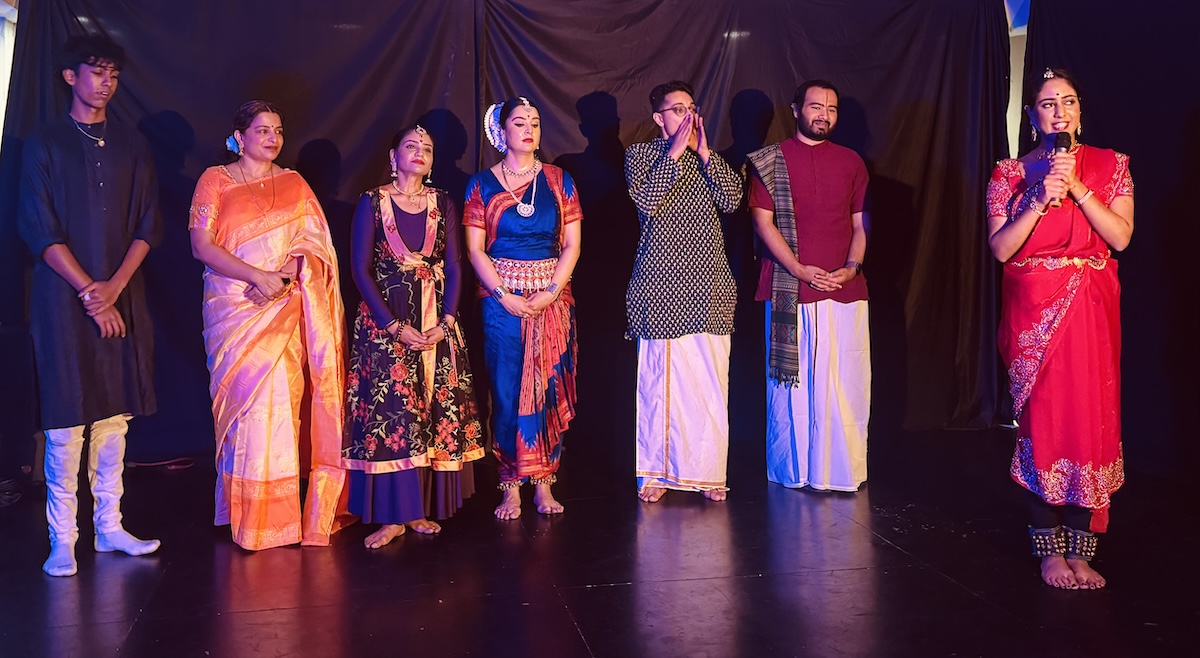

Mandala South Asian Performing Arts gave a series of dance performances last week dedicated to Śiva Bhāva: Love, Care, and the Cosmos. The visually stunning 75-minute performance in two parts featured traditional live music accompanied with Carnatic violin, mridangist percussion, and a vocalist. Three dancers in beautiful traditional dress performed solo and as a group. Shruti Parthasarathy, director and dancer, introduced dances with their spiritual meanings.
Shiva is a multifaceted deity in Hinduism, who, on the surface, is considered the Destroyer god. However, the 'destroyer' is also the deity of yoga and meditation, which teaches balance. Chaos and serenity exist within the same energy and require that we exist within both. Śiva Bhāva literally translates as a devoted and meditative state.
Three styles of South Asian classical dance were performed. Bharatanatyam emphasizes rhythmic, precise foot movements. The feet are used percussively, there are mudras (specific hand gestures), and there are exaggerated eye movements that reminded me of Kabuki theater. Parthasarathy's eye movements expressed amusement and a sense of mischief. Perhaps it symbolized Shiva's duality.
Anindita Anaam's choreography drew on the Kathak dance style, which emphasizes storytelling. Multiplicity: Hindolam Thillana tells the story of Shiva in all of his incarnations, his children, and the elements of earth, wind, fire, water, and space. The steps were fast-paced, with the feet slapping the floor gracefully. I marveled at how beautiful their feet were. Classical ballet dancers have podiatrists on speed dial. The trio had particularly beautiful feet with Ghungroo (ankle bells) jingling. In South Asian Hindu dance, rhythmic foot movements are enhanced by the Ghungroo. Bells are part of many spiritual traditions, used to evoke spirits and deities or to call for worship. It is another way that people are connected, no matter the tradition.
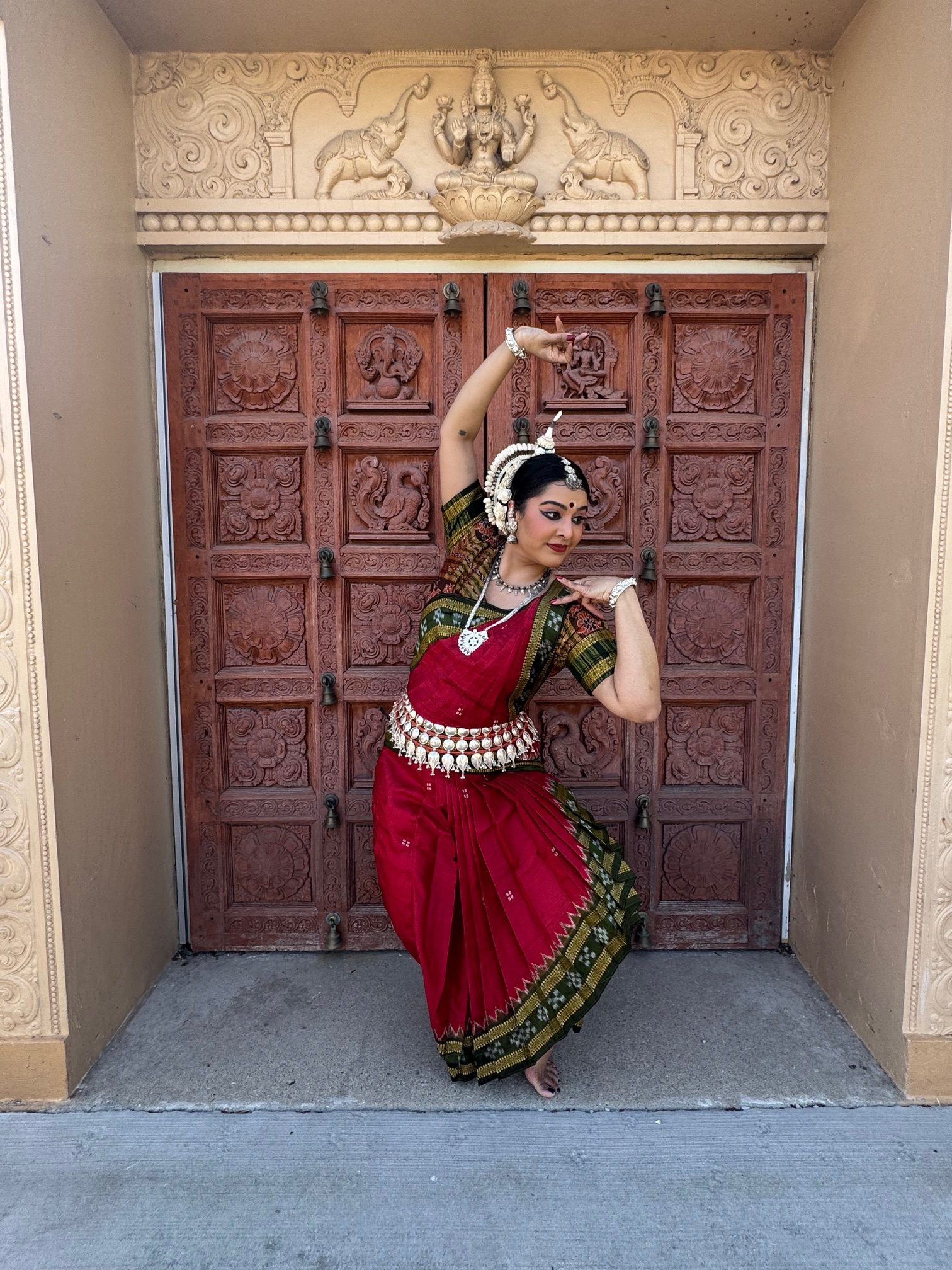
Misha Talapatra specializes in Odissi, a deeply spiritual dance. The Odissi style is the most similar to yoga, with holding poses and flowing movements. I recognized some of the poses from my limited experiences with yoga classes. There was a beautifully intricate pigeon pose, with the back leg arabesqued behind the head. It was spellbinding and beyond a simple pose. The dancers had such focus and balance. Their smiles were beatific, in harmony with the choreography's spiritual nature. Even the costumes and body decoration have spiritual significance. They all wore maang tikka decorations in the center part of their hair. As in kabuki theater, their makeup is specialized with an emphasis on the eyes, headdress, and facial jewelry.
Parthasarathy, Anaam, and Talapatra danced solo, as a duo, and as a trio. I found the experience to be ceremonial and uplifting. Perhaps it's the common threads that run through life. Everyone needs a means of alignment and balance, whether in the turmoil of the world or in one's own personal journey. Mandala South Asian Performing Arts was founded by Pranita Nayar in 2014. She is also the artistic director and an Indian classical choreographer in the Bharatanatyam tradition. Mandala also produces theater and musical programs year-round. The Chicago area has a large South Asian population, and it is wonderful to see cultural traditions shared. I highly recommend that you catch a performance from Mandala.
Mandala South Asian Performing Arts performed Śiva Bhāva: Love, Care, and the Cosmos, February 20-22, at the Fine Arts Building at 410 S Michigan and the Ruth Page Center for the Arts, 1016 N Dearborn. The show was 75 minutes with one intermission.
Did you enjoy this post? Please consider supporting Third Coast Review’s arts and culture coverage by making a donation. Choose the amount that works best for you, and know how much we appreciate your support!
