
At Joffrey Ballet's Grainger Academy, the best of the best train to become part of dance companies worldwide. The academy's four programs are the Joffrey Studio Company, the Ballet Trainee Program, the Contemporary Ballet Trainee Program, and the Conservatory Program. Each year, five choreographers are selected to work with academy members for the annual Winning Works program, which began in 2010. The winning choreographers presented a dress rehearsal last week of original work that dazzled a coterie of press and dance associates.
First on the stage was To Carry Our Own Names choreographed by Da Young Jung to music by Alfonso Peduto and Philip Daniel. In a short film introduction, Jung spoke of the coexistence of the individual within the collective, bringing themselves into the work. To Carry Our Own Names had the dancers pulsing and connected as a moving puzzle, breaking apart and weaving in and out of one another. David Goodman-Edberg's lighting design was dark and filtered with yellow tones. It was like a stop-motion film of individual mechanisms sliding into a kaleidoscope of forms.
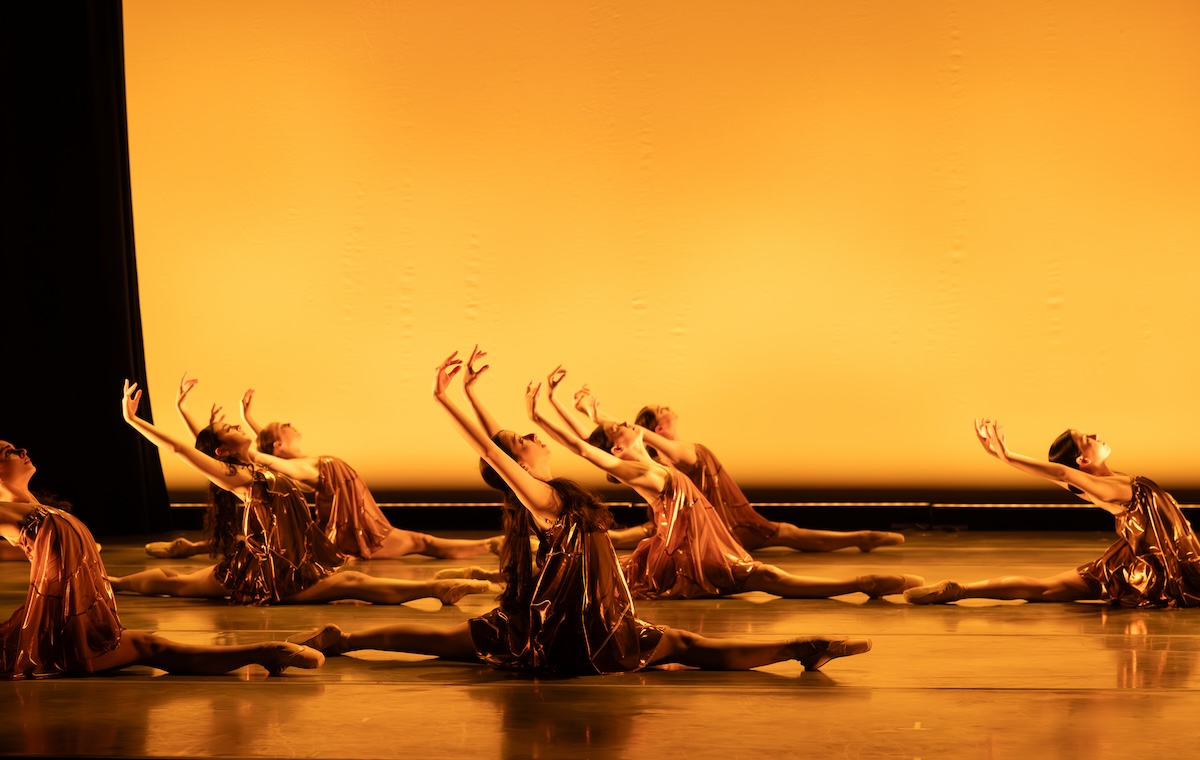
The second segment, titled Hushed Power, was choreographed by Alexandria Schooling, who described it as inspired by sand. Hushed Power shows the endless formations of sand. The dancers spin around like graceful whirling dervishes, low to the ground in iridescent golden costumes from the Joffrey Ballet costume shop. One of the formations reminded me of a beautiful scarab beetle given to me by a friend from Egypt. The scarab was sacred in ancient Egypt, the land of the Sahara Desert. Once again, Goodman-Edberg's lighting design added a gilded sparkle to the stage. Schooling choreographed her work to the music of Claude Debussy, Gregor Quendel, Christian Sinding, and the Anonymous Choir. It was an ethereal experience that I found to be hypnotic and quite moving, like a gilded Henry Darger drawing.
Segment three, called Visitors, was choreographed by Daniel Ojeda. It is an interesting mix of contemporary ballet, Cuban salsa, and punk. Visitors swirled from rhumba to a sock-hop, and a pogo vibe at CBGB in the '70s. One dancer played the role of the outsider looking in, wearing bright red socks. He pursued a mysterious woman in green but she eluded him until they had a pas de deux; then she was surrounded by the ensemble. The choreography and dancers were technically on point, but Visitors was the least visually compelling. The costumes reminded me of hospital scrubs, and the red socks did not give the punch that perhaps was intended. Even the mysterious woman's dress was muted.
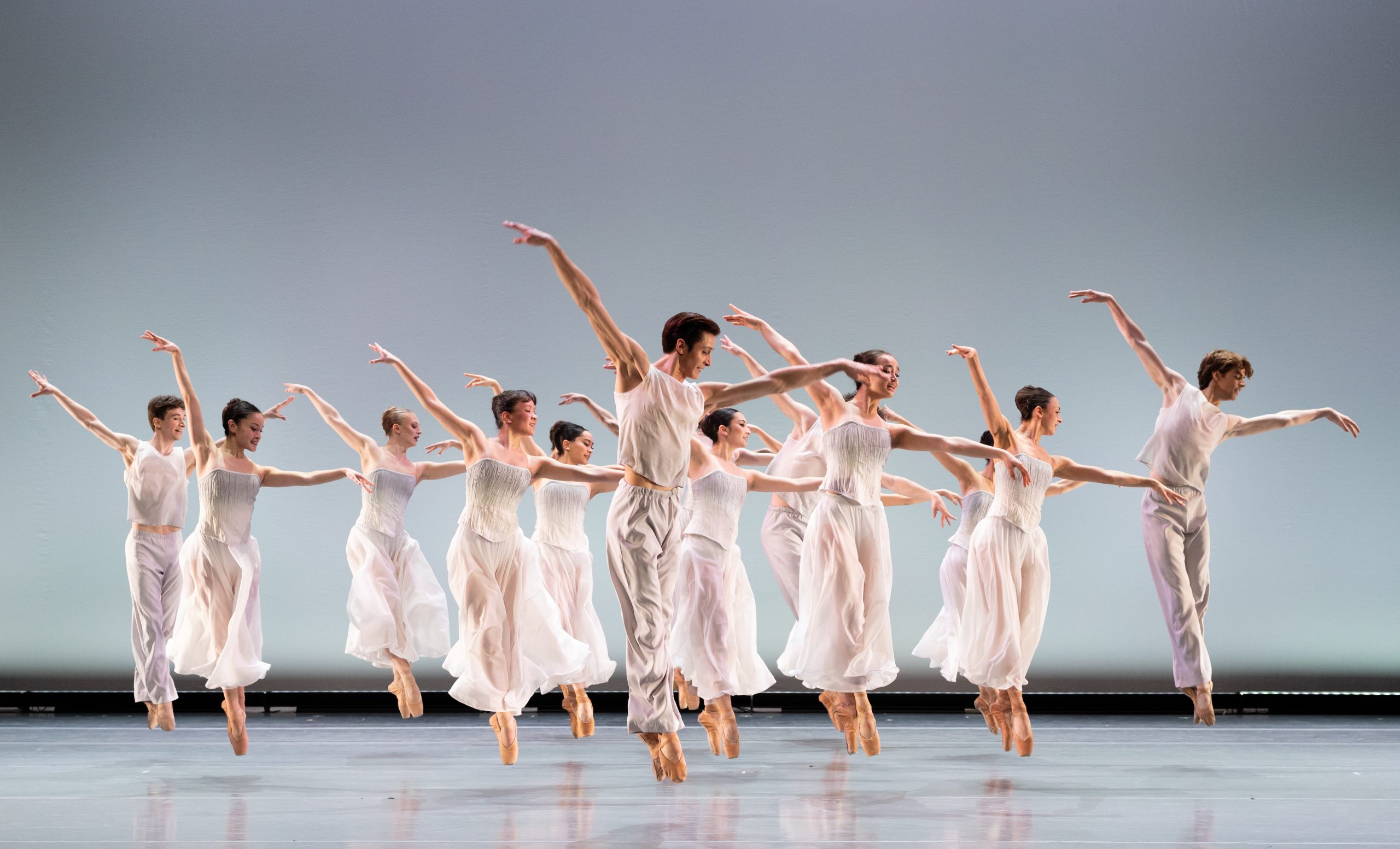
Segment four was Éclat, choreographed by Julia Feldman. This is a gorgeous traditional ballet set to "The Chairman Dances" from John Adams' opera Nixon in China. Éclat's phrases and fragments of dance reminded me of notes on sheet music, in particular, Adams' score for this opera. The dancers spin around the stage in ethereal white costumes. The musicis dramatic, fast-paced, and takes on a cinematic beauty like a Busby Berkeley movie. The Éclat ensemble is meticulous and graceful, ending with a graceful pas de deux. I could envision these dancers and this particular piece on the Joffrey mainstage. It was one of my favorites of the evening.
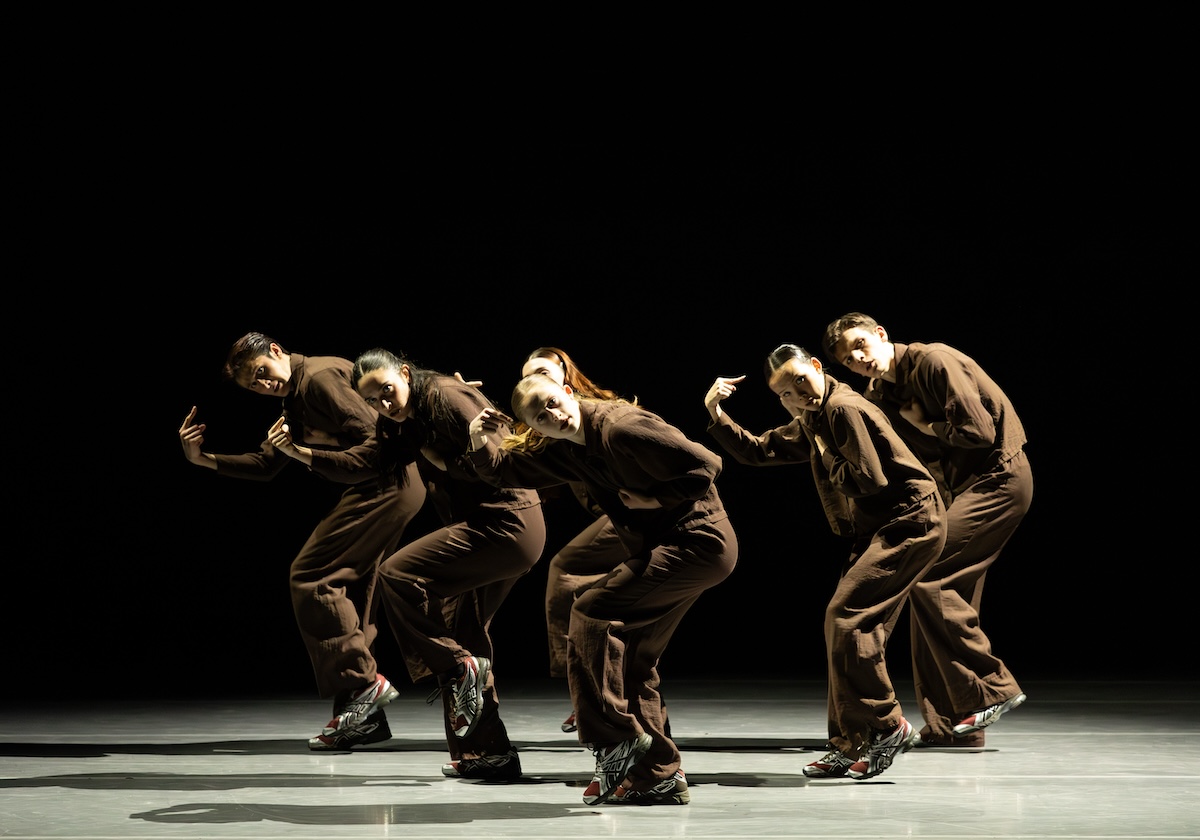
The final segment was choreographed by Fran Diaz. A Strange House We Must Keep and Fill was accompanied by hardcore rap/trap beats by Yanto. This performance is an outlier, in my opinion, as it is neither contemporary nor balletic. This was a mix of '70s pop locking and rap battles. A Strange House We Must Keep and Fill was a precise and energetic display that was nothing less than badass. I mean that as a compliment. The male dancers circled the stage like old school rappers about to have a battle. Diaz's choreography uses every part of the body, and the ensemble was committed. Every choice fit the rap battle look, including the brown sweatsuit costumes and the fierce looks. I found this performance to be another favorite for technical perfection and originality.
I must give full compliments to the students of the Grainger Academy. They are poised and professional. The Winning Works project is a chance for them to be a part of the creative process. Each choreographer complimented the students on their dedication, professionalism, and participation in the creative process. Those compliments are deserved and well earned. The choreographers consider the Joffrey the best in the world, and being a part of Winning Works is the best launch for their careers in dance.
Winning Works runs 90 minutes, including a 15-minute intermission. The performances are at the Edlis Neeson Theater at the Museum of Contemporary Art, 220 East Chicago Ave. The performances run through March 22, and tickets are limited, so do not delay. For tickets and information, visit www.joffrey.org.
Did you enjoy this post and our coverage of Chicago’s arts scene and sometimes beyond? Please consider supporting Third Coast Review’s arts and culture coverage by making a donation by PayPal. Choose the amount that works best for you, and know how much we appreciate your support!
