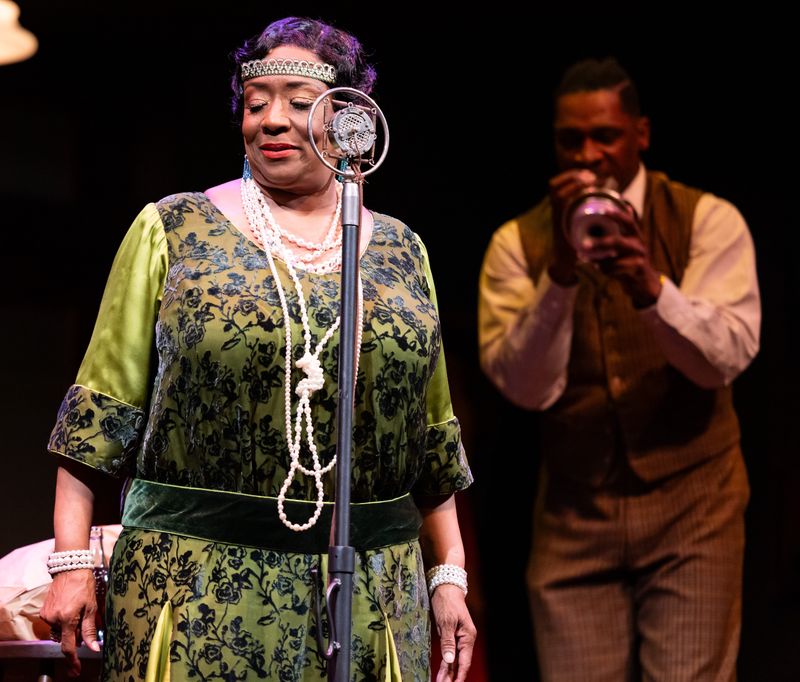

August Wilson’s Ma Rainey’s Black Bottom is a play about music. Yes… about the blues. Yes… about the eponymous singer. And yes… about the heart‑breaking circumstances in which her recordings were made. Those circumstances were racist to the core, and Wilson never lets us forget that as he spins his own music—sometimes funny, often philosophical, and, ultimately, shattering.
Wilson’s melody is built on the verbal exchanges of Rainey’s band members as they wait for Ma to show up. Their conversations form the real score of the play: sharp exchanges, quick volleys, and the kind of talk that only happens in cramped rooms with too much time and too much history.
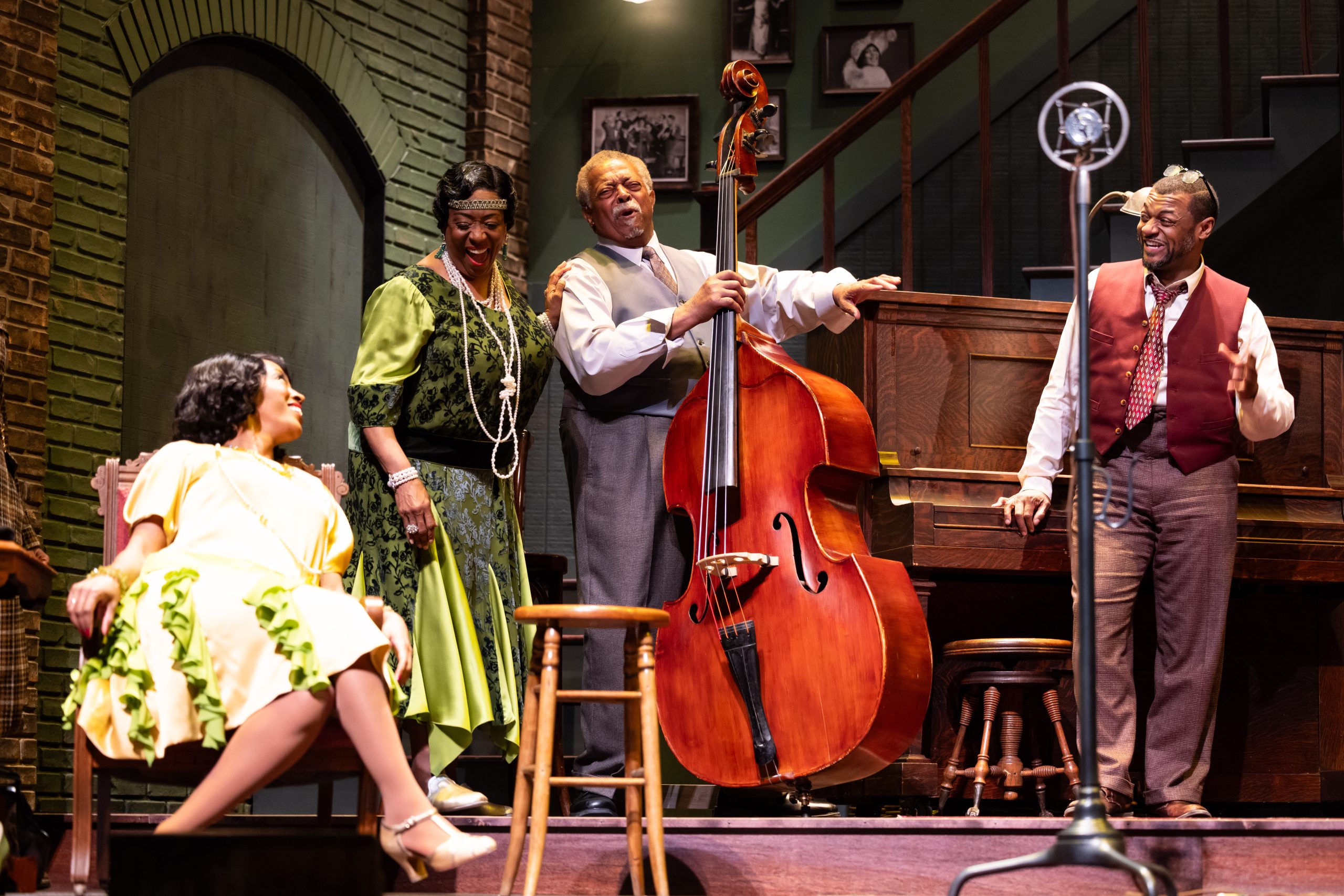
A production with this much musicality doesn’t happen on its own. At 88 years old, the night’s chief music maker is director Chuck Smith, who has lost none of his brilliance or power. This Goodman production shows why he has become one of the nation’s essential interpreters of Wilson’s world.
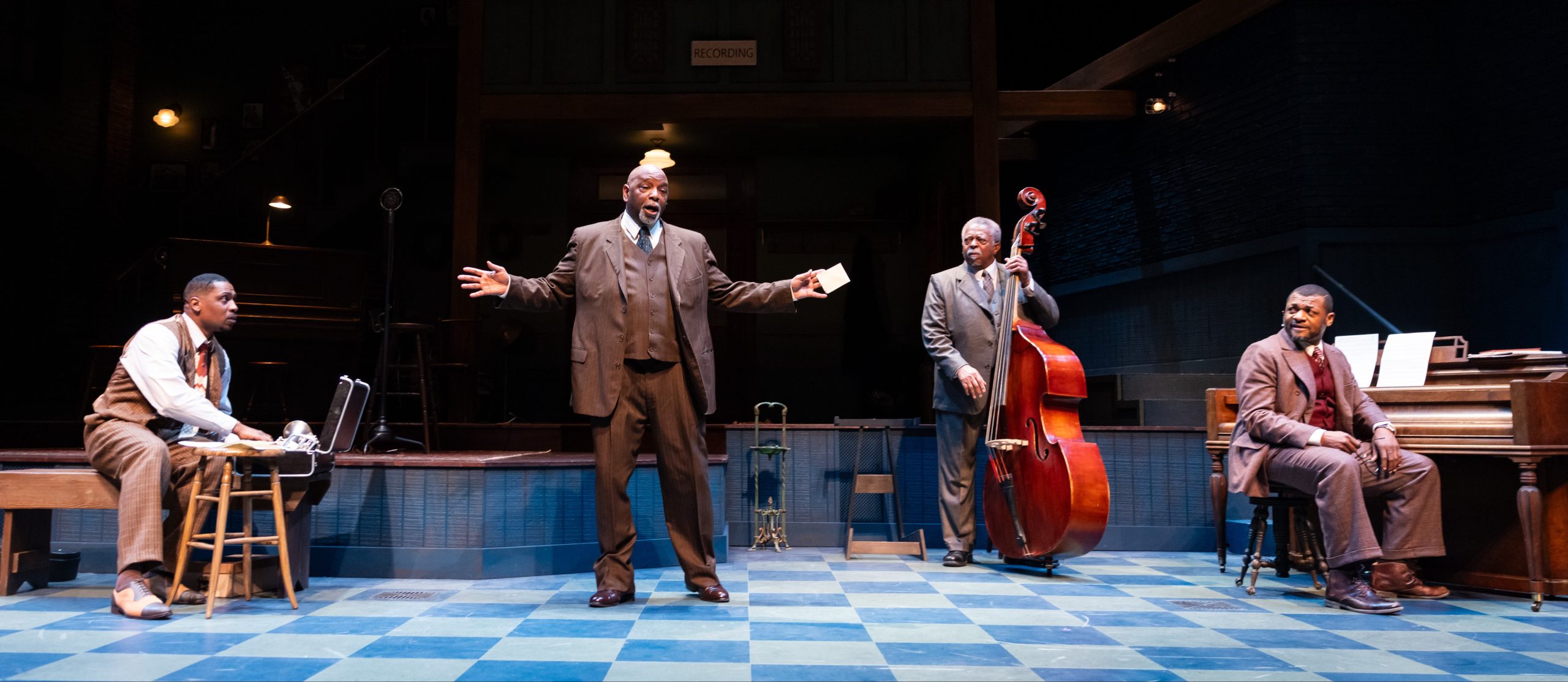
Smith has assembled a cast of virtuosos to play the men in Rainey’s band, and they meet the material head‑on.
As Levee—star trumpeter and the band’s volatile young spark—Al’Jaleel McGhee is extraordinary. The role demands a huge range: swagger, charm, comic timing, raw fury, and an emotional collapse that breaks the play in half. It was a star‑making turn for Charles Dutton on Broadway in 1984, and a career‑capping performance for Chadwick Boseman in 2020 before his untimely death. McGhee shows every sign of carving out a breakthrough of his own.
As the other session musicians, David Alan Anderson, Kelvin Roston Jr., and Cedric Young work as his acting rhythm section. Together, the four form the core of the show, and Smith gives them the space to let the play take shape.
Then comes the stage‑shaking jolt of E. Faye Butler.
She carries herself with the certainty of someone who has fought for every inch she stands on. Her Ma is a powerhouse—blunt, funny, unbudgeable—and fully aware of the stakes every time she opens her mouth. If the men of the band are the core of the play, Ma is the marquee, and Butler is a downright, downtown glimmering one. She enters the stage, and the room adjusts to her presence. Every look, every pause, every refusal to be hurried reminds you that Ma Rainey’s battles didn’t stop at the microphone.
Ma doesn’t arrive alone. Tiffany Renee Johnson gives Dussie Mae a sharp, knowing presence; she's “Ma’s girl,” quick with a look, aware of the power she holds and the trouble she can stir. Jabari Khaliq plays Sylvester, Ma’s stuttering nephew, with a quiet determination that makes his scenes land.
The design work—as usual at the Goodman—is top‑notch. Linda Buchanan’s set and Evelyn Danner’s costumes are beautiful and add to the richness of the whole production.
The level of craft in the entire production gives Ma Rainey’s final movement an even sharper edge. By the end, the music that held the session together breaks apart, and Wilson lets the rupture speak for itself. The final burst of violence is shocking, but it isn’t senseless—it’s the play’s hardest question made visible. Where was justice… where was God… in a world built to crush these men. The play’s answer is as stark as the moment itself, and you hear its cost in every note left hanging in the air.
You can see Ma Rainey's Black Bottom at Goodman Theatre, 170 N Dearborn St.; it has been extended through May 3. The evening runs two and a half hours, including one intermission, and tickets are available at www.goodmantheatre.org.
For more information on this and other productions, see theatreinchicago.com.
Did you enjoy this post? Please consider supporting Third Coast Review’s arts and culture coverage by making a donation. Choose the amount that works best for you, and know how much we appreciate your support!
