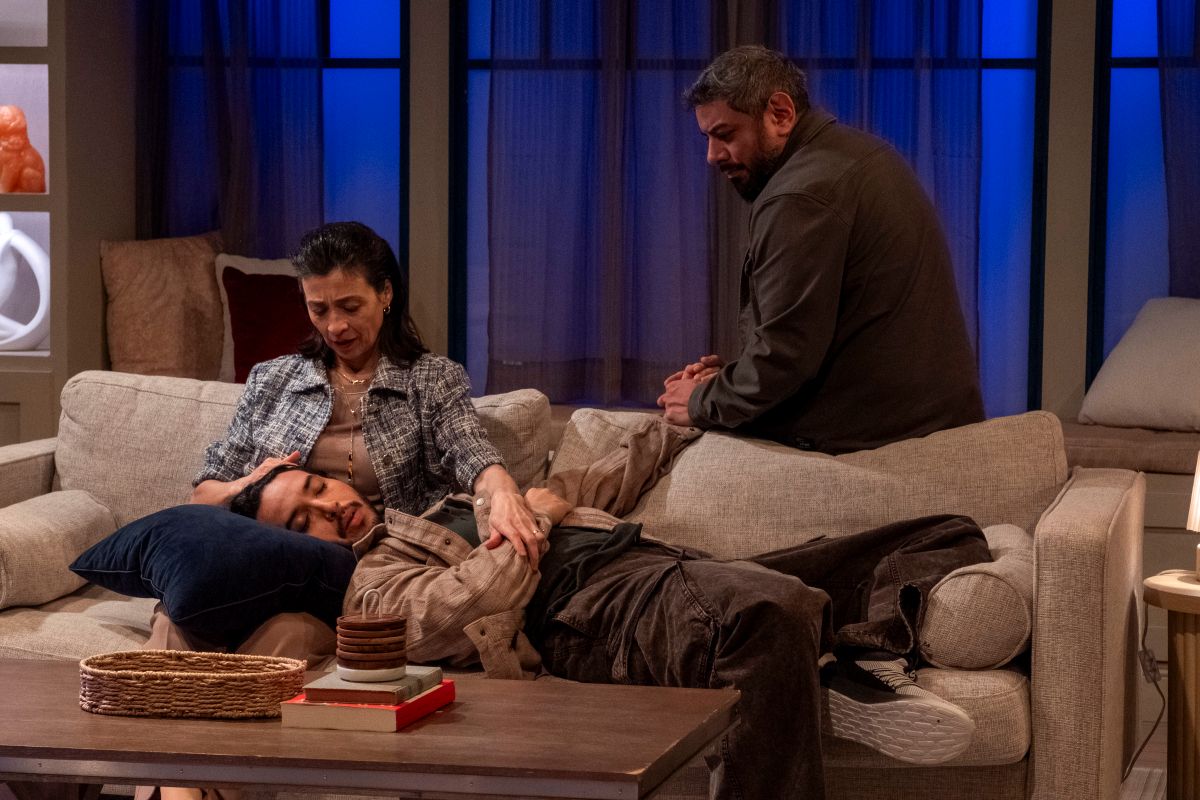

What’s true? Of course, there’s no manageable answer to that. But it’s hard to avoid asking that question throughout Teatro Vista’s world premiere of Paloma Nozicka’s Both, co-produced by Steppenwolf Theatre Company and directed by Georgette Verdin.
Painted on the wall of the entryway to Steppenwolf’s 1700 Theater is Tolstoy’s famous opener to Anna Karenina: All happy families are alike but each unhappy family is unhappy in its own way. Inside the black box space, a vast living room fills the generous stage. Scenic designer Sotirios Livaditis has created a chic beige environment where a family might find happiness so long as they don’t spill any red wine. But Maximo Grano De Oro's lighting design and Satya Chávez's sound design quickly change the vibe.
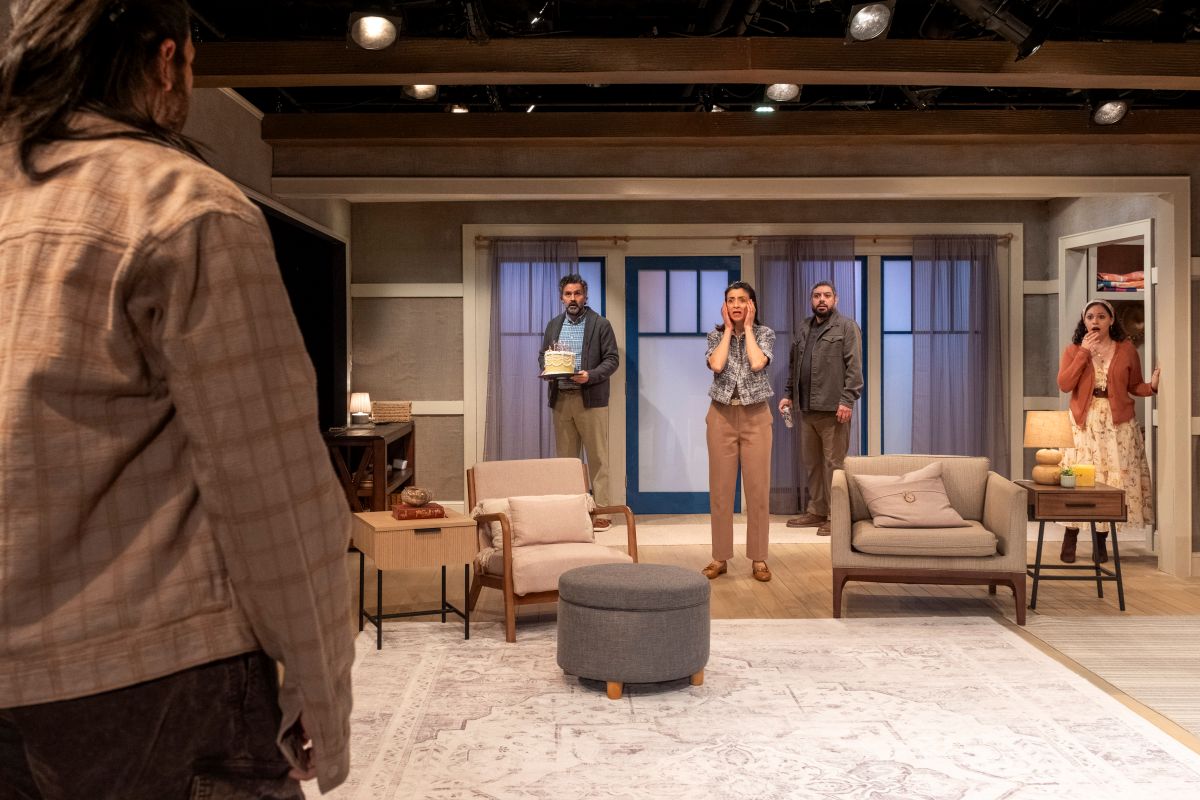
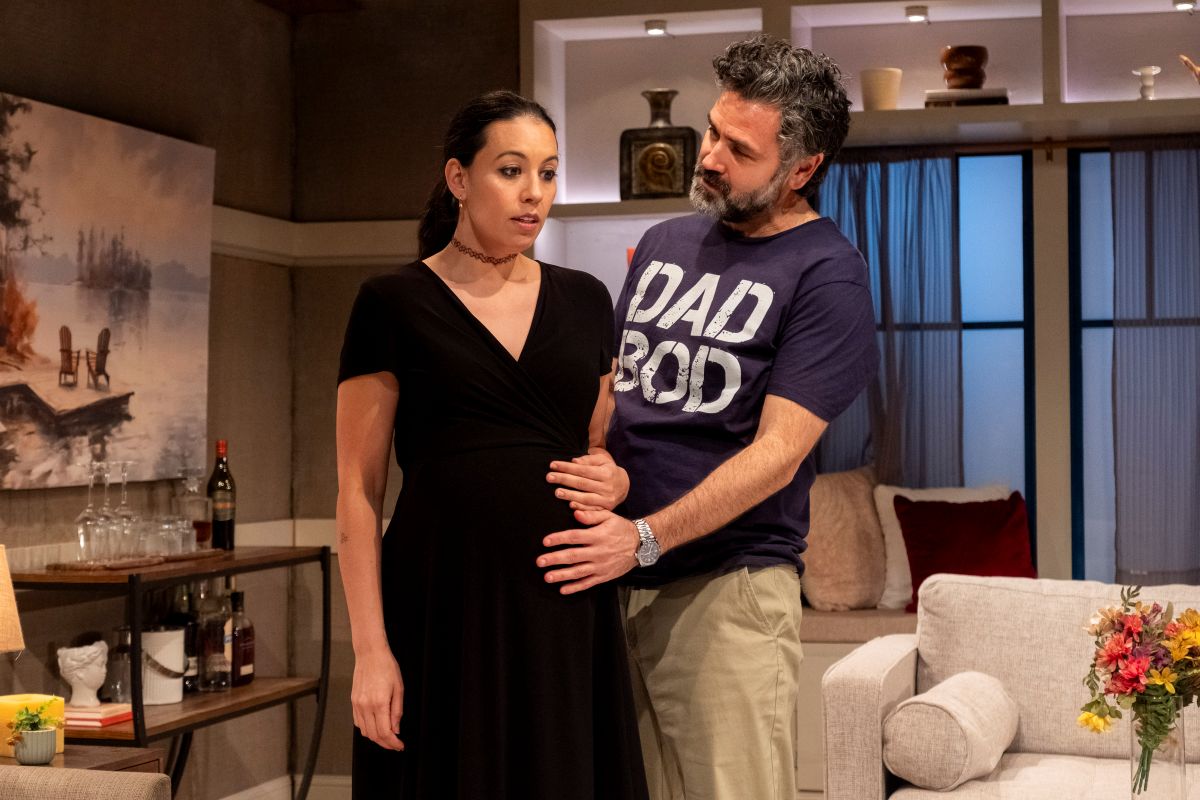
As soon as the play begins, lights darken, noises erupt and an anguished woman wrapped in a beach towel rushes in and listens to recorded messages on her cellphone. The next scene fast-forwards that woman, Xochi (played by Nozicka herself), into a bright present day in which she is many months pregnant and preparing for a baby shower.
When her family arrives, the reason for the living room looking more realtor-staged than inhabited gradually becomes apparent. Xochi has written a successful novel loosely based on her family that was optioned for a hefty sum by Reese Witherspoon. Though her fictionalized portrait of a troubled household alienated her widowed mother and older brother, she nonetheless used the proceeds to buy a luxury lake house.
In a flashback scene, Xochi’s other brother and her twin, Sebastian (Yona Moises Olivares), makes a first visit to his sister’s new paradise and asks, “How rich did our trauma make you?” The twins go swimming together, but Sebastian does not return to shore.
Xochi believes that Sebastian drowned that day even though his body was never found in the lake. Their mother Angela (Charin Álvarez) and older brother Juan (Eddie Martinez) refused to accept that he died, did not attend the funeral and have cut off contact with Xochi. After that, Xochi could not bring herself to spend time in the new house.
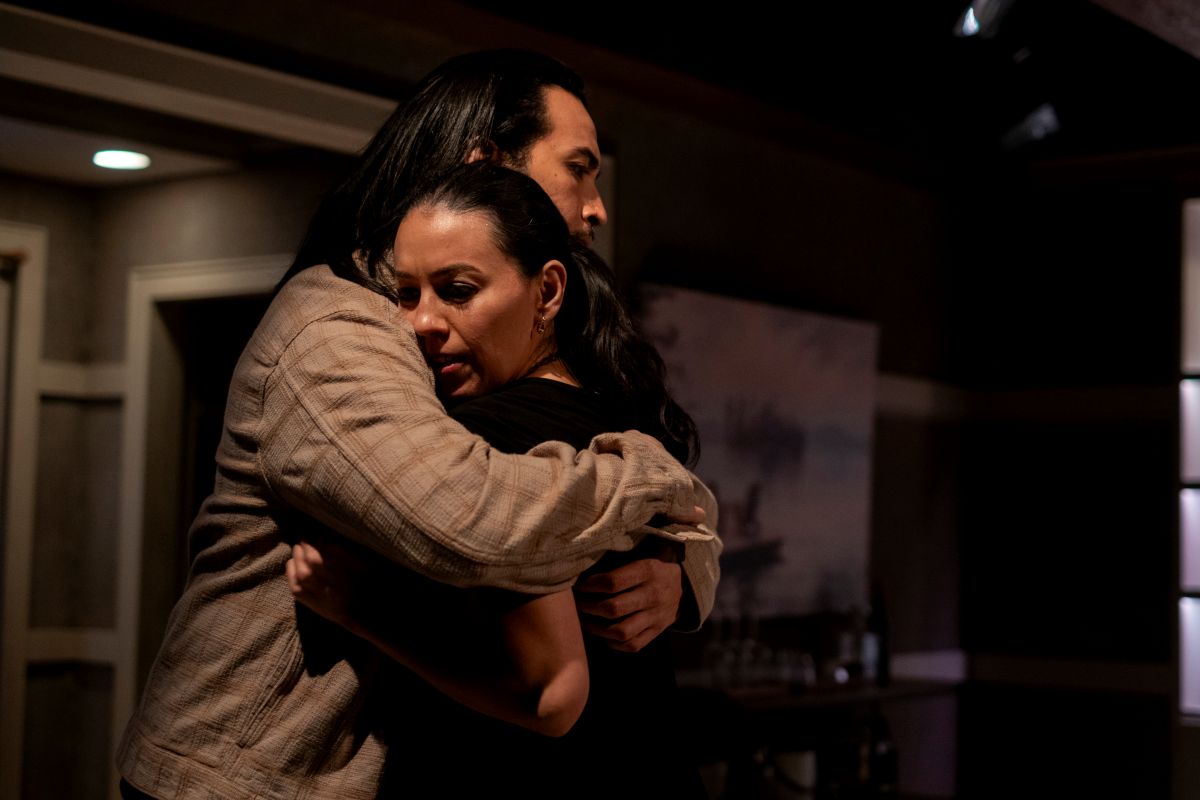
A year later, Xochi and her supportive boyfriend Sam (Brian King) hope that hosting a baby shower in the house will heal some wounds and start a new chapter. But how can that happen when the two parties disagree on reality? Angela shows up with a stranger, a young woman named Cynthia (Ayssette Muñoz) who “works in sales,” but more importantly serves as Angela’s psychic to reach Sebastian. “She is drawing us to him” insists Angela when challenged by Xochi.
Amid the familial discord and during supernatural interruptions that may or may not be hallucinations, Sebastian suddenly appears. Is he really Sebastian? He looks and sounds exactly like Sebastian but his twin suspects the doppelganger merely satisfies her mother’s longing. In the script’s fascinating consideration of twins, Xochi describes her unique connection to Sebastian as “the constant hum” between them. Because she cannot feel a hum with the man now standing in the living room, he cannot be Sebastian.
So what is true? Xochi herself believes that the hum represents an intuitive bond through which the twins could feel each other’s pain. At the same time, she dismisses her mother’s belief that a psychic power has returned Sebastian to her.
Nozicka takes a scene or two to settle into her role and then becomes compelling as she navigates the personalities around her. As her boyfriend, King has little opportunity to break out of Sam’s nice-guy character. This makes his longtime friendship with Martinez’s Juan—a policeman with a drinking problem—and his own family history of an abusive father less palpable than it should be. Olivares as Sebastian makes a strong impression in the flashback; whether legit or imposter, it’s harder for Olivares to get a grip as the returning brother.
There are other elements to the story that are told rather than shown organically. The novel’s unflattering revelations and Sebastian’s tragic death are profound reasons for a family breach, yet the play doesn’t allow too much toxicity or raw emotion to leak into the pristine living room airspace. However much Angela and Juan want to gloss over their pain, a little more mess might have made the story even more urgent.
That said, Both raises plenty of questions that are all the more forceful because there are no manageable answers. Along the way, we learn that people have very different versions of truth and fiction, of facing the loss of a loved one, and of viewing their own lives through the lens of daylight or darkness.
Teatro Vista’s production of Both has been extended through May 24 at Steppenwolf's 1700 Theater, 1650 N. Halsted St. Tickets are $47 with pay-as-you-can for Wednesday performances. Running time is 95 minutes without an intermission. For more information, visit Teatro Vista.
For more information on this and other productions, see theatreinchicago.com.
Did you enjoy this post? Please consider supporting Third Coast Review’s arts and culture coverage by making a donation. Choose the amount that works best for you, and know how much we appreciate your support!
