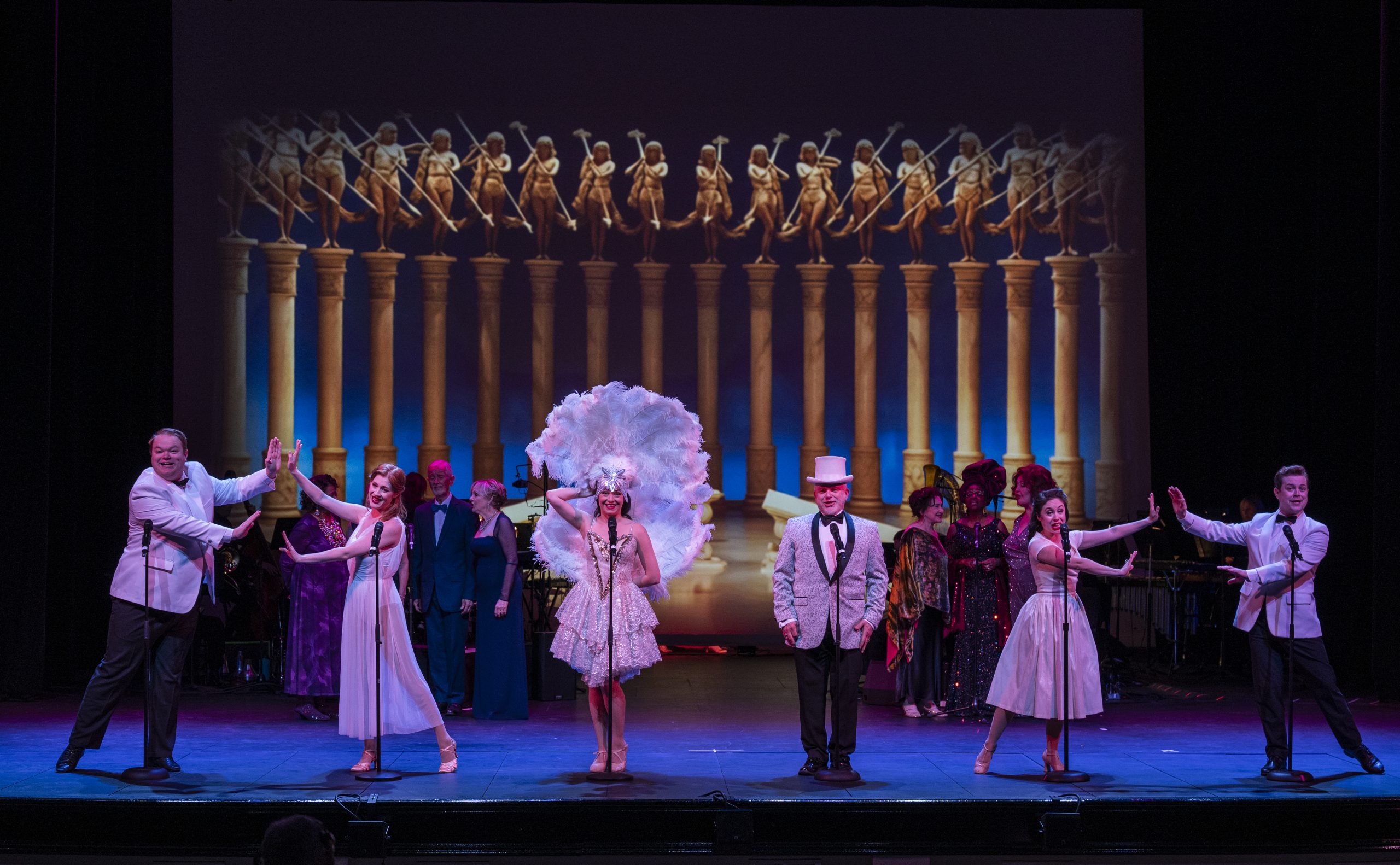

We got a reminder last weekend about just how essential Porchlight Music Theatre is. Their concert staging of Sondheim’s Follies (at the Studebaker Theater) reaffirmed the company’s willingness to tackle the most ambitious musical‑theater terrain. Follies—a 1971 breakthrough that fused memory play, pastiche, and psychological realism—has become a cornerstone of Sondheim’s legacy. Even in concert form, it demands emotional precision and a company ready to meet its scale.
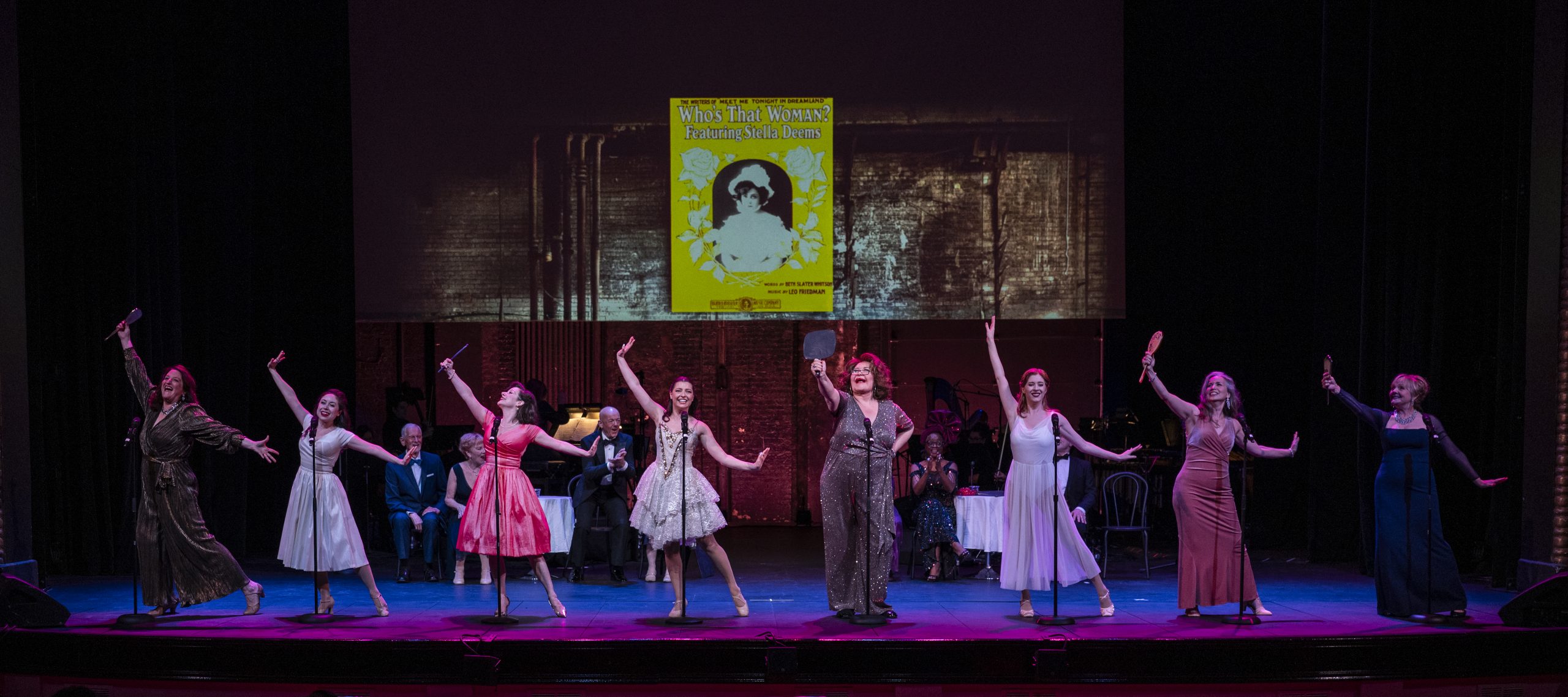
One reason the evening resonated so strongly was the depth of Chicago talent onstage. What a treat it was to see a cast boasting local institutions like Tony‑nominated Felicia P. Fields, former Victory Gardens artistic director Dennis Zacek, and the legendary Honey West standing alongside younger performers who are just beginning to leave their mark. That’s a Porchlight signature, balancing established talent with emerging voices, and Follies is a show almost tailor‑made to show it off.
Let’s name some names, starting with Chicago‑born and Broadway‑lauded Anthony Rapp, who has recently moved back home. His performance as Ben Stone lent a level of star power and onstage charisma the role depends on, making it easy to see why the character Sally (more about her later) never got over him.
Can you praise an entire performance based on just one song? You can when the song is “I’m Still Here” and Susie McMonagle is delivering it.
Her performance had a well‑seasoned elegance that snapped into focus the moment she stepped into the spotlight. A song that could have served as an anthem for many of the veterans onstage, “I’m Still Here” is, as Elaine Stritch once said of another Sondheim standard, a “three‑act play”—a number that unfolds as a complete dramatic unit in the space of a few minutes and has rightfully earned a life far beyond the show itself.
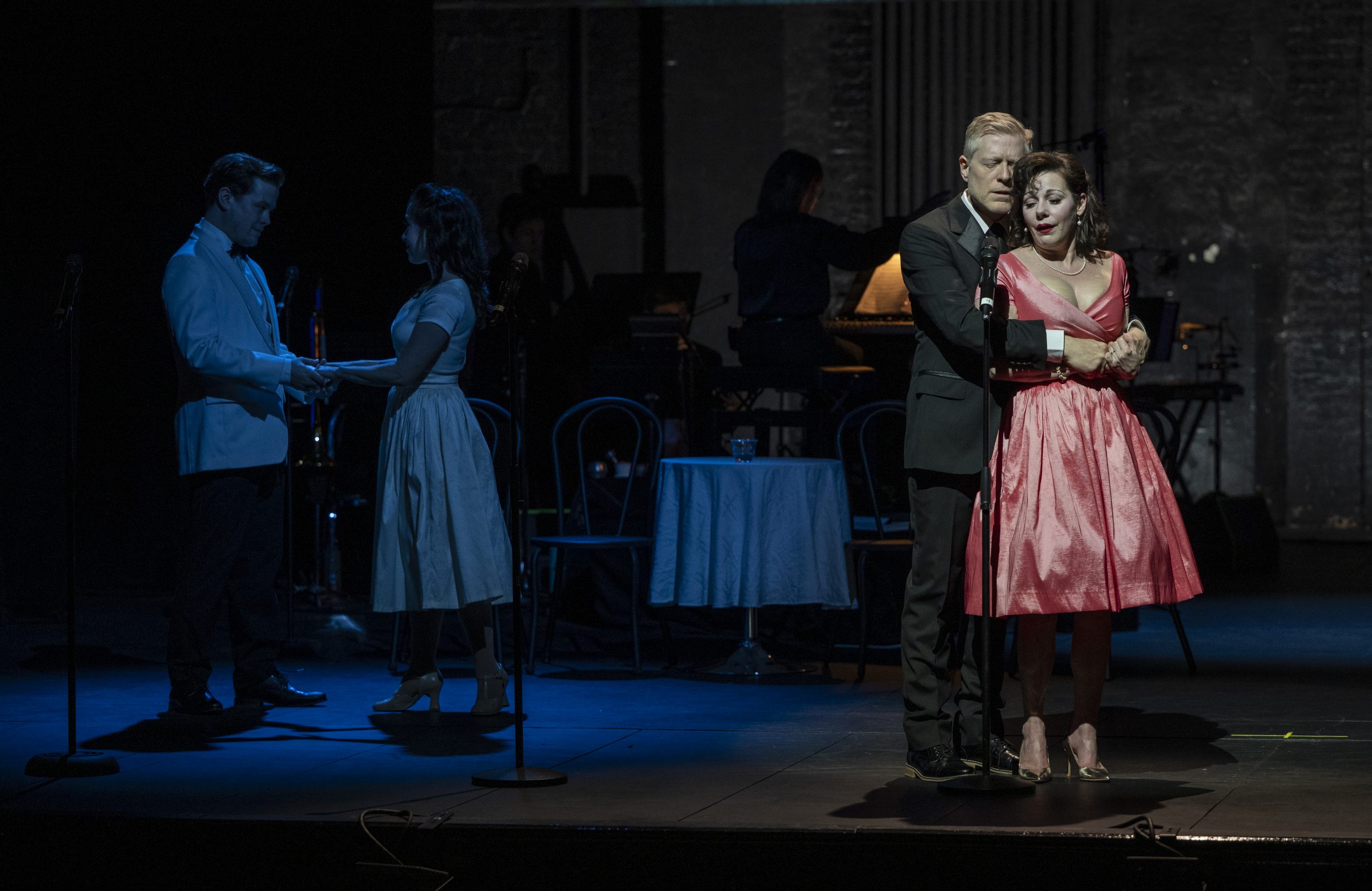
In a night of many high points, Angela Ingersoll’s performance as Sally was perhaps the highest. Sally is the show’s emotional fulcrum—the character through whom Follies’ collision of past and present hits hardest. Her songs (“In Buddy’s Eyes,” “Too Many Mornings,” “Losing My Mind”) trace the cost of clinging to a fantasy long after it’s curdled, and Ingersoll’s beautiful voice and heartbreaking portrayal gave the role its full emotional force.
Now for the bad news: Sound design was a persistent frustration throughout the performance. Microphones placed on stands created awkward staging patterns and muffled stretches of dialogue. Performers were pushed into unnatural angles to remain audible and occasionally struggled to be heard above the (excellent) orchestra. This isn’t the first time sound has been an issue at the Studebaker, and it remains the one element that consistently works against the theater’s charm and its suitability for performance at this scale.
Despite those technical limitations, this concert staging affirmed why the musical endures and why Porchlight remains one of the city’s essential Sondheim interpreters. Porchlight’s willingness to tackle Follies is something Chicago audiences shouldn’t take for granted.
Looking ahead, the company’s move into residence at the storied Biograph Theater next season sets up an appealing mix of familiar and new: a fall revival of Little Shop of Horrors, the Chicago premiere of Dead Outlaw in February, and a spring world premiere of Shake It Away: The Ann Miller Story. It’s a lineup that suggests a company stepping confidently into its next chapter.
Porchlight staged three performances of Porchlight in Concert Follies last weekend at the Studebaker Theater, 410 S. Michigan Ave.
Did you enjoy this post? Please consider supporting Third Coast Review’s arts and culture coverage by making a donation. Choose the amount that works best for you, and know how much we appreciate your support!
