Three new exhibits at Wrightwood 659 explore a variety of approaches to space and spatial impressions. Scott Burton: Shape Shifts may at first appear to be an exhibit of furniture design but turns out to be the artist’s explorations of how the human body exists in space. The Joffrey: Ballet in the U.S. exhibit demonstrates through imagery how Robert Joffrey created a new kind of ballet, a new way for bodies to perform in space. And in the exhibit Ellen Altfest: Forever, the painter shows us how to really see images in her definition of space.
Wrightwood 659, a gallery that emphasizes socially engaged art and architecture, issues facing LGBTQ+ communities, and Asian art and architecture, often fills its three floors of gallery space with a single exhibit (as it did with this year’s groundbreaking The First Homosexuals: The Birth of a New Identity 1869 – 1939).
But in the new exhibitions, the gallery divides its space skillfully, and you find yourself walking through large galleries furnished with Burton’s designs and then wander through space filled with the Joffrey Ballet story, ending up in a small gallery of Altfest’s compelling paintings, which range from closeup views of male bodies to a large closeup of a tumbleweed. Each work demands you stop and pay attention. We attended the press preview for the new exhibits and were guided through each by its curator.
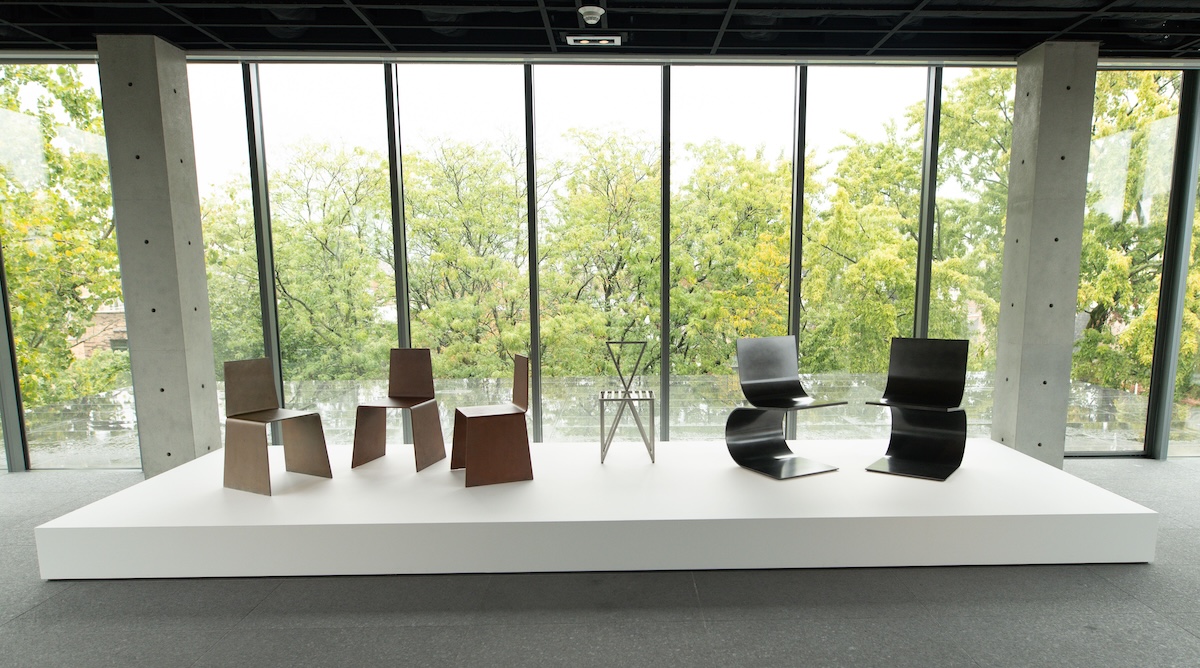
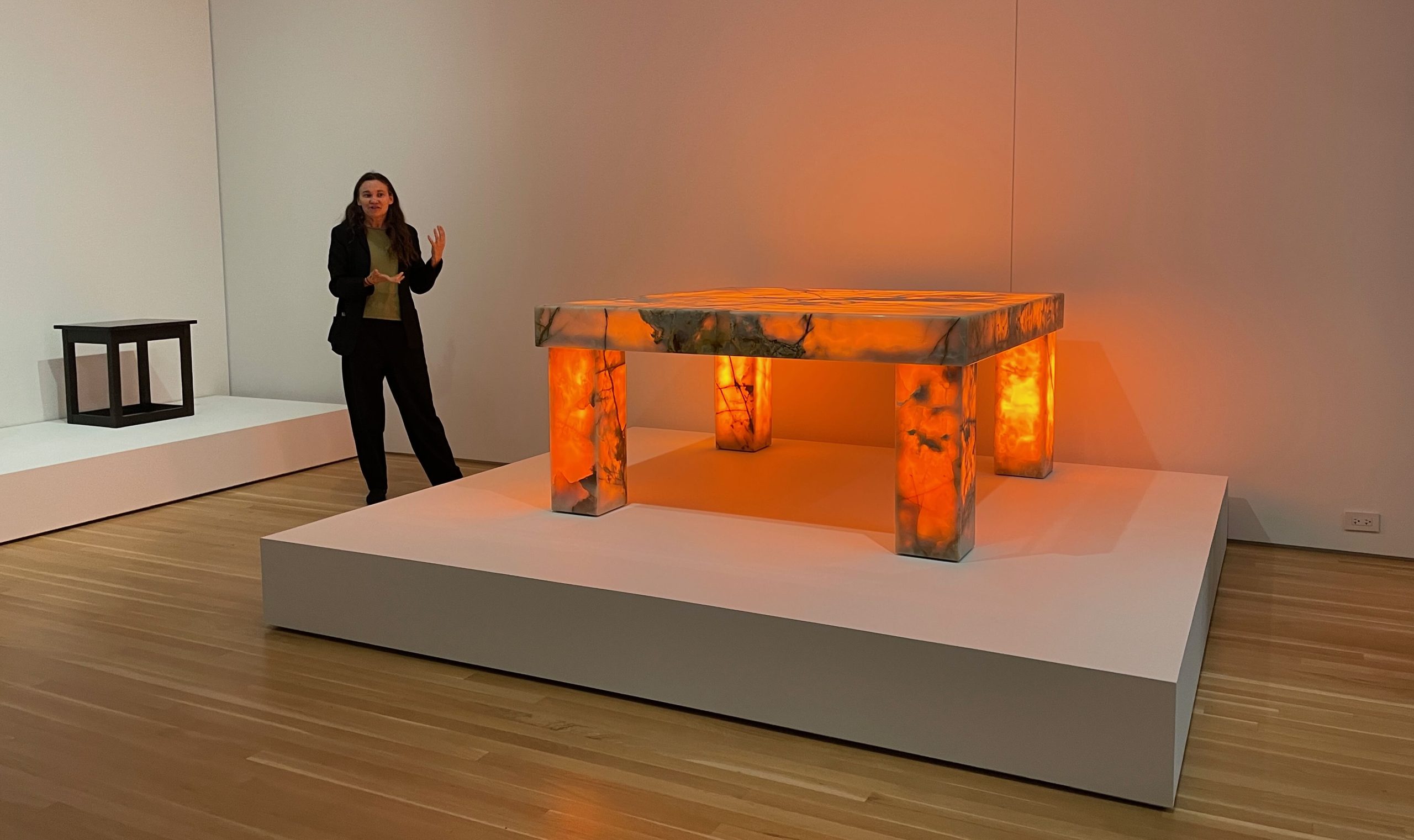
Jess Wilcox, the curator of Scott Burton: Shape Shifting, led us through the exhibit, describing and visualizing Burton’s creativity and shape-shifting as conceptual artist, performance artist, public sculptor, critic and curator. Chairs were especially important to Burton, who died in 1989 at age 50 from an AIDS-related illness. Chairs “formally resemble the human body and can suggest different relationships, ages, classes or genders” through their materials and design. Burton described his work as “sculpture in love with furniture.”
Two large-scale installations demonstrate this. Your first view of the Burton exhibit emerges on the fourth floor, bathed in the light from the glass wraparound wall. He also created “public art environments” with outdoor furniture and landscaping designed for parks, courtyards and busy areas where people could find spaces to rest, regenerate and socialize. In the 1960s and ‘70s, Burton created performance art using people and furniture to explore personal and group relationships an the ways materials and spatial environments shape the way people act and behave.
The Joffrey: Ballet in the U.S. exhibit begins with the story of Robert Joffrey himself, born in Seattle as Anver Bey Abdullah Jaffa Khan to a Persian father and an Italian mother. Although small in stature (unlike the typical tall, slender male dancer), he knew at a young age that he wanted to dance and at age 11, he created a list of the dances he wanted his company to perform. Only 15 years later, in 1956, his company of six dancers traveled across the US to perform in small towns. Now 70 years on, the Joffrey thrives with 40 dancers, a home in Chicago since 1995, and a repertory of more than 250 very different works by 90 choreographers. Joffrey and his co-founder, Gerald Arpino, created a ballet company known for its eclectic repertory and a cadre of dancers with looks and body types beyond the ballet stereotype.
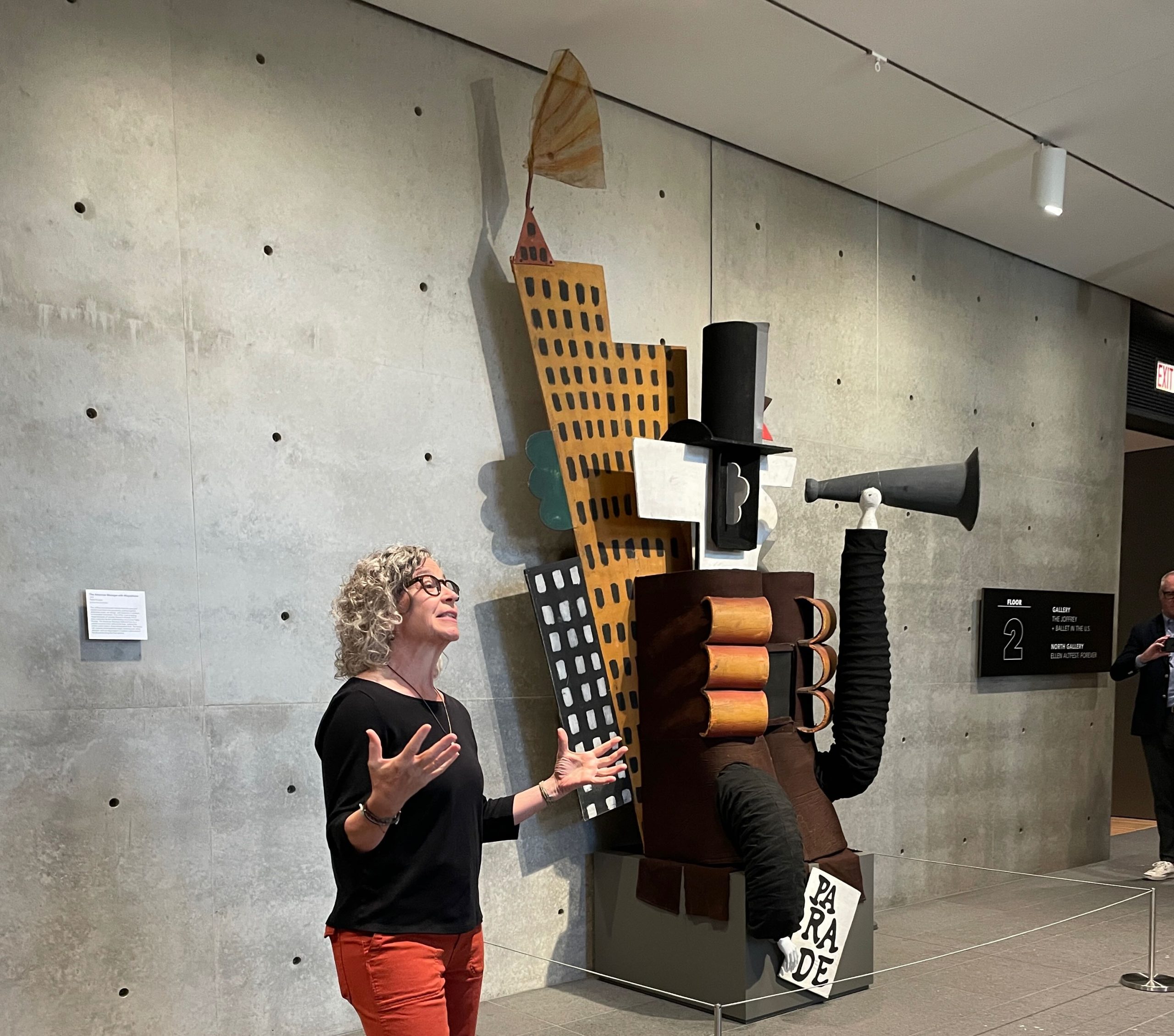
Our guide through the Joffrey exhibit was Julia Foulkes, curator of the exhibit, which opened at the amazing New York Public Library for Performing Arts at Lincoln Center. (I have spent many hours at this library, which holds thousands of filmed Broadway productions from 1970 to today. The Theatre on Film and Tape archive is available free—but must be scheduled in advance—to theater professionals, students, and researchers.)
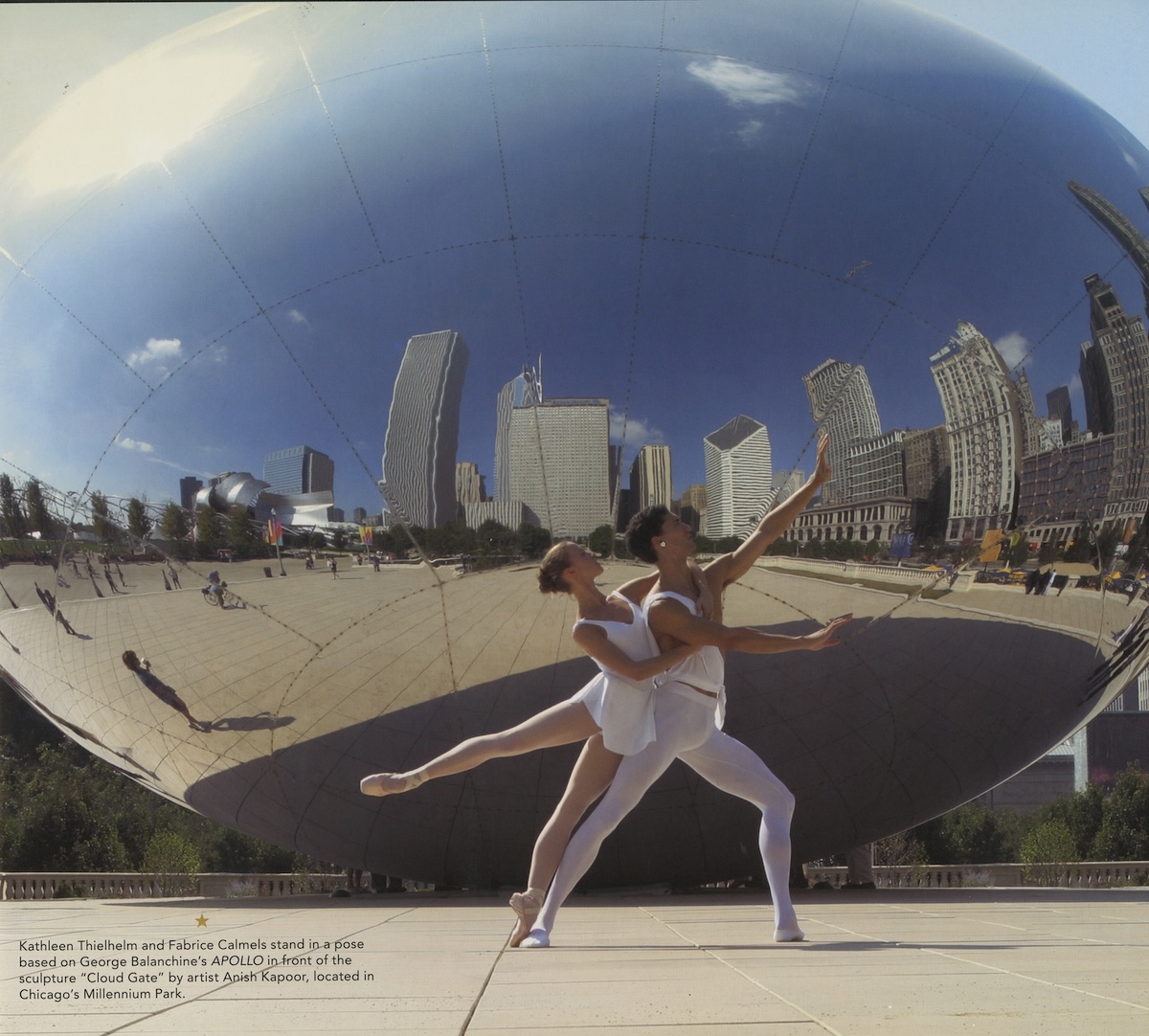
Foulkes noted how variety was the point of Joffrey’s repertory—how it could include both romanticism and modernism, and range from farcical to serious while expressing the realities of the moment.
One example was Joffrey’s Astarte (1967), the first live, multimedia ballet, during which a man rose from his seat in the audience, walked onto the stage, removed his suit and danced with a goddess; he later walked out the stage door and onto the street, where a camera followed him and projected his image back to the theater audience.
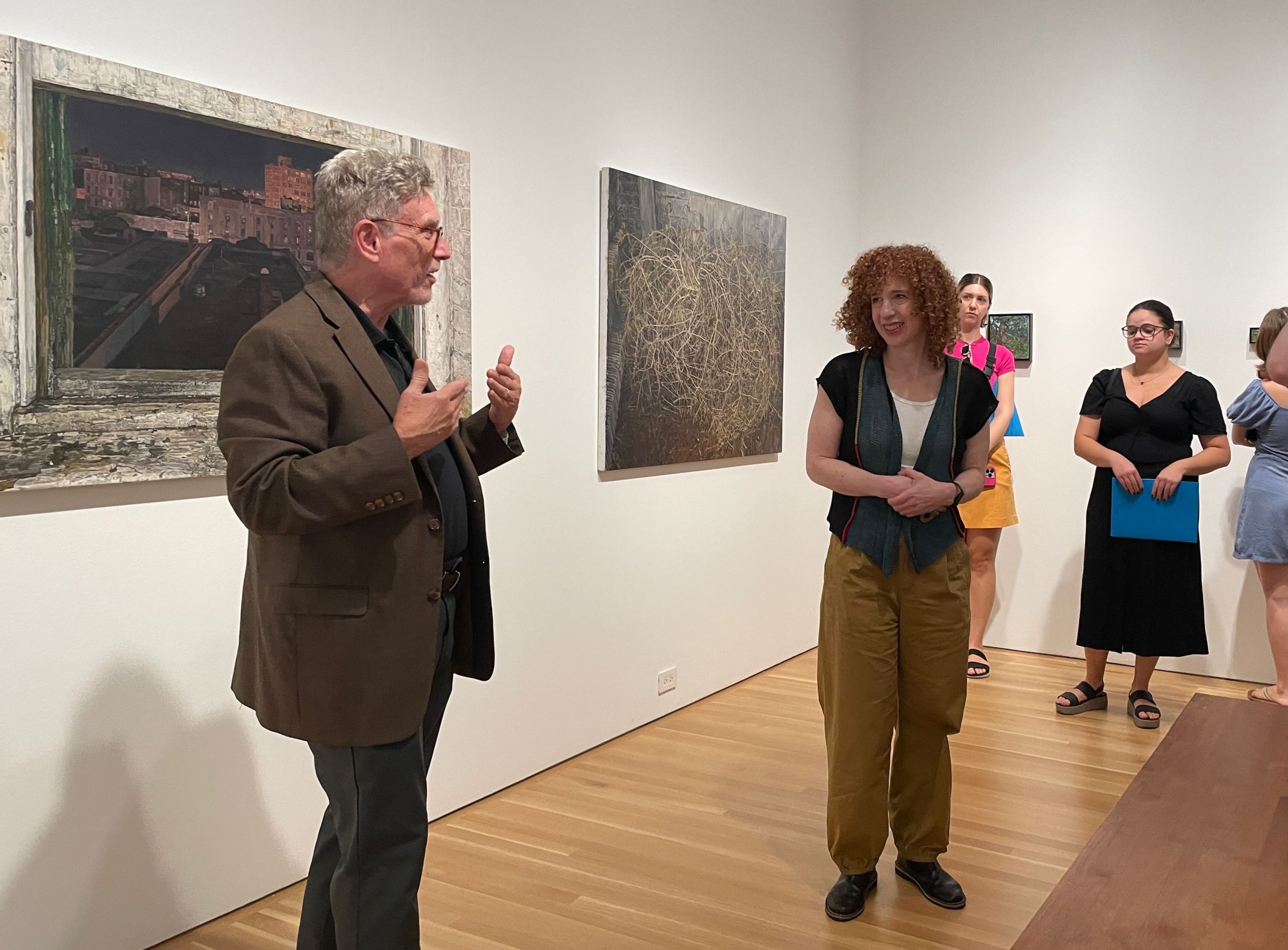
Ellen Altfest: Forever is a selection of 15 paintings of various sizes by the representational painter. The exhibit—in a small gallery on Wrightwood’s second floor—was organized by the Frist Museum in Nashville and curated by Mark Scala, chief curator of the Frist. Scala and Altfest described the work during the press preview. Altfest is known for her labor-intensive paintings, which may take months or more than a year to create. Her work focuses on surface textures and details and include unorthodox cropping or unusual juxtapositions of objects. One example is her large scale painting titled “Tumbleweed,” which we found did demand our attention, as do her paintings of gourds and oddly cropped male bodies.
The exhibit title—Ellen Altfest: Forever—is inspired by a line from Emily Dickinson, “Forever—is composed of Nows.”
These three exhibits will continue through December 20 at Wrightwood 659, located at 659 W. Wrightwood Ave. The gallery is open Thursday-Saturday. Advance tickets are $20; no walk-ins are permitted.
Support arts and culture journalism today. This work doesn't happen without your support. Contribute today and ensure we can continue to share the latest reviews, essays, and previews of the most anticipated arts and culture events across the city.
