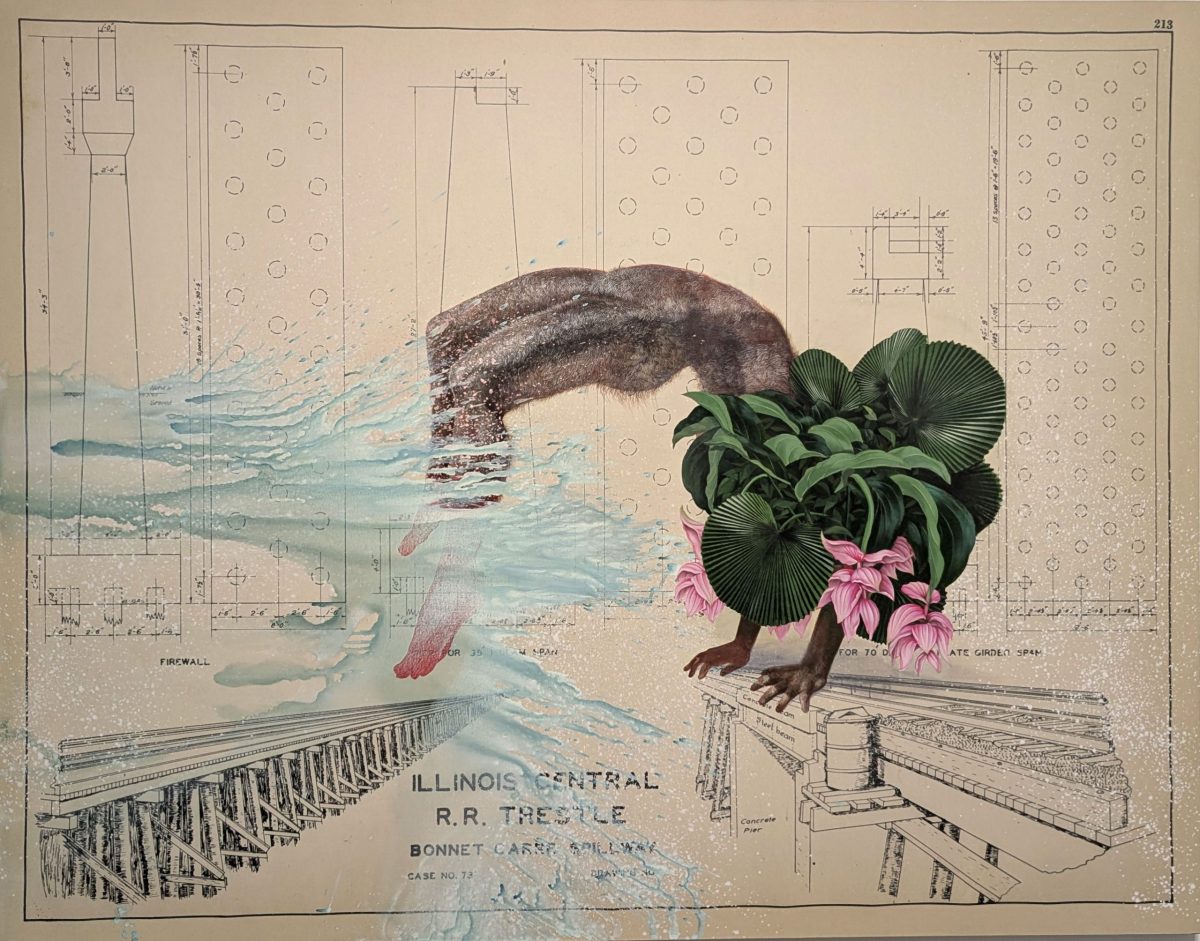
As a vexatious 2025 slides to its close during this holiday season, two exhibitions at the Museum of Contemporary Art point to the type of hope and healing that can only be found in creative expression. One basks in the joy of celebrating the fullness of self through imaginative vision, luxurious color and identity-based exuberance. The other uses art to trigger the mind, freeing it to believe in itself and see possibilities where we thought none existed.
Firelei Báez, in the Bergman gallery on the museum’s first floor, presents a sweeping representation of a celebrated living artist’s work. Frequently intricate and gorgeously complex, Baez’s art explores the uniqueness of heritage and its particular meaning to her. Something, during her artistic training, she was dissuaded from doing. Allowing herself the freedom to explore nuanced facets of her lineage lends a radiant vitality to her paintings and other art objects. By extension, she simultaneously provides an outlet for “untold stories and unheard voices” that are such an integral part of her blood legacy.
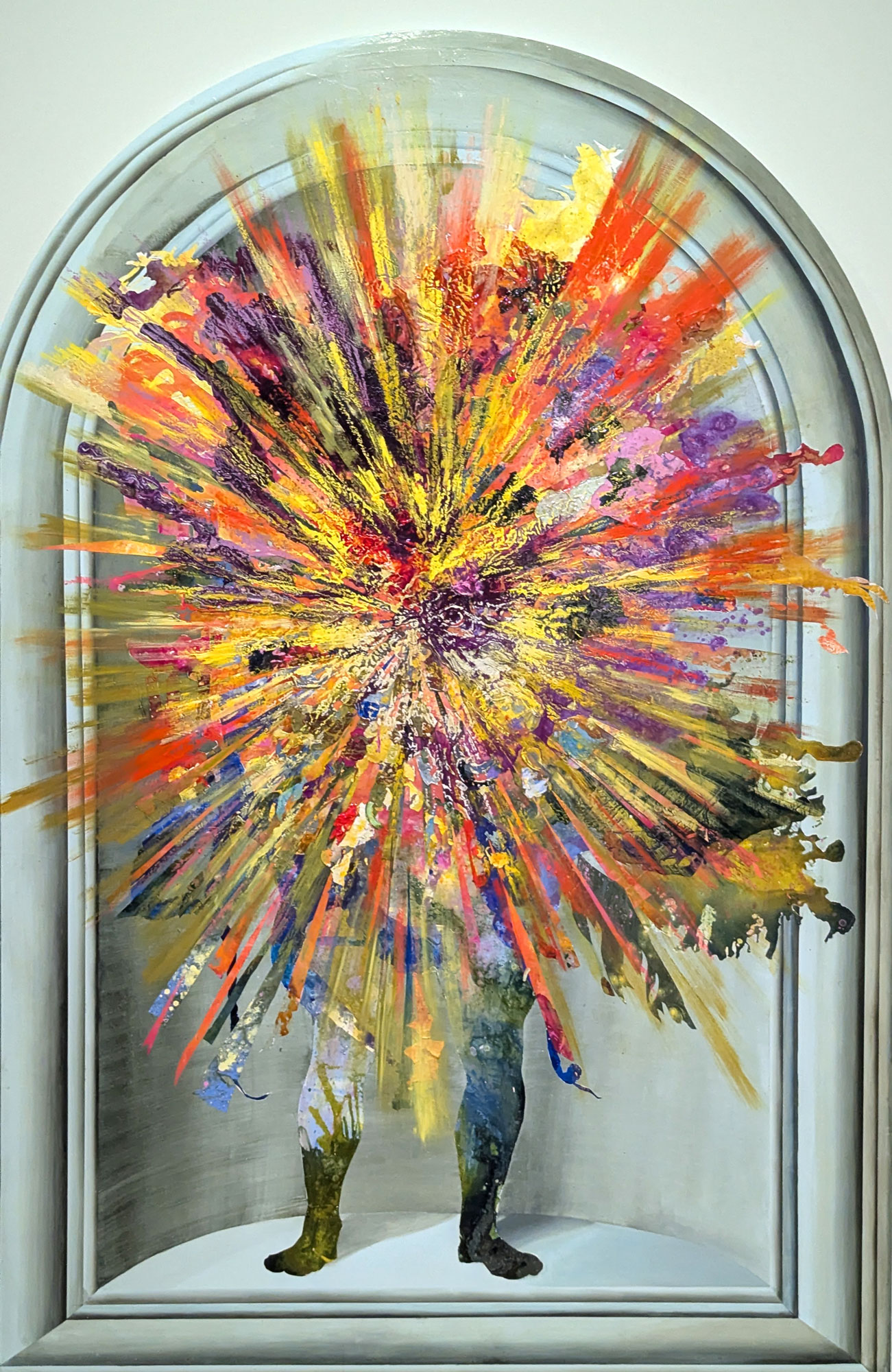
A millennial whose mother is Dominican and whose father is Haitian, Baez was born on a razor’s edge; between two cultures whose tensions between one another have been active since the island they both occupy was divided in 1697. Baez and her parents migrated to the United States when she was eight; but the essence, feel and texture of her homeland were by then well engrained and spew like a technicolor geyser from the art on display in her eponymously named exhibition.
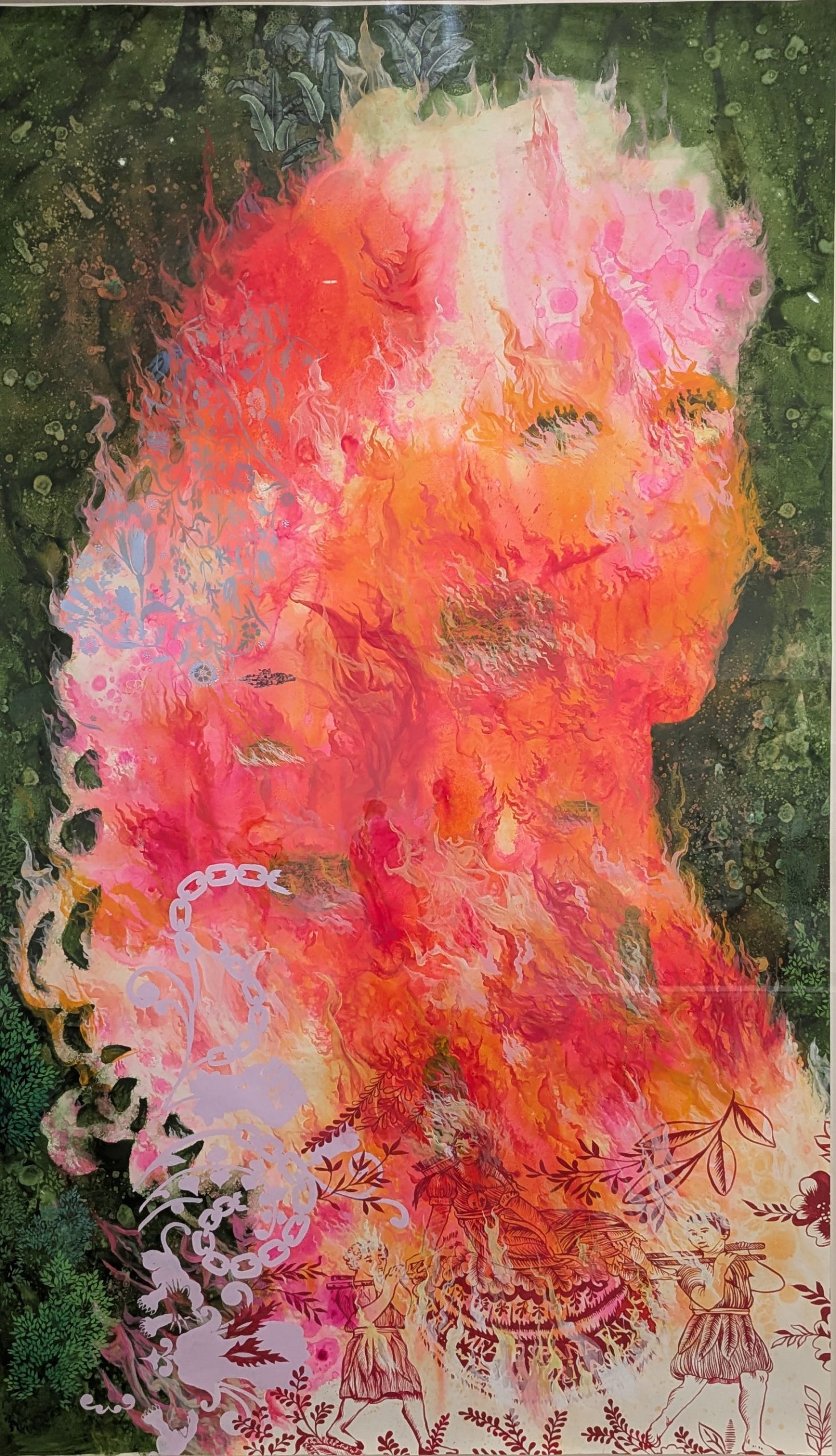
In portraits like Those Who Would Douse It, you first notice the extravagance of radiant color and the image’s stately size. It features a woman’s profile in flames. You’re awed by the ferocity and contained beauty of the fire before noticing the woman’s calm as she’s consumed by its horror. The contrast makes the painting read as a resounding refutation of cultural assault and as an emphatic testimony to an ethereal resilience.
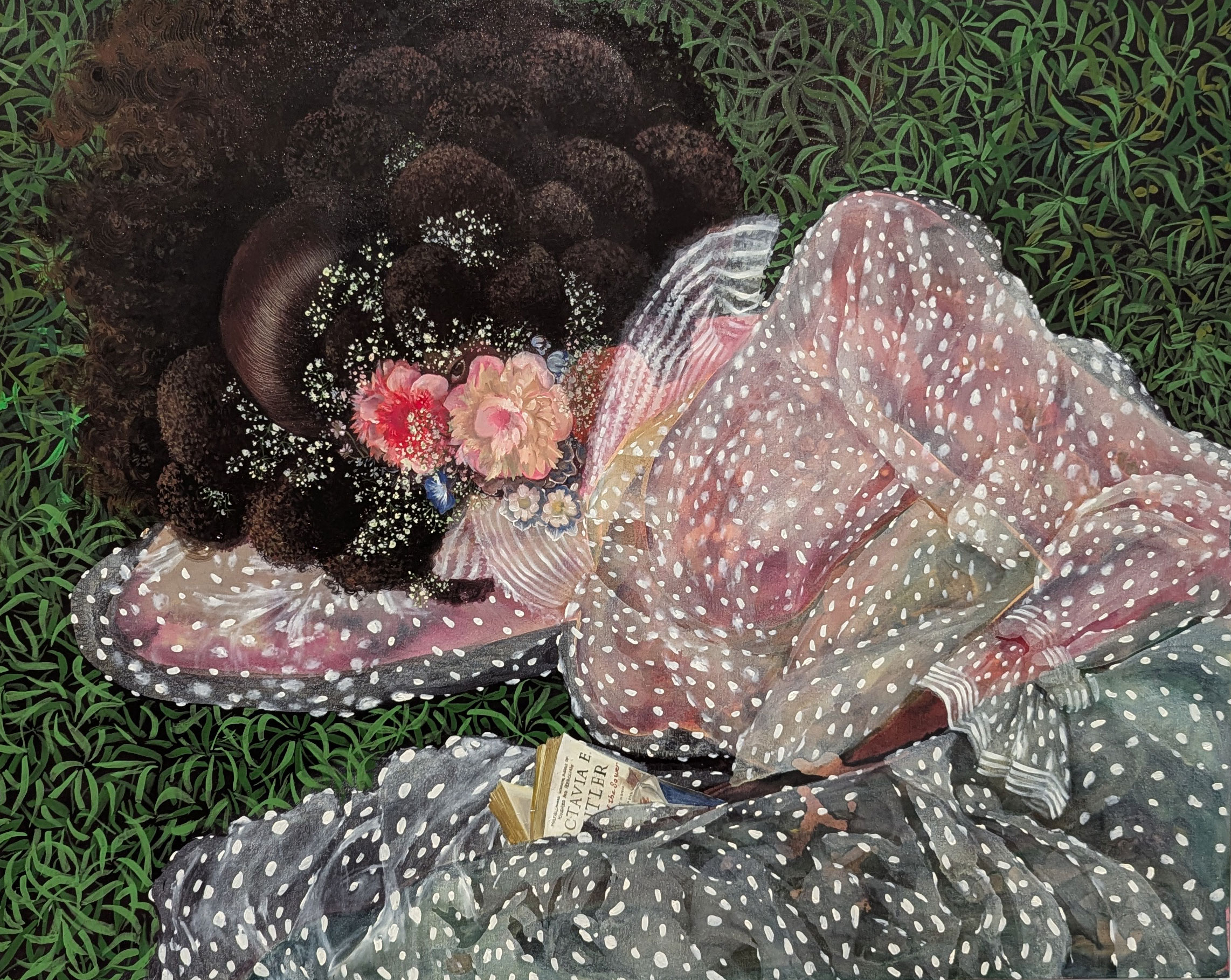
Many of the works in the first two rooms feature images of the type of women’s countenances one rarely encounters in artistic settings. Some, like the eerily evocative On rest and resistance. Because we love you (to all those stolen from among us), spring from the influences of science fiction. A peaceful pastoral scene is disrupted by a facial depiction that’s lovely; but also disturbing and strange. Ode to la Sirene references and elevates Haitian goddesses and devotional spirits with a sublimity that borders on reverence. They all flow from a mind and artistic hand in tune with a past and a place that expand our understanding of humankind’s cultural breadth.
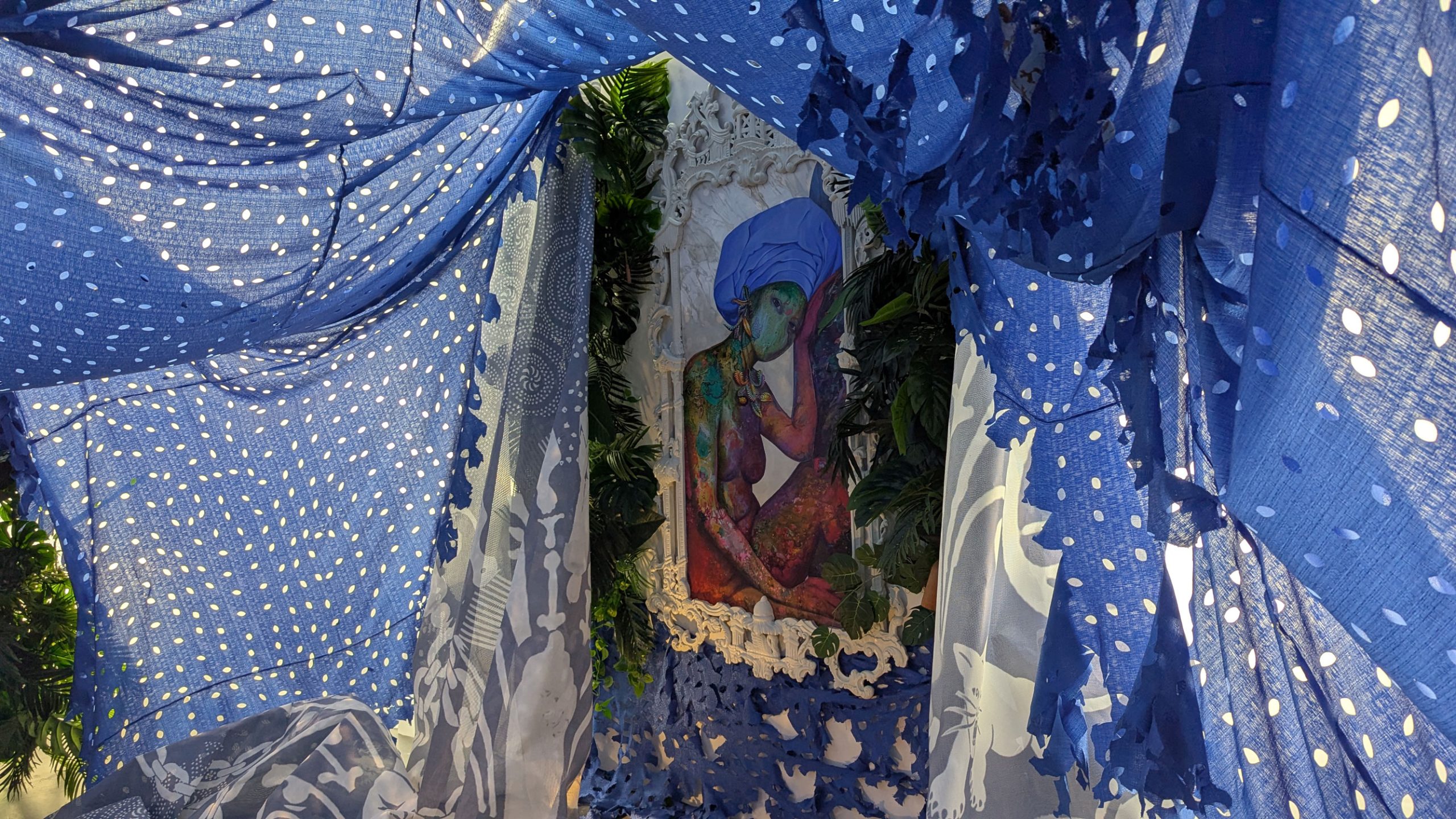
History and myth also inspire the engulfing installation, A Drexcyen Chronocommons (To win the war you fought it sideways). The sea and nature are conjured in an immersive space swathed in feathery blue fabric that makes you feel you've just entered a beautiful and welcoming grotto that's completely devoid of time. Standing alone in the space is soothing and reflective. In it, Baez reimagines Drexciya, a mythical Black underwater nation populated by the descendants of “pregnant African women who were thrown overboard from slave ships when they went into labor”. Serene, memorialized images of two of them are slightly recessed in the space’s nooks giving it an air of solemnity and reverence.
Artists distinguish themselves in many ways and Baez does it through the singularity of her interpretations of how the past and present are linked. =The works she creates blaze with captivating presence. When she moves to the abstract, she incorporates just enough realism to confound before revealing clues that help unlock the mystery to her marvelously composed images.
Their impact is expansive, opening windows of promise and possibilities through a visionary’s sense of cultural history.
On the museum’s top floor, a grand dame of art is feted in a sprawling retrospective of a nearly 70-year long career crammed with blinding ingenuity. Yoko Ono: Music of the Mind showcases a peerless artist who’s stayed true to her commitment to make art that’s taken off its pedestal while also inviting others to participate in its creation.
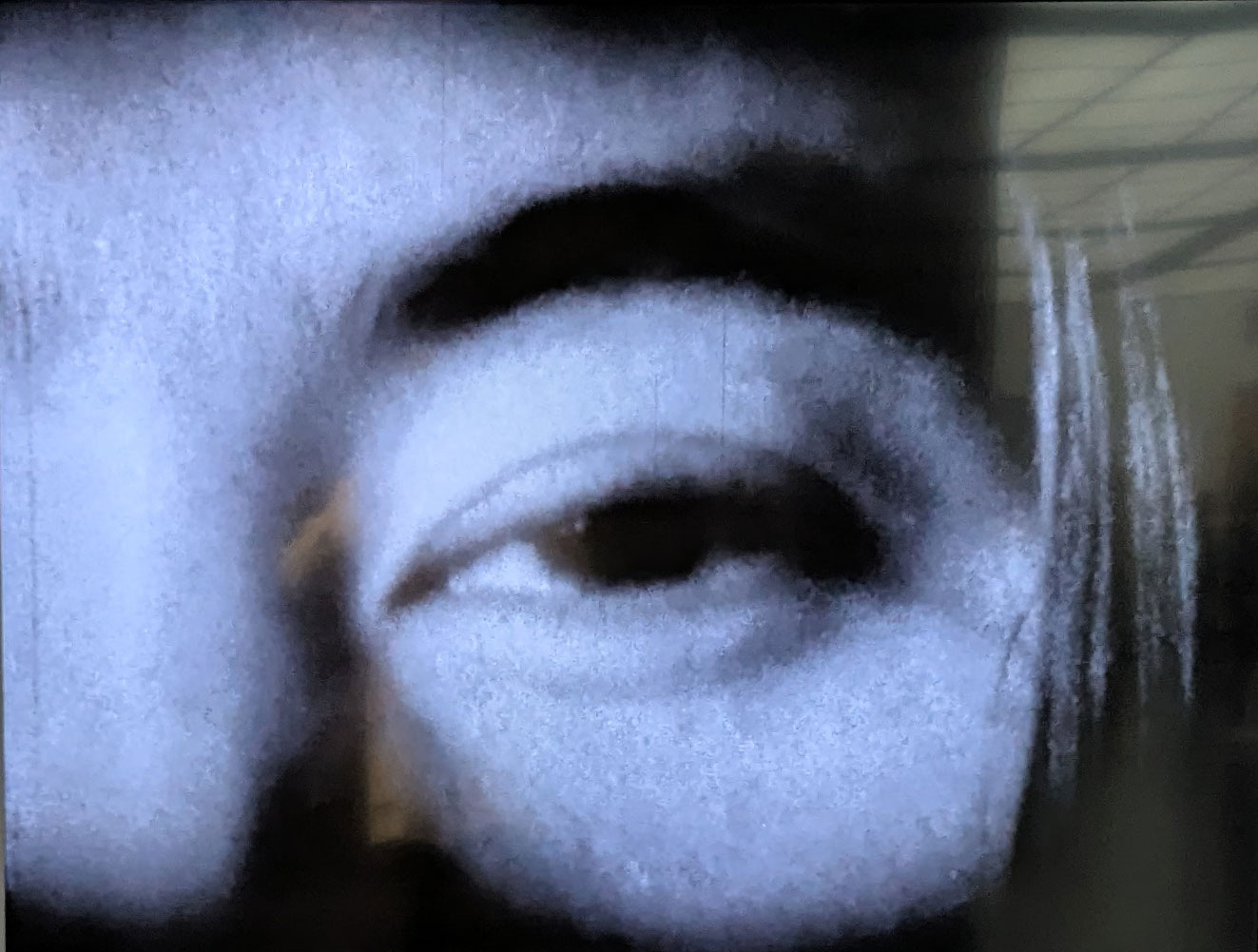
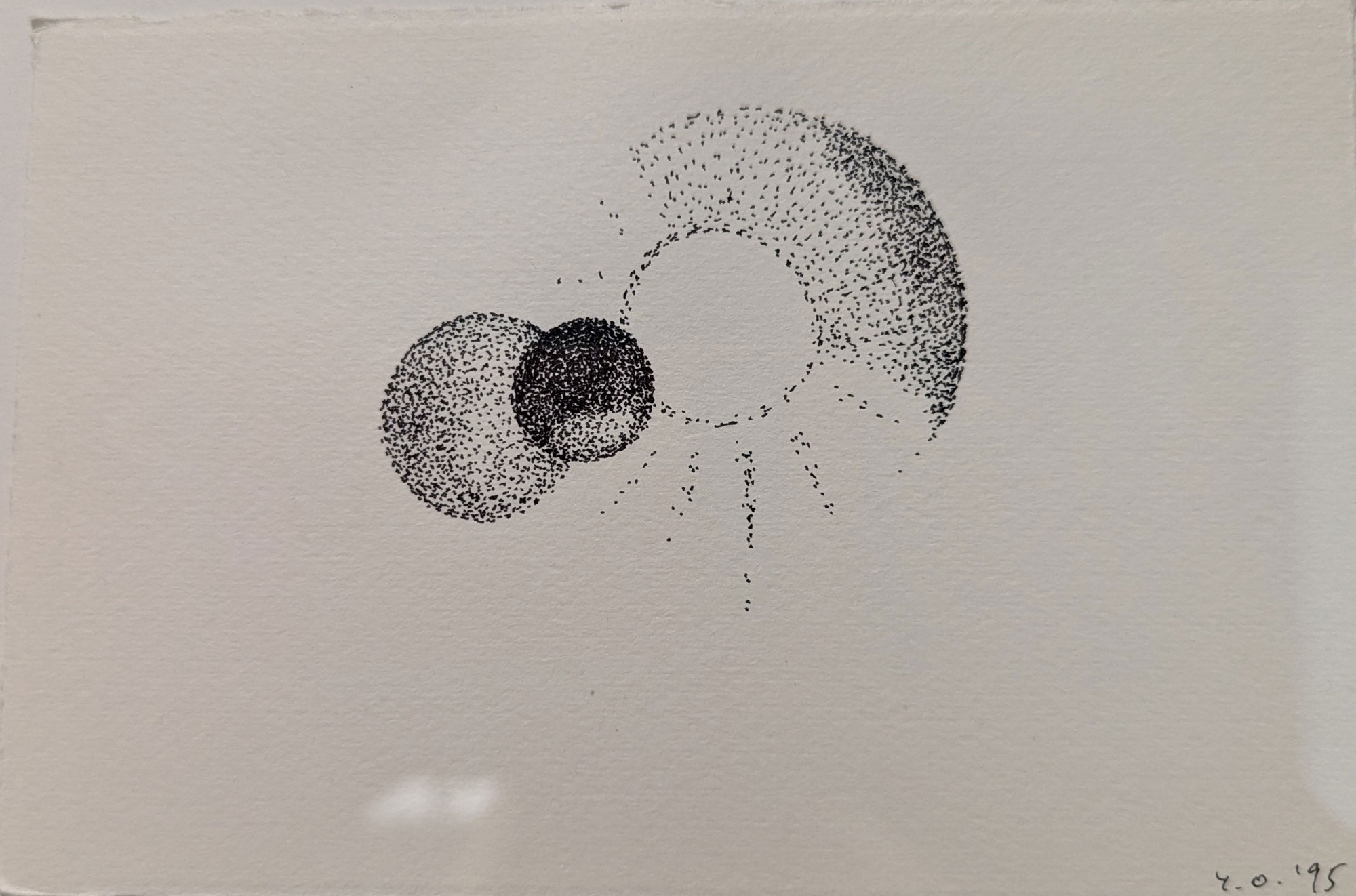
After visiting the show, you begin to understand why some say it was tragic Ono married a Beatle. By the time she met John Lennon, this woman raised in wealth and as much a product of west as she was the east, had already established herself as a leading light in conceptual art. The glare of massive celebrity all but obliterated that achievement and even made her a target of the scurrilous who either could not or chose not to understand her work. Fifty-six years later, Ono is now 93; the glow of outsized fame still distracts from her artistic importance and contributions.
Touching on her music, encompassing a wide scope of her participatory art and displaying film of her groundbreaking performative pieces, including her masterpiece, Cut Piece, Music of the Mind, lets it all shine.
Much of it requires that you pause and devote the time to digest what your eyes are taking in. The aim is not to visually stimulate. It’s to pierce deeper into places of the mind that may have been neglected. Ono’s a master at re-awakening them.
Add Colour (Refugee Boat) starts out as a completely white room with a stark white boat sitting in the middle of it. Like many of Ono’s works, she provides instructions and says: “'Just blue like the ocean.' You are invited to contribute your hopes and beliefs in blue and white using the markers provided."
Now almost midway through the exhibition's run, the walls and boat are saturated in blue lettering. Extolling sentiments of love, acceptance, and enlightened wishes for society and the world, the room overflows with the thoughts, desires and preoccupations of ordinary people.
Ono felt first-hand the ravages of war while living with her family in Tokyo in her pre-teen years. They were fortunate to able to leave the city while it was blanket bombed by US forces, and escaped to the countryside. Even for the privileged, food was scarce. She’s often quoted as saying that one of the first pieces of art she ever created existed purely in the imagination as she and her little brother lay on the ground looking up to the sky and imagined some of things they would like to eat. Much of her mature work retains that purity.

Cut Piece, a solo performance piece she debuted in 1965, exists in its own realm of greatness. Fully and meticulously dressed, she, as artist, walks to the center of a stage and kneels with a large pair of fabric shears next to her. The audience, usually overwhelmingly white, is invited to come on stage one by one and cut off a piece of her clothing. The artist offers no resistance and remains motionless and expressionless. It’s her prerogative to say when the performance ends.
Often hailed as a feminist masterwork, it’s riveting. But one wonders if what she saw and experienced during the war isn’t also present in this galvanizing piece.
Film No. 4, or Bottoms as it’s more commonly known, is much lighter and almost playful as it, as Louis Menand noted in his New Yorker profile, “mocks self-importance.” An 80-minute film showing only the bare posteriors of art celebrities walking was banned by the British Board of Censors when it premiered in 1966. Today it's innocuous but still wickedly ingenious and perceptive.
Yoko Ono: Music of the Mind is filled with discoveries about a master artist who’s been in our midst for decades. Despite that, what’s on view in Music of the Mind feels like a must-experience revelation deluge.
Firelei Baez continues through May 31 and Yoko Ono: Music of the Mind through February 22 at the Museum of Contemporary Art, 220 E Chicago Ave. For tickets and more information: https://mcachicago.org/#gbp
Now through December 31, Third Coast Review is raising money to support the diverse roster of writers you know and appreciate for their thoughtful, insightful arts and culture coverage in Chicago and beyond. Everything raised during this time will go directly to paying these writers a well-deserved year-end stipend; you can make a contribution here. Thank you!
