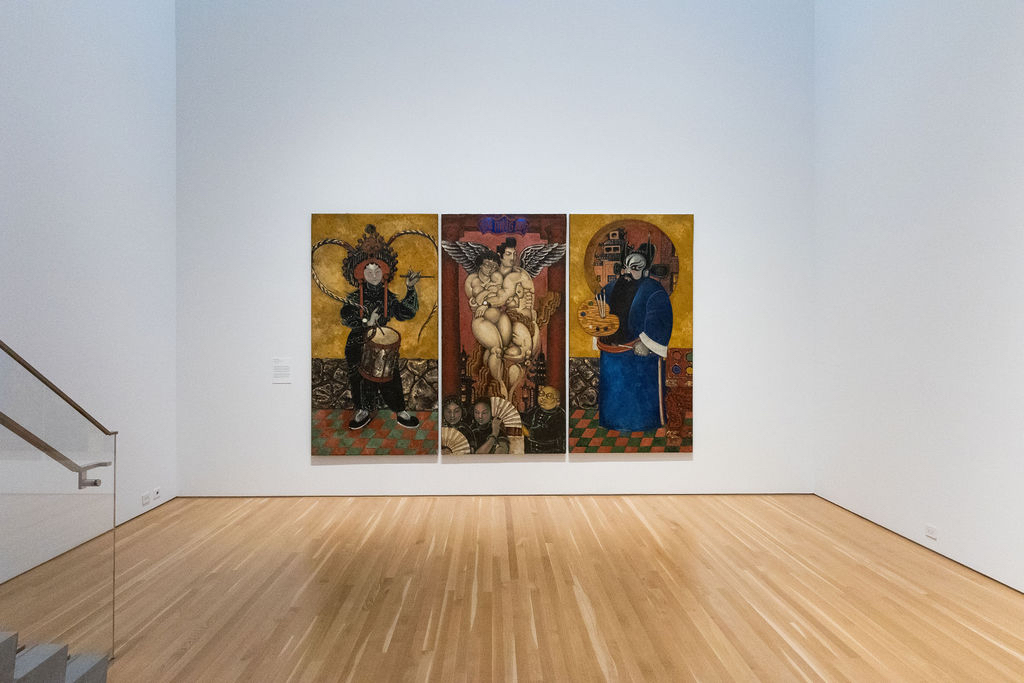
Asian art abounds in Chicago, especially during Asian American and Pacific Islander Heritage Month in May, with three exhibits currently on display: Martin Wong, Chinatown USA, at Wrightwood 659; a permanent installation on the first-floor event space in Bridgeport’s Zhou B (meaning brothers) Art Center; and at the Art Institute’s Modern Wing with Korean National Treasures: 2,000 Years of Art.
The Wrightwood 659 space looks like a typical 1920’s Lincoln Park brick mansion on the outside. But the inside reveals a sophisticated, brutalist interior of concrete walls and angled glass-railing staircases, culminating in a gorgeous added fourth floor surrounded by windows that offer a panoramic view of the city. (The interior architecture is the wiork of architect Tadao Ando.) This engaging yet serene space is populated by a bevy of friendly and knowledgeable docents, each of whom does a deep dive into a particular artwork and are at the ready to answer questions as you meander through the galleries.
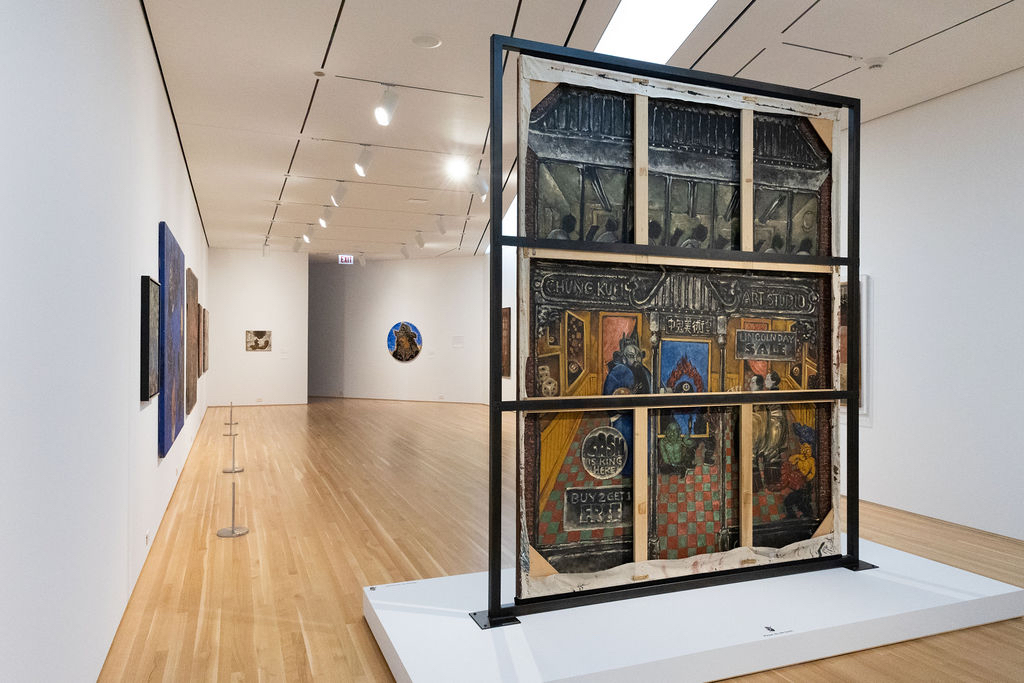
Currently occupying the third and fourth floors is Martin Wong, Chinatown USA, an “overlap of the mystic and benign” collection of over 100 paintings, drawings and photos, a celebration of the prolific Chino-Latino artist’s exuberant work curated by Yasufumi Nakamori, PhD, and Ashley Janke. Videos of Wong at work are part of the installation as well.
Wong grew up in San Francisco near Chinatown with a Chinese-American mother and Chinese-Mexican-American stepfather, not speaking either language and also unsure of his place as a young gay man. After college, Wong was a theatrical designer for queer Bay Area groups before moving to New York in 1978, where he was a contemporary of other groundbreaking young artists, like Keith Haring, and started collecting graffiti art. Wong’s impressive, tall, and mostly rectangular paintings are whirlwinds of his various cultural references that continue as leitmotifs throughout the canon.
Wong conveys a concrete but uncertain sense of place, sharing complex street scenes, often overcast, that incorporate Chinese iconography, calligraphy (his chop signature shows up frequently on the corners of his canvasses) and curlicued, filigreed architectural details. Brick walls are a common theme (perhaps representing him facing personal barriers), as are other items that Wong stumbled across and embraced, like Bruce Lee, Buddhism, Peking Opera performers, star constellations, fortune-telling Magic 8 Balls, poetry (his handwriting is an art in itself, especially exemplified in his handwritten 1977 resume), and American Sign Language hand shapes, inspired by an ASL deck of cards he found (and often replicated inaccurately). Sometimes photorealistic people and faces populate these cityscapes, from children playing with stars like marbles, to presumable self-portraits.
“Everything I’ve ever wanted to paint, like the Chinatown paintings, I’ve painted,” Wong said. “When I was younger, I was always paranoid that I would die before I could finish my paintings, and at a certain point I actually finished them.” And we’re lucky that he did, because he died of AIDS at age 53 in 1999. We’re also fortunate to see this vibrant, visionary collection now as a time capsule of fin de millénaire queer and ethnic cultural explorations to support Wrightwood 659’s mission to uplift Asian and LGBTQ+ voices.
Wrightwood 659 is located at, unsurprisingly, 659 W. Wrightwood in Chicago, open Fridays 12 noon-7pm and Saturdays 10am-5pm. Advance online $20 tickets are required, and last daily admittance is 90 minutes before closing. The Dispossessions in the Americas exhibit is also currently running (including themes such as “heterosexuality is a colonial project”), and One with Eternity: Yayoi Kusama and Everyday War: Yuan Goang-Ming opening on September 25, 2026.
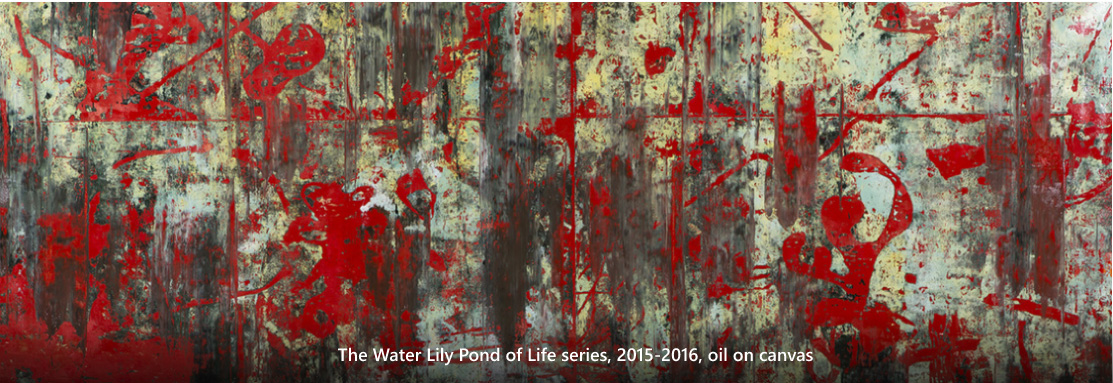
In 2004, internationally acclaimed Chinese painter brothers ShanZuo and DaHuang Zhoushi repurposed a cavernous former Spiegel Catalog building in Bridgeport into a third space called the Zhou B Art Center, “for art, for life, for people and for the future” (as well as the occasional yoga class). This behemoth on the edge of Chinatown (across the way from the Heritage Museum of Asian Art) features 10,000 square feet on the second floor as a rotating exhibition space, and artist studio spaces ranging from 200-1500 square feet across four floors, featuring artists like building engineer Farries Maxwell, who creates handsome and utilitarian computer display bags via his company Bespoke Mix, and D. Anson Brody’s 19th century antique tintype and ambrotype photography.
The Zhou B ground floor is an event rental space with a café, art book library, and displays of the brothers’ large-scale abstract canvases plus humanoid marble and wood sculptures, which can also be found outside the building in the spacious parking lot and ramped entryways.
While the permanent collection is definitely Asian-inspired, the current exhibition titled “in conversation with what remains…” is a dialog between Ronald Fritkin’s enduring legacy and Blake D. Lenoir’s present-tense exploration of cultural memory, history and becoming: an evocative dual exhibition exploring persistence, memory, and the negotiation of time and absence.
“I didn’t see reflections of myself,” said Beverly-based Lenoir, so he incorporates surrealistic color coding and body language in his paintings and drawings, because “some work does not stay in its time. What remains is not only what is left behind. It is what endures, evolves, and stays in conversation.”
Lenoir describes his often-intimate portraits as cross-cultural and intergenerational, implementing influences like feminist writer Audre Lorde, his three sisters, interviews with women, and the concept of face value, depicting “not what she looked like, but what she was.”
The Zhou B Art Center is located at 1029 W. 35th St., and participates in Third Friday Artwalk, where art studios and galleries throughout Bridgeport are open 7-10pm, along with bars, restaurants and other venues in the area. “in conversation with what remains…” runs through May 12.
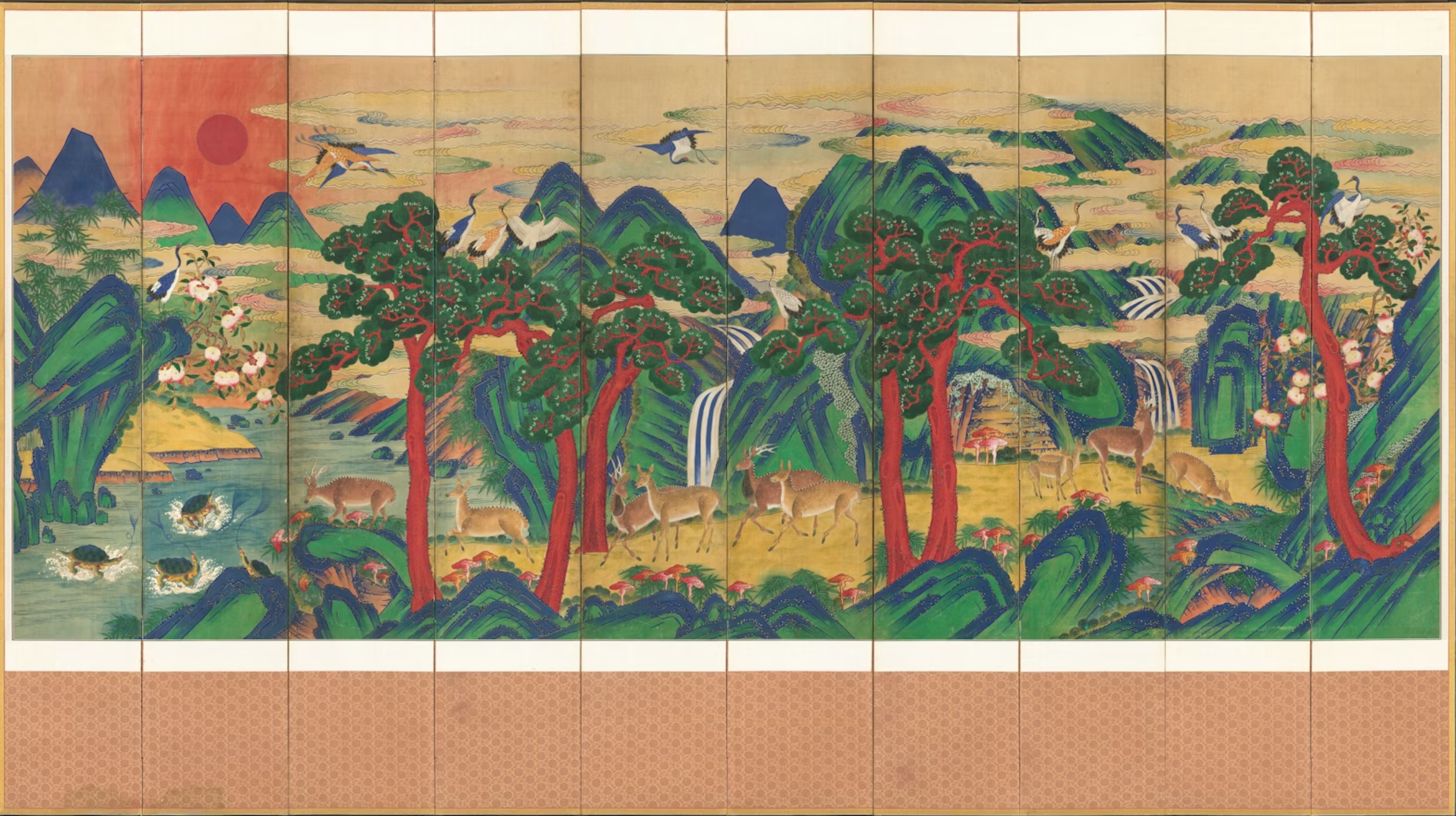
attributed to court painter, The Art Institute of Chicago.
In addition to Korean objects in the museum’s permanent collection (like Chun Kwang Young’s impressive circular paper installation “Aggregation” from 2021), the Art Institute is presenting the temporary Korean National Treasures: 2,000 Years of Art, featuring 140 modern and historical works, 22 of which are recognized as Korean National Treasures, from the Three Kingdoms Period (57 BCE-676 CE) through modern day. The bulk of the exhibit is from the Joseon dynasty (1392-1897), when the elite class studied Confucianism, which focused on compassion, learning, piety and propriety.
Some might consider this collection as Samsung’s reputation-washing, but it’s also a compact tribute to Korean culture from the civil service to a movable metal type printing tradition (read from right to left) that predated the Gutenberg Bible by 80 years, often using hanji paper made from mulberry tree pulp.
Symbols of flora and fauna appear on artifacts from paintings (some on silk) to large room screens, including rocks and mountains, peach blossoms, pine trees, bamboo, mushrooms, cranes, deer, turtles, water, clouds, the sun, plus some passionate horses and a bull (perhaps a response to Japanese colonial rule from 1910-45).
Some of the detailed, multi-paneled screens are artistic meeting minutes from official gatherings, creatively crafting an annual report of sorts, and/or the “step and repeat” moments on modern-day red carpets that can also convey the status of the artists creating them. One of the more vibrant screens depicts a detailed bookcase, showcasing deeply symbolic items, while another depicts a sprawling tableaux of court life with rich reds, greens and blues, punctuated by the intense white eyeballs of the courtiers deep in craft, conversation or scheming.
The porcelain moon jars are appropriately luminous, and the delicate pale-mint celadon ceramic pieces sport painterly affects, which can represent Neo-Confucianism thought starting around the 11th century, blending Buddhism and Daoism to support humanism after centuries of instability and to foster “right thinking.” Korean culture tends to promote consideration of the collective, rather than the isolating individualism often rampant in modern American culture, all of which is apparent in this lush sampling of Korean cultural output.
The Modern Wing entrance for Art Institute Chicago is at 159 E. Monroe Street. Admission to the museum is $26-$32, with an additional fee for special exhibits. The museum is closed on Tuesdays, and open 11am-5pm on Mondays, Wednesdays, Fridays, Saturdays and Sundays, and 11am-8pm on Thursdays. Korean National Treasures: 2,000 Years of Art runs through July 5, 2026.
Support arts and culture journalism today. This work doesn't happen without your support. Contribute today and ensure we can continue to share the latest reviews, essays, and previews of the most anticipated arts and culture events across the city.
