2025 is finally over, so it’s time to reveal my Best Narrative Films of the Year list. As always, I was able to squeeze in a couple dozen additional films in the last few weeks of December—mostly titles that others have told me are worth checking out that I either missed when they were released in Chicago, or movies that were never released in Chicago at all. I also tend to do a great deal of re-watching in those last two weeks, primarily to solidify the order of my top 10.
According to my count, I saw 562 films in 2026 (roughly the same as the previous year), either in a theater or via screening link—from one of the funniest films of the year, One of Them Days, (the first press screening of 2025) to the final press screening of the year, Anaconda (always nice to end the year on a Rudd). This tally does include a few vintage titles, but only if I saw them in a theater (often as restored prints, but not always). If I simply watched an older film at home, that doesn’t make the overall count—so my actual count of movies watched in 2025 is much higher.
As I do every year, I’ve separated my Best Documentaries List from narratives because I want an excuse to call extra attention to a whole other group of 20 worthy films that might go unnoticed on a combined list.
In previous years, my Narrative Features list has reached anywhere between 30 and 50 titles; this year, 40 movies stood out to me. I often feel that after the first 10 titles, the rankings don’t mean as much, and that’s certainly true this year. As always, if you think a list of 40 films is annoyingly excessive, kiss my ass and feel free to stop reading at 20, or 10. I have faith you’ll find ways of coping with my overly indulgent means of expression.
I’ve included excerpts of my original reviews of my Top 10 films, if I wrote one; if I didn’t, I scribbled down some thoughts. Hope you dig the list and that it gives you some ideas for future viewings on some platform.
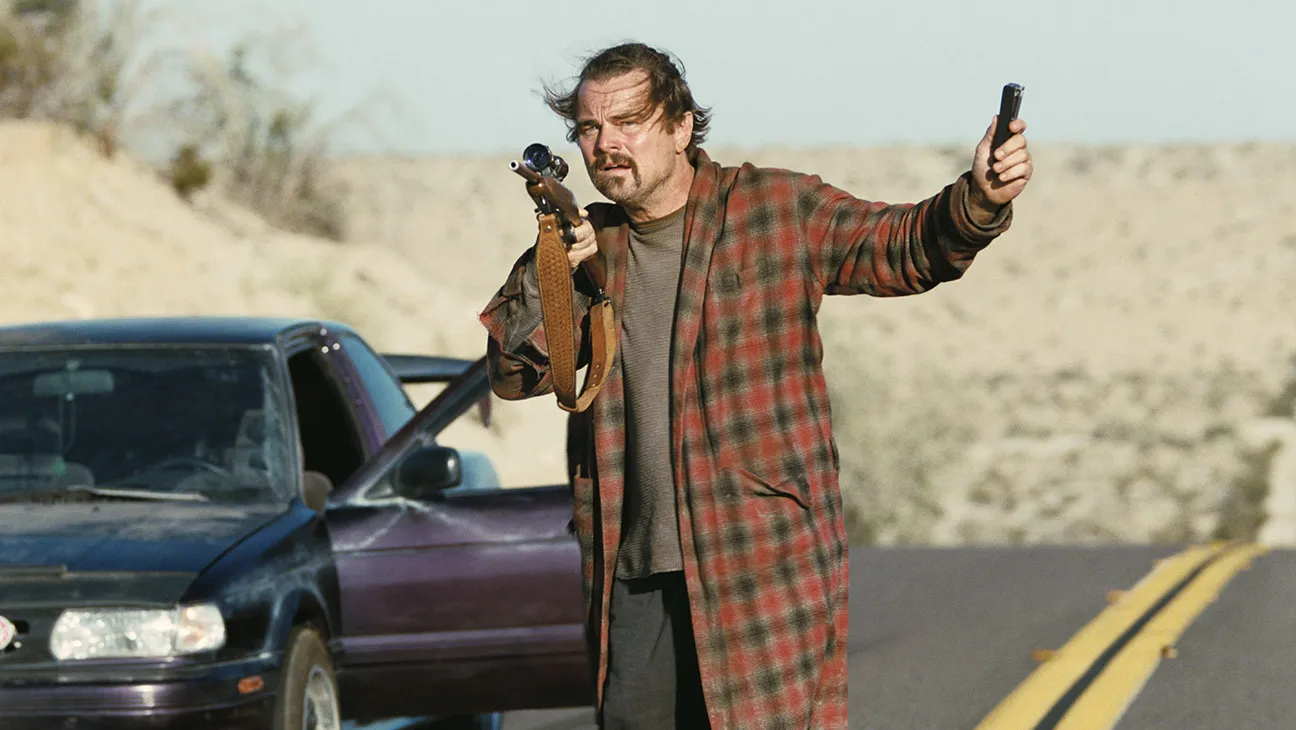
In any other action movie, the emphasis on a revolutionary would be on his/her glory days of radical acts, like blowing up buildings, freeing political prisoners, etc. But in writer/director Paul Thomas Anderson’s One Battle After Another (inspired by the Thomas Pynchon novel Vineland), he spotlights said revolutionary 16 years after he’s effectively hung it up. Now a stoned, paranoid sap named Bob (Leonardo DiCaprio), he's trying to raise teen daughter Willa (Chase Infiniti) off the grid. In the process, he’s ended up raising a tough, self-reliant rebel who finds herself a target by simply being his daughter.
It’s also a story about dealing with the consequences of the past, whether it’s your past or the history you were born into because your parents wanted to change the world. There are absolutely people in this world who are going to see the revolutionaries and migrants as the bad guys in this scenario, while viewing Sean Penn’s deeply troubling Lockjaw as the savior (if you do feel that way coming out of this, stay far away from me). Whatever baggage you bring into this movie, there’s no way you come out of One Battle After Another feeling nothing.
2. Sinners
Across their five films together, filmmaker Ryan Coogler (Fruitvale Station, both Black Panther movies, and Creed) and actor Michael B. Jordan have elevated each other’s work in ways that are plainly visible on screen. They’ve also elevated the various genres they’ve tackled by making one of the greatest superhero movies ever, one of the best sports dramas, and now, with Sinners, one of the most fascinating takes on vampire mythology I’ve ever seen, one that incorporates regional specificity, religious fervor, passionate music elements, and an uncanny sense of history. Do things get messy in the process? Absolutely. But it’s the kind of mess I can and do absolutely get behind because it’s the result of ambition and a filmmaking skill that is growing with each Coogler/Jordan collaboration.
This is also a film that isn’t afraid to be sexy, sweaty (every moment in the film looks blazing hot), gritty, or wildly stylized to the point where some moments seem to be an idealized version of reality. But as I mentioned, I like the way Coogler swings. Do I care that he wears his influences, messages, and metaphors on the outside, instead of making them subtle? Why should he? That’s never been his style. He’s an in-your-face filmmaker whose boldness and singular voice mesh beautifully with Jordan’s acting style, making them one of the great actor/director teams in history.
3. It Was Just an Accident
Winner of the 2025 Palme d’Or, the Cannes Film Festival’s top honor, It Was Just an Accident is the latest from Iranian writer/director Jafar Panahi, a filmmaker known for his deeply personal and unflinching takes on life in his home country. The story is of a group of detention survivors unexpectedly confronted by their traumatic shared past, and like many of Panahi’s recent films, it was shot in secret and without film permits.
Vahid, an unassuming mechanic, is suddenly reminded of his time in an Iranian prison when he has a chance encounter with Eghbal, a man he strongly suspects to be his sadistic jailhouse captor. Panicked, Vahid rounds up a few of his fellow ex-prisoners to try and confirm Eghbal's identity. Panahi creates a deeply felt moral thriller, where tension combines with unexpected moments of humor and thoughtful, sometimes devastating questions regarding persecution and revenge. The film ends with one of the most unforgettable sequences of the year. (My colleague Lisa Trifone reviewed It Was Just an Accident.)
4. No Other Choice
Park Chan-wook’s ambitious and darkly funny No Other Choice is based on a novel by Donald E. Westlake, with Park turning his attention to the modern dilemma of committing oneself entirely to their job only to learn that those in power aren’t nearly as committed to them. Lee Byung-hun plays Man-su, a dedicated employee at an esteemed paper-making company, but when said company is acquired by an American owner, his job is eliminated. He tells his family that he’ll have a new job in three months, and more than a year later, he’s still unemployed and he begins to take merciless measures toward solidifying his standing with a potential new employer—measures that might end up including murdering the competition for a prime new position. This is a work about class divide, corporate greed, and families that get a little too comfortable with life’s extravagances. It’s a nasty bit of social commentary that feels far too of the moment. (My colleague Lisa Trifone reviewed No Other Choice.)
As Americans, most of us are suckers for stories about underdogs, comebacks, or characters who rise up from great adversity to triumph in the end, and certainly, Marty Supreme, the debut solo film from Josh Safdie (who made works like Uncut Gems and Good Time with brother Benny), has those elements. But somehow, Safdie makes it almost impossible for us to fully like lead character Marty Mauser (Timothée Chalamet), a champion table-tennis player living in New York City in the 1950s. He’s a character who believes in himself completely, never so much as even entertaining the idea that he could ever fail, even as he’s actively failing. His passion for what he does so well and belief in himself so dominate his personality that he’ll do anything and destroy anyone to get where he knows he needs to be. Mauser is a user, emotional abuser, taker, con artist, and terrible son.
Eventually, all roads lead to Japan, where Marty must decide what is more important: winning a world title or escaping a harrowing situation with some dignity and cash. With Marty Supreme, you can tell which of the Safdies was responsible for the nerve-wracking qualities of something like Uncut Gems, and with Chalamet steering the ship and doing the best work of his career (a year after his previous best work playing Bob Dylan), this film rarely takes its foot off the gas or gives us time to catch our collective breath. And I was fully along for every anxiety-laden minute.
The most important part of director Akira Kurosawa’s 1963 High and Low (which in turn was based on the Ed McBain novel King’s Ransom) was never the story of a kidnapping and the police investigation that follows. It was always about the great class divide within a single large city: a very poor man kidnaps the son of a very rich man (or so he thinks), and the rich man must make both an ethical and financial decision about whether he’s going to pay the hefty ransom. In director/co-writer Spike Lee’s reinterpretation—and his fifth collaboration with Denzel Washington—Highest 2 Lowest, this moral decision has never felt more palpable and resulted in heftier consequences than the ones presented here, making it not only one of Lee’s finest achievements but also one of the greatest remakes in cinema history.
In so many ways, the film wouldn’t work without Jeffrey Wright’s intense, short-fused right-hand man, an ex-con given a chance at a new life thanks to Washington’s character. He doesn’t like the way the police are investigating the kidnapping, and the way he comes up with information in an instant thanks to his street-level connections is thrilling and sometimes funny, But he has the biggest heart of anyone in Highest 2 Lowest, and we’re always rooting for him. It’s exciting to see Lee achieve something so entertaining, personal, and culturally relevant, all in one film, which stays fairly faithful to the original movie until the last third, when it actually gets better.
7. Frankenstein
Writer/director Guillermo del Toro has had a vision for his telling of author Mary Shelley’s Frankenstein for a couple of decades—not just ideas for the makeup and production design but also what themes he would emphasize. He's said that he's always seen the story (originally told in the book Frankenstein; or, The Modern Prometheus) as one about what it means to be human, and how, if you can’t die, that takes away your humanity: what makes life so significant is that it will eventually end, and we all have a limited time on this earth. But the Creature in Frankenstein (portrayed beautifully by Jacob Elordi) can’t die, and thus, can’t be fully human. And when it realizes this, its heart breaks and it becomes full of rage, as one might.
Fun character work by Oscar Isaac, Christoph Waltz, Mia Goth, David Bradley, Lars Mikkelsen, and Charles Dance abounds. Throughout Frankenstein, the production design, practical special effects, and costumes are a wonder to behold. Goth’s Bride of Frankenstein-inspired wedding dress alone should get costume designer Kate Hawley an Oscar nomination. My only major issue with the film might be Isaac’s exaggerated, melodramatic performance, which would seem appropriate for the material, except no one else in the cast is acting at the same temperature as he is, which is all the way up. With Elordi’s career-best performance dominating so much of the film’s second half, it’s hard to complain. Del Toro doesn’t go wildly astray from the Shelley text; if anything, his is a fairly faithful adaptation. But hearing the Creature talk so eloquently and spout philosophy and considered opinions might be jarring to some, but I’ve been waiting to hear him speak like this ever since I read the book as a kid.
One of the more memorable and impactful films at Sundance this year was from writer/director Mary Bronstein, and it concerns a woman named Linda (Rose Byrne), who is effectively raising her ailing child by herself. Linda’s husband is in the military and travels for weeks at a time, leaving her to deal with their child’s unnamed affliction as well as an unexpected, catastrophic home repair involving a massive hole in her bedroom ceiling. These events are negatively impacting Linda’s day job as a therapist, and her attitude toward her patients (I especially like Danielle MacDonald's performance as a paranoid mother), as well as her sessions with her own therapist (Conan O’Brien). Linda and her daughter are forced to move in to a shady motel, where she meets a local eccentric, played by musician A$AP Rocky, whom she befriends.
Byrne finds ways to inject her dramatic roots and comedic flair into the character of Linda, making If I Had Legs I’d Kick You both darkly funny and a pressure cooker of a character drama. On its surface, the film is about the perils and pressures of motherhood, but in a broader context, it’s about being supported. It might take a village to raise a child, but Linda’s village has abandoned her, with rare exceptions. Linda frequently leaves her daughter alone in their room so she can simply get out and feel connected with grown people, and we’re allowed to dive deep into her troubled, fractured mind as Byrne takes us from fantastical delusions to pure panic attacks. The film is certainly not for everyone, but when it works, it’s magnificent.
From first-time Norwegian writer/director Emilie Blichfeldt comes this gruesome retelling of the Cinderella story, done from the perspective of one of her stepsisters, Elvira (a breakneck performance by Lea Myren). From this perspective, the filmmaker has made the stepsisters more misunderstood than outright evil. When word reaches the kingdom that a ball will be held so that Prince Julian can scope out the local virgin population, Elvira is convinced this is her chance to finally meet and marry the prince. The problem is that Elvira isn’t as conventionally attractive as her stepsister Agnes (Thea Sofie Loch Næss), the daughter of the recently deceased man who married Elvira’s mother. She will eventually be reduced to playing servant to her stepfamily, giving her the name Cinderella.
Elvira’s mother sees a marriage to the prince as a money-making scheme and will do anything to improve her daughter’s looks, from a brutal nose job to shaming Elvira about her weight. The girl downs a tapeworm egg, which leads to a contender for the grossest scene in any movie this year—I loved it. With The Ugly Stepsister, director Blichfeldt has taken this fairy tale back to its Brothers Grimm roots, and the results are a truly great period (as in 19th century) body horror film, with more modern commentaries on beauty standards, body image, social status, and the lengths people will go to achieve something resembling physical perfection.
10. Sorry, Baby
Eva Victor (they/them) has made a career—and a helluva feature film debut with Sorry, Baby—by never doing what’s expected. They won the Screenwriting Award-U.S. Dramatic at this year’s Sundance Film Festival. In it, Victor plays Agnes (she/her), whom we see at two different times in her life: as a student, and later, as a professor at the same college, where an event occurred that altered her even as she refuses to let it break or define her. The film is about how Agnes, along with her best friend Lydie (Naomi Ackie) work to bring Agnes back to the funny, optimistic person she was before this event, a tone that may bother people who believe a film about trauma also has to be heavy or upsetting. Victor respectfully disagrees, and Sorry, Baby is proof that stories like this can tackle heavy material without becoming self-serious trauma porn.
11. Together (Writ/Dir: Michael Shanks)
12. Sentimental Value (Joachim Trier)
13. (tie) Nouvelle Vague / Blue Moon (Writ/Dir: Richard Linklater)
14. Weapons (Writ/Dir: Zach Creggar)
15. Sirat (Writ/Dir: Oliver Laxe).
16. Bugonia (Dir: Yorgos Lanthimos)
17. The Shrouds (Writ/Dir: David Cronenberg)
18. (tie) Black Bag / Presence (Dir: Steven Soderbergh)
19. Eddington (Writ/Dir: Ari Aster)
20. Wake Up Dead Man (Writ/Dir: Rian Johnson)
21. Warfare (Dirs: Alex Garland & Ray Mendoza)
22. Song Sung Blue (Dir: Craig Brewer)
23. The Secret Agent (Writ/Dir: Kleber Mendonca Filho)
24. Train Dreams (Writ/Dir: Clint Bentley)
25. The Baltimorons (Writ/Dir: Jay Duplass)
26. The Plague (Writ/Dir: Charlie Polinger)
27. The Testament of Ann Lee (Writ/Dir: Mona Fastvold)
28. Hamnet (Writ/Dir: Chloé Zhao)
29. Familiar Touch (Writ/Dir: Sarah Friedland)
30. The Life of Chuck (Writ/Dir: Mike Flanagan)
31. Eephus (Writ/Dir: Carson Lund)
32. Twinless (Writ/Dir: James Sweeney)
33. Anniversary (Writ/Dir: Jan Komasa)
34. Materialists (Writ/Dir: Celine Song)
35. One of Them Days (Dir: Lawrence Lamont)
36. 28 Years Later (Dir: Danny Boyle)
37. Caught Stealing (Dir: Darren Aronofsky)
38. A House of Dynamite (Dir: Kathryn Bigelow)
39. Mission: Impossible / The Final Reckoning (Writ/Dir: Christopher McQuarrie)
40. (tie) Fantastic Four: First Steps / Thunderbolts* (Dir: Matt Shakman / Dir: Jake Schreier)
If you enjoyed this post, please consider supporting Third Coast Review’s arts and culture coverage by making a donation. Choose the amount that works best for you, and know it goes directly to support our writers and contributors.
